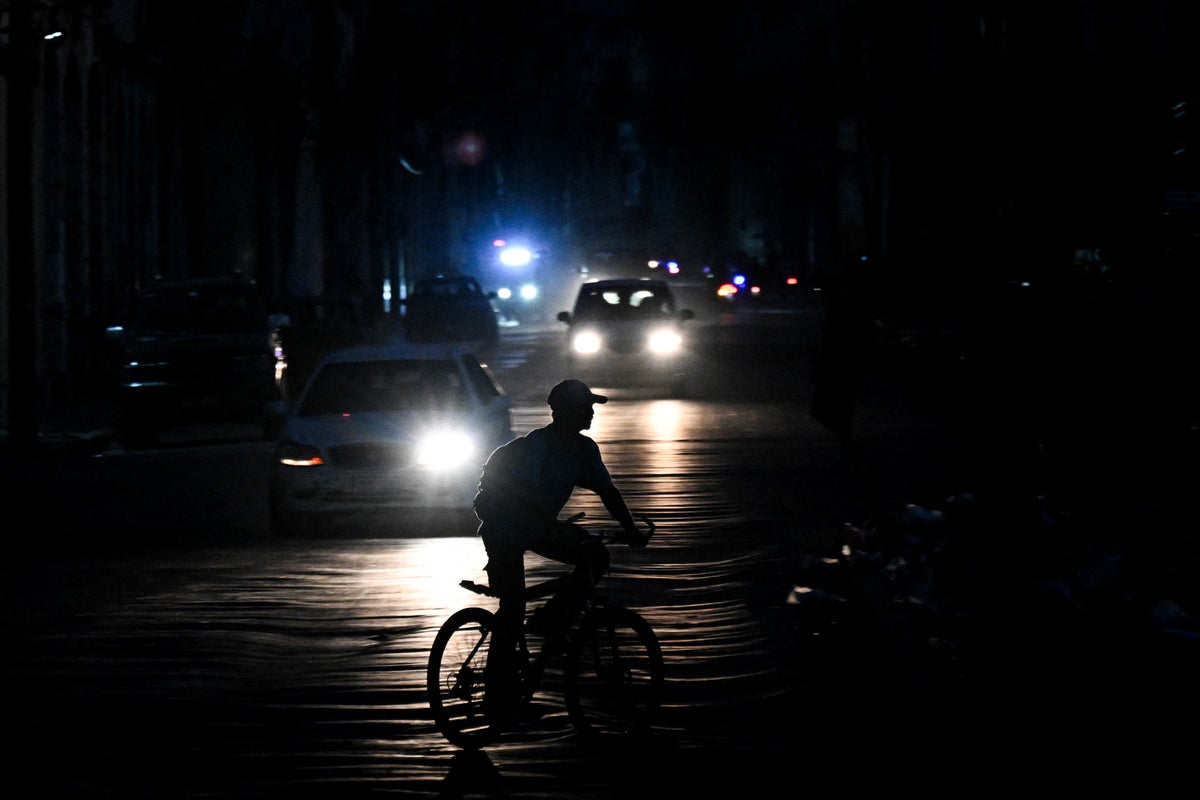
Every mainstream news desk on earth just rushed to publish the exact same lazy panic porn. The headline is always identical: Cuba plunged into total darkness after its national electricity grid collapses again.
They paint a picture of a helpless island trapped in an eternal 20th-century loop, helpless against rusting Soviet infrastructure, waiting for a western-style bailout that never comes. It is the kind of superficial, drive-by journalism that treats a complex geopolitical and infrastructural stress test like a cheap disaster movie. For a more detailed analysis into this area, we recommend: this related article.
It is also profoundly wrong.
If you think Cuba’s persistent grid failures are merely a consequence of poor maintenance or bad luck, you are missing the entire point of what happens when a nation is forced to operate outside the traditional petro-dollar matrix. I have spent years analyzing grid vulnerabilities across restricted markets, and I can tell you right now: what looks like systemic collapse to a western observer is actually an aggressive, high-stakes forced decoupling. For further information on this topic, in-depth coverage can also be found at The Washington Post.
Cuba is not just breaking down. Cuba is being squeezed into an alternative survival architecture whether it wants to or not.
The Lazy Consensus of Decay
The narrative pushed by international media goes like this: aging thermoelectric plants built in the 1970s and 1980s break down, fuel imports dry up because of tightening sanctions, and the whole island goes dark.
End of story. Cue the sympathy, cue the warnings of humanitarian disaster, cue the predictable think pieces about the failure of centralized planning.
This narrative treats the Cuban electrical system as if it were supposed to function like the PJM Interconnection in the United States. That is a category error. You cannot evaluate an isolated, heavily sanctioned island economy using the metrics of a continental market fueled by endless capital and unrestricted supply chains.
The plants are old. Yes, Antonio Guiteras and Renté have been duct-taped together for decades. But treating this as a simple maintenance failure ignores the structural chokehold strangling the fuel supply. When you cannot reliably finance or ship heavy crude due to extraterritorial financial blockades, your power plants do not fail because engineers are lazy. They fail because they are deliberately starved of feedstock.
To call this a blackout is accurate in the literal sense. The lights go out. But calling it an accidental collapse ignores the weaponization of global trade routes that forced the island into this exact corner.
The Microgrid Reality Nobody Wants to Talk About
While the western press obsessively covers every national grid shutdown, a quieter, much more radical transformation is happening on the ground. Cubans are not sitting in the dark waiting for Havana to fix the central spine of the high-voltage transmission lines. They are abandoning it.
Necessity is the mother of decentralized engineering. Across neighborhoods, agricultural co-ops, and small state enterprises, a patchwork of localized energy autonomy is taking root. People are pulling together mismatched solar panels, salvaged inverters, and small biomass generators to create hyper-local microgrids.
This is the exact opposite of what the mainstream media wants you to believe. They want a story of total helplessness. The reality is an organic, grassroots shift away from the centralized grid model that every industrialized nation is secretly trying to figure out anyway.
Think about it. Centralized grids are massive, brittle targets. They are vulnerable to cyberattacks, extreme weather, and catastrophic cascade failures. When a Texas grid goes down, millions freeze because they are wired into an archaic monopolistic web. When Cuba's national grid flatlines, communities are forced to learn the hard lesson of hyper-local resilience.
I have seen corporate conglomerates blow hundreds of millions of dollars trying to engineer localized microgrid redundancy for data centers and smart cities, failing miserably due to regulatory red tape and bureaucratic inertia. In Cuba, it is happening out of raw survival instinct. It is messy, it is inefficient, and it is entirely illegal under traditional administrative frameworks, but it is working.
The Fuel Paradox and the Sanctions Blind Spot
You cannot discuss the Cuban grid without addressing the elephant in the room that financial journalists love to sidestep: fuel logistics.
Cuba relies heavily on imported heavy crude to feed its steam turbines. For years, that oil came from Venezuela under preferential agreements. As Venezuela's own production faced internal chaos and international sanctions, those shipments became erratic. When secondary sanctions target any tanker daring to dock in Cuban ports carrying fuel from alternative suppliers, the math changes overnight.
Here is the mechanical reality: a thermoelectric plant cannot spin up without continuous, heavy fuel oil pressure. When a tanker is blocked from docking, power plants have to burn whatever domestic crude they can scrape together. Cuban crude is notoriously high in sulfur and heavy metals. It acts like liquid sandpaper inside boilers designed for cleaner foreign oil.
So what happens? The boilers corrode faster. Tubes rupture. The plant trips offline.
This is a cascading failure engineered by policy. To pretend that this is purely an internal management failure is dishonest. It is the direct result of a maximum-pressure economic strategy colliding with physical thermodynamic limits.
The Uncomfortable Truth About Decentralized Survival
Let us be completely candid about the downside here, because a contrarian take isn't useful if it pretends everything is a rosy revolution.
This forced transition to decentralized, localized survival is brutal. It creates a stark, deeply unfair two-tier society. If you have family abroad sending remittances, you can buy a private lithium battery bank and a solar array, keeping your lights on while your neighbor's food spoils in the fridge.
Public hospitals, water pumping stations, and essential logistics cannot run on smuggled solar panels alone. They need megawatt-scale base-load power. When the national grid collapses completely, water systems fail, sanitation risks skyrocket, and the fragile economy grinds to an absolute halt. You cannot run a modern supply chain on DIY backyard electronics.
The romanticization of hardship helps no one. The Cuban state knows that microgrids are a band-aid on a gushing wound. They desperately need massive capital injection to transition their entire energy matrix to renewables at scale, yet international credit markets are barred to them.
Dismantling the Collapse Narrative
So why does the media keep hammering the same story of terminal collapse? Because "state-run system fails again" is an easy, digestible narrative that flatters western ideological biases. It requires zero critical thinking. It lets analysts pretend that the global energy architecture is stable, while isolated socialist economies are the only ones vulnerable to structural shock.
That perspective is dangerously outdated.
Global energy systems everywhere are teetering on the edge of volatility. Look at Europe scrambling for energy after cutting ties with Russian gas. Look at the strain placed on American grids by artificial intelligence data centers and extreme weather events. Everyone is staring down the barrel of grid fragility. Cuba is simply experiencing the future of energy insecurity first, magnified by the magnifying glass of sanctions.
The lesson coming out of Havana is not that centralized planning is dead. The lesson is that centralized infrastructure, anywhere in the world, is a single point of failure.
When the national grid collapses, the knee-jerk reaction is to ask how quickly they can rebuild the old, broken system. That is the wrong question entirely.
The right question is how fast an entire nation can unlearn its addiction to heavy fossil-fuel base-loads and leapfrog straight into decentralized, renewable autonomy without completely tearing the social fabric apart in the process.
Cuba is being dragged into that future kicking and screaming, through rolling blackouts and economic agony. But while the headline-writers weep over the darkness, the engineers on the ground are quietly building the blueprint for a post-grid world.
Stop looking at the outages as a sign of an ending. Watch what people build in the dark.