Salt gets into everything here. It climbs the porous Istrian stone of the ground floors, leaving a pale, crystalline crust that looks like hoarfrost in the middle of summer. It hangs heavy in the sea air, mingling with the scent of stagnant lagoon water, rotting wood, and the faint, sweet trace of diesel from passing vaporetti.
Centuries ago, men stood on these very mudbanks and saw something entirely different. They did not see a sinking city or a romantic postcard destination. They saw a floating fortress born of desperation. You might also find this related story insightful: The Silence Beneath the Waves Where Amelia Still Waits.
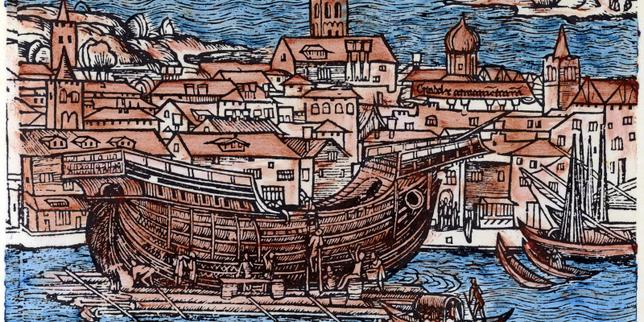
Consider what happens when you have nowhere to run. When continental armies sweep across the mainland, burning fields and driving villagers toward the coast, you either drown in the marsh or you make the marsh your armor. The first refugees who paddled out into the Venetian lagoon did not come searching for glory. They came because the mud was too soft for cavalry charges and the water was too shallow for enemy galleys. They drove wooden piles deep into the silt, poured stones over them, and built an empire out of nothing.
Water was their wall. Geography was their destiny. As reported in latest articles by Lonely Planet, the effects are worth noting.
By the high medieval period, this cluster of mudbanks had transformed into La Serenissima, a mercantile leviathan that stretched its tentacles across the Mediterranean. Walk through the narrow alleyways today, away from the glittering glass shops of Murano and the crowded tables of Piazza San Marco, and you can still hear the ghosts of that commerce. The city was never meant to be pretty. It was meant to be efficient. Every canal was a loading dock. Every bridge was a tollbooth. Every palazzo was a warehouse on the bottom and a counting house on the top.
To understand how a handful of marsh-dwellers built a global trade network, look at how they handled risk. In the eleventh century, Venice did not rely on luck. They relied on maritime law, convoy systems, and state-sponsored merchant fleets known as muda. Individual merchants pooled their money into early forms of venture capital, spreading the terrifying risk of shipwreck, piracy, and spoiled cargo across dozens of investors. They treated trade not as an adventure, but as an exact science.
Cargo ships returned laden with silk and spices from the Levant, silver from the mines of the Balkans, and glass secrets from workshops that guarded their craft under penalty of death. The Doge married the sea every Ascension Day by dropping a golden ring into the Adriatic, a symbolic wedding that meant one simple thing: we own the water, and everything that floats upon it pays us tribute.
Then came the shift.
Empires do not die overnight. They transition. When Portuguese navigators rounded the Cape of Good Hope in the late fifteenth century, opening a direct sea route to India, the Mediterranean lost its absolute monopoly on the spice trade. Venice watched its eastern chokehold loosen. Did they panic? For a moment, yes. Then they adapted. If they could no longer be the sole middleman of the East, they would become something else entirely.
They became the playground.
Slowly, almost imperceptibly, the merchant republic pivoted into a spectacle. Palaces that once housed ruthless spice barons were transformed into salons of music, art, and theatrical excess. Vivaldi composed his concertos for orphaned girls in quiet ospedali. Casanova gambled away fortunes in smoky ridotti. Travelers on the Grand Tour—young English aristocrats seeking culture and a bit of moral ruin—arrived by the boatload, eager to spend their inheritances in a city that floated on water and flirted with decadence.
Commerce did not disappear; it changed its costume. The ships still came, but now they carried pilgrims, poets, and painters instead of peppercorns and camphor.
Today, that dual identity defines every single breath the city takes.
Stand on the Rialto Bridge at dawn before the cruise ships unload their human tides. The water is leaden gray, reflecting the peeling pastel plaster of Gothic facades. A lone delivery boat put-puts past, its hull riding low under crates of fresh artichokes from Sant'Erasmo and loaves of bread baked on the mainland. For twenty minutes, you can almost hear the quiet pulse of a living community.
Then the bells ring. The cruise liners heave into view on the horizon, massive floating apartment blocks dwarfing the campaniles. Thirty million visitors descend on a city that barely houses fifty thousand permanent residents.
The numbers are staggering. They are also unsustainable.
Walk through the residential neighborhoods of Cannaregio or Castello in the afternoon, and you will notice something missing. You won't hear children playing football in the campi as often as you used to. You won't find hardware stores or neighborhood bakeries. You will find lockboxes on apartment doors, souvenir shops selling plastic gondolas made in China, and grocery stores stocked with miniature bottles of prosecco instead of daily necessities.
The locals are leaving. They are being priced out, crowded out, and drowned out by a relentless wave of global tourism that treats a fragile ecosystem as a theme park. When every apartment becomes an Airbnb, the community evaporates. When the economy relies entirely on the transient dollar, the soul of the place begins to hollow out from the inside.
Yet, the city refuses to surrender quietly.
Engineers work beneath the surface on the MOSE barrier, a massive system of mobile gates designed to rise from the seabed when the acqua alta threatens to swallow St. Mark's Square. It is an engineering marvel born of the exact same survival instinct that drove those first refugees into the mud fifteen hundred years ago. We built it on water. We will defend it from water.
At the same time, a new generation of artisans, young Venetians who refuse to let their ancestral home become a mere open-air museum, are fighting back. They reopen traditional mask-making studios, fight for affordable housing, and insist on living normal, messy, beautiful lives amid the grandeur. They know that Venice is not just a collection of picturesque stone and brackish canals. It is an argument about human resilience.
The sun dips low behind the silhouette of Santa Maria della Salute, turning the lagoon into a sheet of hammered copper. A lone gondolier rows his empty boat through the amber reflections, his oar making a soft, rhythmic slosh against the hull. The tourists are retreating to their hotels or boarding the evening ferries back to Mestre. The ancient stones settle into the cool evening air, exhaling the heat of the day and the weight of a thousand years of history.
The empire of commerce and tourism is tired. But as long as the tide rises and falls against these wooden piles, the stone ship will keep sailing.