In Stockholm, the granite walls of the Nobel Foundation are thick enough to muffle the roar of the Baltic winds. Inside, past the polished oak doors and the portraits of men and women whose equations carved the modern world, sits a simple mahogany box.
At precisely 11:45 AM, a secretary will slide a key into the brass lock.
The door clicks open. A piece of paper is drawn out. And somewhere in the world, a telephone rings in an empty hallway, echoing against bare plaster at three in the morning. A scientist wakes up, their heart hammering against their ribs, staring into the dark as centuries of human curiosity collapse into a single, breathless sentence spoken in a Swedish accent.
We tend to think of science as a quiet thing. We picture sterile white laboratories, the steady drip of a pipette, the hypnotic glow of a monitor tracking carbon bonds or protein folds. We imagine discovery as a straight line drawn by methodical geniuses wearing crisp lab coats.
It is a comforting lie.
Real science is messy, exhausting, and borderline obsessive. It is built by people who stared at failed reactions for twenty years, drinking lukewarm coffee out of chipped mugs, watching their grant money evaporate while their peers bought houses and raised families. It is an act of violent hope against a universe that guards its secrets behind walls of chaotic probability.
And every October, Stockholm tries to balance the ledger.
To understand why the Nobel Prize in Chemistry matters—why we pause to watch men and women in tailcoats bow before a king—you have to understand what chemistry actually is. It is not just baking soda volcanoes or periodic tables hanging on high school walls.
Chemistry is the translation layer of existence.
It is the invisible grammar of reality. It dictates why a molecule of water freezes into a crystal that floats instead of sinking, allowing fish to survive a frozen winter. It dictates how a stray photon of sunlight hits a chlorophyll molecule in a blade of grass and turns into a whispered promise of life. It dictates why a strand of synthetic polymer can replace a failing heart valve or why a new catalyst can slice global carbon emissions in half.
When the prize committee meets in secret deliberation behind locked doors, they are not merely rewarding an algorithm or an isolated experiment. They are honoring the moment a human being reached into the dark, felt the texture of something no one had ever touched before, and brought it back to the light.
Consider what it takes to alter the fundamental architecture of matter.
Imagine spending decades trying to map a structure a billion times smaller than the width of a human hair. You cannot see it. You cannot touch it with your fingertips. You can only listen to its faint, ghostly echoes as X-rays bounce off invisible planes of atomic lattices, translating noise into geometry.
For years, you fail. Your computer models crash. Your crystals dissolve into cloudy sludge just hours before an inspection. Your funding is cut by an administrative board that wants immediate commercial products rather than theoretical poetry. Your spouse asks, for the tenth time this month, if you are ever going to come home for dinner before midnight.
You keep going because of a stubborn, irrational belief that beneath the chaos of the physical world lies an elegant order waiting to be decoded.
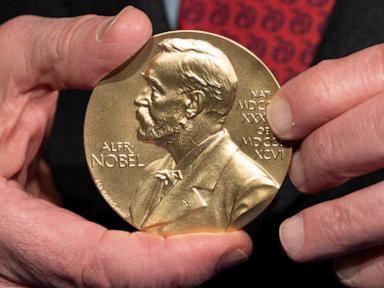
This is the hidden cost of the Stockholm envelope. Behind every gold medal stamped with Alfred Nobel’s profile lies a graveyard of discarded hypotheses. There are thousands of empty coffee cups, sleepless nights spent staring at ceiling tiles, and quiet moments of profound doubt where the researcher wonders if they are chasing a ghost.
When the announcement finally ripples across the global wire services, the world sees only the triumph. They see the flashbulbs, the champagne flutes, the polite applause echoing through the concert hall. They don't see the twenty-year-old notebook stained with ink and coffee rings where a breakthrough was scribbled in the margins during a layover at O'Hare airport.
We live in a culture obsessed with speed. We want instant answers, overnight disruptions, apps that deliver dinner in ten minutes and algorithms that write our poetry. We treat technology as magic, something that simply appears out of the ether, fully formed and ready for consumption.
We forget the agonizingly slow crawl of foundational science.
The laureates celebrated in Stockholm this week did not invent a product for next quarter’s earnings report. They mapped a corner of reality that everyone else walked past. They asked a question so simple, so fundamental, that no one else bothered to pause long enough to wonder about it.
That is the true gravity of the Nobel Prize. It is an institutional anchor in a world that spins too fast. It tells us that truth still matters, that meticulous, grinding, beautiful intellectual labor is still the most radical thing a human being can do.
Later today, the banquet tables in the Stockholm City Hall will be laid out with thousands of flowers flown in from Sanremo. The orchestra will tune its instruments. The King of Sweden will adjust his cuffs.
And somewhere, a tired researcher in a crumpled shirt will walk out of their laboratory into the crisp autumn air, still trying to process the fact that their quiet obsession just changed the world forever. The lab lights will stay on, casting a warm yellow glow against the darkening window, ready for whoever walks in tomorrow to start all over again.