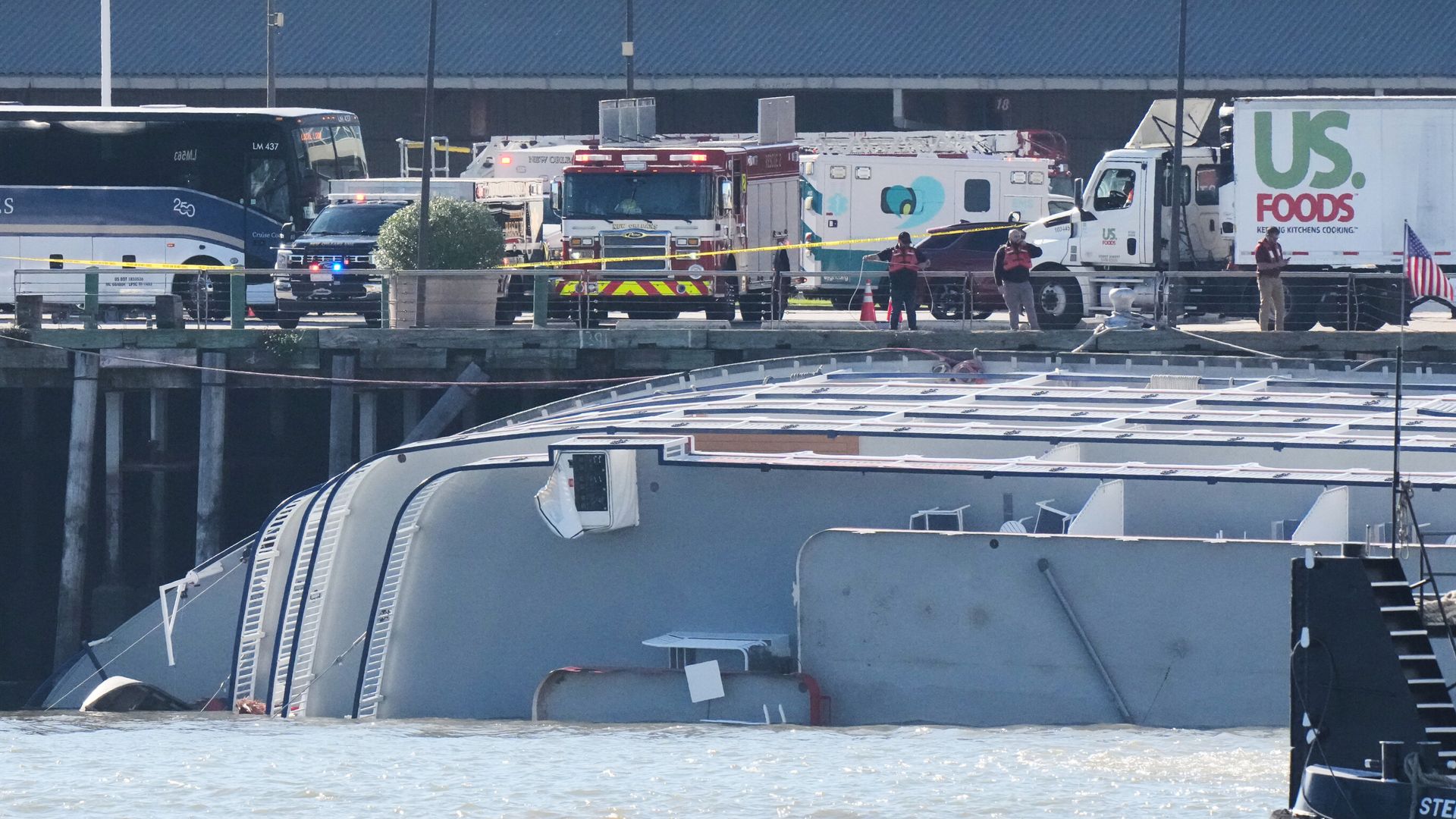
Silence.
That is the first thing people remember when hundreds of thousands of tons of steel lose their argument with the Mississippi River, right before the screaming metal starts to tear itself apart.
If you have ever stood on the wooden planks of the Riverwalk in New Orleans, holding a paper cup of chicory coffee while a warm breeze carries the smell of frying dough and muddy water up from the bank, you know the scale of the vessels that glide past your shoes. They do not look like boats. They look like floating apartment complexes, painted stark white, towering twelve stories above the levee while jazz drifts down from an upper lido deck. You watch them ease away from the Julia Street Cruise Terminal, and you assume—because modern engineering encourages us to assume—that every ounce of that colossal weight is held in check by infallible math, redundant hydraulics, and steady hands on the bridge.
Then the river reminds you who is actually in charge.
When a massive ocean-going tanker loses control in the lower Mississippi and slams into a docked cruise ship, the immediate headlines write themselves in dry, predictable ink. Reporters count the bruised passengers, photograph the crumpled steel along the hull, note the temporary closure of a berth, and move on to the next news cycle. Months or years later, a second, even quieter headline appears in the back pages of maritime trade journals and local business sections: port officials in New Orleans have filed a lawsuit against the owner of the tanker.
Most readers skim past that second story in three seconds. A lawsuit between a municipal port authority and an international shipping conglomerate sounds like dry paperwork—lawyers in tailored suits arguing over insurance deductibles and admiralty clauses.
They are wrong.
That lawsuit is the only thing standing between a working port city and the quiet erosion of the infrastructure that keeps its economy breathing. Behind the dense legal filings, the technical citations of maritime negligence, and the demands for millions of dollars in structural damages lies a story about physics, accountability, and what happens when a global shipping giant treats one of the most treacherous stretches of commercial water in North America like an ordinary highway.
The Invisible Current Beneath the Hull
To understand why a collision at the Port of New Orleans ends up in federal court, you first have to understand the river itself. People who grew up along the Gulf Coast learn early that the Mississippi is not a scenic canal; it is a muscular, unpredictable conveyor belt of mud and kinetic energy draining nearly half a continent.
Consider a hypothetical scenario that plays out in various forms every single week along the Crescent City bend. Picture a deep-draft chemical or crude tanker, seven hundred feet long, loaded down until its red waterline disappears beneath the brown swirl of the current. It is pushing upriver against a five-knot flow, fighting water that wants to shove its bow sideways toward the concrete wharves. Just a few hundred yards away, a cruise ship sits moored to the terminal, tethered by thick braided mooring lines while thousands of vacationers unpack suitcases, order frozen drinks, and snap photos of the skyline.
On the tanker, all it takes is a single mechanical failure. A clogged fuel filter. A sudden loss of steering pressure. A momentary lapse in bridge communication during a sharp turn around Algiers Point, where the river bends like a crooked elbow and the current boils in chaotic eddies.
Suddenly, seventy thousand tons of momentum is no longer steering. It is drifting.
In maritime law, there is a famous, centuries-old presumption known as the Louisiana Rule—named, fittingly enough, after a nineteenth-century steamboat collision on these very waters. Simply put, when a moving vessel strikes a stationary object like a docked ship or a pier, the law presumes the moving vessel is at fault. You do not get to blame the wind, the current, or bad luck unless you can prove you took every conceivable precaution and still got blindsided by an act of God.
That legal rule exists because the consequences of a drift on the Mississippi are catastrophic. When the tanker’s bow scrapes, crushes, or punches into the side of a moored cruise vessel, the damage does not stop at the scratched paint and buckled hull plates of the ships involved. The force of that impact transfers straight through the steel cleats, snaps mooring lines like guitar strings under tension, and slams into the concrete pilings, fender systems, and terminal structures owned by the Port of New Orleans.
The Anatomy of a Port Lawsuit
When port officials take a tanker owner to court, they are not chasing a windfall. They are trying to claw back the literal foundation of their city’s livelihood before the repair bills bankrupt public budgets.
I have walked along industrial wharves after heavy vessel strikes, and the damage rarely looks like a Hollywood explosion. Instead, it looks like slow-motion structural betrayal. Thick steel pilings bent twenty degrees off their vertical axis. Reinforced concrete decking cracked like dry earth, exposing rusted rebar to the humid salt air. Rubber and timber fender assemblies—the massive shock absorbers meant to cushion ships against the dock—sheared clean off their bolts and dropped to the riverbed forty feet below.
To an untrained eye, the dock might still look usable the next morning. To a structural engineer, that berth is a ticking clock.
Here is what happens behind the scenes in the weeks after the cameras leave:
- The Underwater Inspection: Commercial divers have to go down into zero-visibility river water, feeling their way along submerged pilings by hand to map fractures that could cause a section of the wharf to collapse under the weight of a gangway or a supply crane.
- The Economic Bottleneck: While a damaged cruise terminal berth is offline or operating at reduced capacity, every incoming ship becomes a logistical puzzle. Cruise lines operate on ruthless schedules; a four-hour delay in disembarking three thousand passengers ripples outward into missed flights, canceled hotel reservations, idle tour buses, and lost shifts for hundreds of longshoremen, baggage handlers, and dockworkers.
- The Corporate Shell Game: Maritime ownership is notoriously labyrinthine. The company whose logo is painted on the funnel of a tanker is rarely the entity that legally owns the steel. Global shipping fleets routinely register individual vessels under single-purpose shell corporations in foreign jurisdictions, separating operational liability from parent-company assets.
That third point is why port authorities sue aggressively and immediately. In admiralty law, a port doesn't just sue the corporate owner in personam; it often files an action in rem—literally suing the ship itself, threatening to have federal marshals arrest the vessel at the dock until the owners post a multi-million-dollar letter of undertaking or cash bond. Without that immediate legal choke hold, a foreign tanker can finish its repairs, slip its lines at midnight, sail out past the Head of Passes into the Gulf of Mexico, and vanish into a maze of overseas holding companies while New Orleans taxpayers foot the bill for a ruined wharf.
What Passengers Never See From the Lido Deck
If you were aboard a cruise ship during a port collision, your memory of the event would likely be visceral and personal. You would remember the sudden, sickening lurch beneath your sneakers. You would remember glassware sliding off dining room tables, the abrupt silence of the ship’s engines, the crackle of the captain’s voice over the public address system assuring everyone that the vessel was secure, and the eerie sight of an industrial tanker pressed flush against the balcony outside your cabin window.
You might receive a future cruise credit, a refunded port fee, or an apology letter slipped under your stateroom door. For you, the story ends when you fly home.
For the people who run the port—and the thousands of families whose mortgages depend on ships arriving and departing on time—the story is just beginning.
New Orleans sits at the throat of the most vital inland waterway system in the Western Hemisphere. Grain from Iowa, steel from Pennsylvania, chemicals from Baton Rouge, and over a million cruise passengers a year all funnel through this narrow crescent of river. The port is an economic engine, yes, but it is an engine running on tight margins and aging concrete. Every dollar spent patching a fender system smashed by a negligent tanker is a dollar stolen from dredging deeper channels, upgrading terminal security, or building cleaner shore-power infrastructure so ships can shut down their diesel generators while docked.
When port officials file a complaint alleging unseaworthiness, improper lookout, failure to maintain propulsion systems, or reckless navigation in restricted waters, they are asking a federal judge to enforce a basic social contract. If you want to profit from moving hazardous cargo up the Mississippi River, you have to maintain your engines, train your crew, respect the current, and pay for what you break.
The High Cost of Cutting Corners on the Water
Why do these collisions keep happening in an era of satellite GPS, electronic chart displays, and mandatory river pilots?
Because technology cannot fix deferred maintenance.
Anyone who has spent time around commercial shipping knows the quiet pressure exerted on vessel crews and shore managers. Every hour a tanker sits at anchor waiting for a replacement valve or a fuel-pump overhaul costs tens of thousands of dollars in charter fees. When profit margins tighten across global freight markets, the temptation to push a tired engine through "just one more voyage" becomes immense.
Think of it like driving an eighteen-wheeler down a steep mountain pass with worn brake pads because you didn't want to miss a delivery window. On a flat stretch of interstate, you might get away with it. On a tight switchback with a sheer drop on one side and a crowded rest stop on the other, physics eventually collects its debt.
The Mississippi River around New Orleans is that mountain pass. Between the industrial refineries upriver and the tourist terminals downtown, heavy commercial traffic shares narrow water with ferries, tugboats, barges, and passenger liners. There is zero margin for a fuel line that clogs when the engines are thrown into full astern, and zero tolerance for a steering gear that freezes mid-turn.
When the tanker’s owners push back in court—and they always push back, often filing countersuits claiming the river current was unforeseeable or the port’s structures were already deteriorated—they are testing the resolve of the public agency tasked with guarding the waterfront. They hire experts to argue over depreciation curves on concrete pilings, trying to shave percentages off the repair invoice by claiming a thirty-year-old dock wasn't worth full replacement value anyway.
It is an exhausting, unglamorous legal war of attrition. There are no dramatic courtroom confessions, only boxes of engine-room logs, voyage data recorder transcripts, radar plots, and engineering blueprints.
Yet the outcome matters to every person who ever books a vacation out of New Orleans, every dockworker who clocks in at dawn, and every business owner along the riverfront. Accountability on the water is what keeps the river safe. If a shipping company knows it can smash into a public terminal, tie up a cruise berth during peak season, and walk away paying pennies on the dollar after five years of procedural stalling, the financial incentive to maintain safe vessels evaporates.
Stand back on those wooden planks near the Julia Street terminal at dusk, watching the twilight turn the muddy Mississippi into dark hammered bronze. Downriver, the running lights of a northbound tanker blink red and green against the approaching dark, its massive hull pushing steadily against the current. Just ahead, a cruise ship glows like a floating lantern, thousands of people leaning over its railings to wave goodbye to the city.
Between those two giants sits a narrow ribbon of brown water, a few hundred yards of concrete wharf, and the quiet insistence of a port willing to fight in court to make sure they never touch.