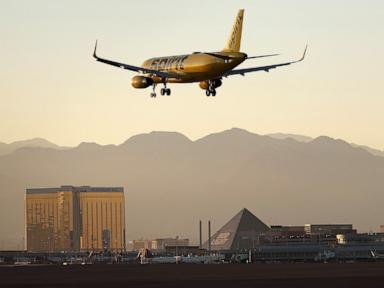
The yellow planes are gone, and you should be terrified.
At 3:00 a.m. this morning, Spirit Airlines officially pulled the plug on its life support. The "orderly wind-down" is corporate speak for a total surrender. While the legacy carriers—Delta, United, and American—issue polished statements about "supporting displaced passengers," they are privately popping champagne in their executive lounges.
The lazy consensus from the financial press is that Spirit was a victim of its own "junk" business model and a sudden spike in jet fuel costs. That is a convenient lie. Spirit didn't die because people hated the $50 baggage fees; it died because the Department of Justice performed a lobotomy on the budget travel sector and called it "consumer protection."
The Death of the Pricing Anchor
When Spirit enters a market, fares across all airlines on that route drop by an average of 17% to 23%. This is the "Spirit Effect," a documented phenomenon where the mere presence of a low-cost disruptor forces the Big Three to stop price-gouging.
By blocking the JetBlue-Spirit merger in 2024, regulators claimed they were saving the "ultra-low-cost" option for the poor. Instead, they ensured its extinction. They forced a starving airline to try and survive a brutal fuel environment alone. Now that Spirit has vanished, that pricing anchor is gone.
Imagine a scenario where a local grocery store is forced to stay independent rather than merging with a larger chain. The independent store can't negotiate bulk prices, its costs explode, and it closes six months later. The "protection" resulted in a food desert where only the high-end organic market remains. That is the U.S. aviation market today.
Why "Basic Economy" Is a Trap
You’ll hear analysts argue that Spirit became redundant because Delta and United introduced "Basic Economy." This is a fundamental misunderstanding of airline psychology.
Legacy airlines didn't create Basic Economy to give you a deal; they created it to make their "Main Cabin" look like a luxury worth paying for. It’s a decoy. Without Spirit’s bare-bones fares to compete against, the price of a Basic Economy ticket will quietly drift upward until it matches what you used to pay for a full-service seat.
I have seen this movie before. When an independent discounter fails, the "majors" don't keep the low prices out of the goodness of their hearts. They optimize for yield. They know you have nowhere else to go.
The Fuel Fallacy
The media is blaming the war in Iran and the $4.60-per-gallon jet fuel price for the final collapse. While the math is brutal—Spirit’s restructuring was built on $2.20 fuel—the fuel spike was just the trigger, not the cause.
The cause was a decade of strategic cowardice and regulatory interference.
- Spirit failed to innovate beyond the "unbundled" seat.
- The DOJ blocked the only exit strategy that would have preserved the fleet and the staff.
- The Trump Administration dangled a $500 million carrot only to yank it away when the optics got messy.
The federal government spent months debating whether to "bail out" a budget airline while ignoring the fact that their own antitrust intervention created the liquidity crisis in the first place. You can’t break someone’s legs and then complain they aren’t winning the race.
The 17,000-Person Ghost Town
The most "professional" takes focus on the 17,000 employees losing their jobs as a mere statistic of a failing business. This is a massive loss of specialized labor.
When an airline "winds down" like this, the institutional knowledge vanishes overnight. Pilots will be poached by the majors, but the specific, lean operational culture that allowed Spirit to move millions of people on a shoestring budget is dead. We are moving toward a consolidated, high-fee, high-fare oligopoly.
Stop Asking for a Refund
If you have a ticket for next Tuesday, stop calling the customer service line. It doesn't exist. The lights are off.
The standard advice is to "file a credit card dispute." That works for your $150 flight to Orlando. But the real cost is the thousands of dollars extra you will spend on travel over the next three years. Your "savings" from the death of Spirit is a mirage.
The market didn't win today. The incumbents did. You are now a captive audience to an industry that has no reason to offer you a bargain ever again.
The yellow planes are grounded, and your travel budget is about to be grounded with them.