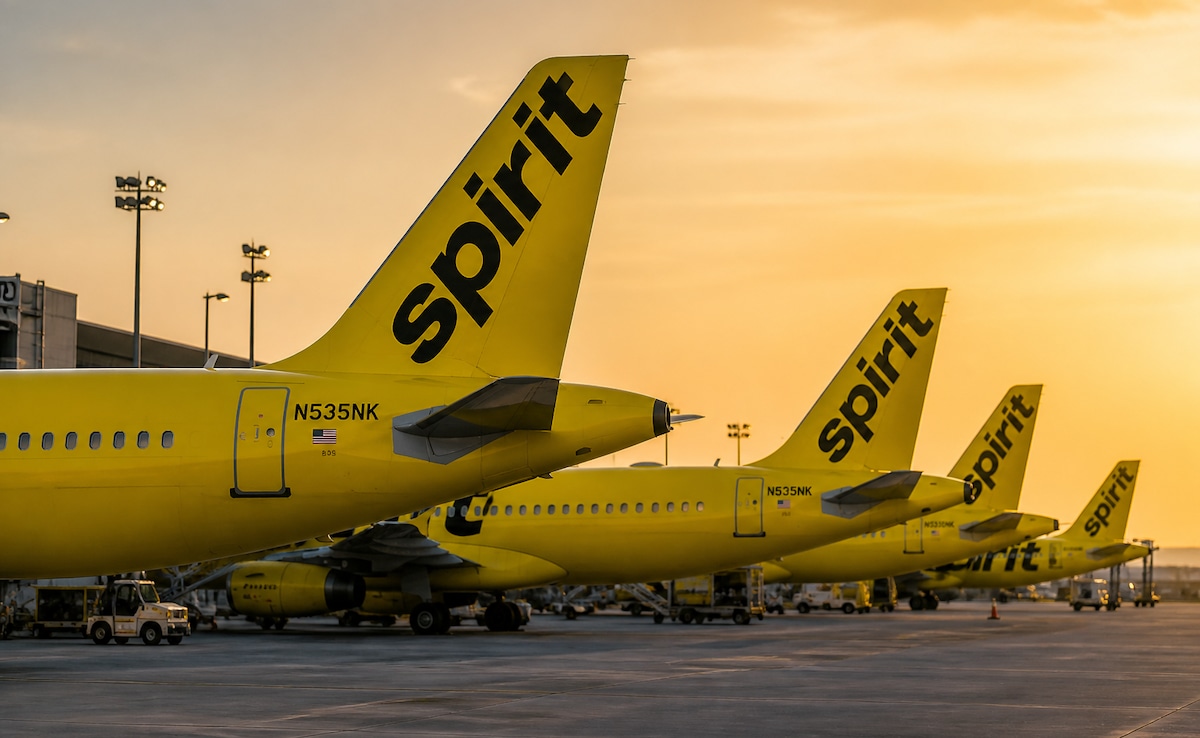
The headlines are mourning a corpse that was never actually alive. They tell you that Spirit Airlines is "winding down," that the era of the ultra-low-cost carrier (ULCC) is dead, and that travelers should prepare for a world of sky-high fares and monopoly dominance. They are wrong. They are looking at a balance sheet and calling it a tragedy; I’m looking at a bloated, inefficient business model finally being forced to evolve or evaporate.
Spirit didn't die because people stopped wanting cheap flights. It died because it forgot that "cheap" is a strategy, not a personality trait. For years, Spirit operated on a predatory math equation: lure the price-sensitive with a low base fare, then squeeze them for oxygen, legroom, and basic human dignity. It worked until it didn’t. When the "legacy" carriers like Delta and United figured out how to segment their cabins with Basic Economy, Spirit’s only competitive advantage—being the cheapest—vanished. Don't miss our recent post on this related article.
This isn't a funeral. It’s a long-overdue market correction.
The Myth of the "Value" Traveler
Industry analysts love to weep for the "budget-conscious traveler." They claim that without Spirit, the working class will be grounded. This is a fundamental misunderstanding of how airline economics work. Spirit didn't create demand; it captured the bottom-of-the-barrel scraps that other airlines didn't want. To read more about the history of this, Travel + Leisure offers an excellent summary.
In reality, the ULCC model in America became a race to the bottom that sacrificed operational reliability for a $39 ticket. I have sat in boardrooms where the metric for success wasn't "did we get the passenger there on time?" but "how much did we extract in bag fees?" When your entire business hinges on the hope that your customers don't read the fine print, you aren't a service provider. You’re a casino.
The bankruptcy of Spirit Airlines is the market finally saying that the "unbundled" model, in its most extreme and toxic form, is a failure. It turns out that people actually value not being treated like self-loading cargo.
Why the JetBlue Merger Blockade Was a Gift
The DOJ blocked JetBlue’s $3.8 billion acquisition of Spirit under the guise of protecting competition. The "lazy consensus" says this killed Spirit. The truth is sharper: The merger would have just created a bigger, more confused version of a failing airline.
JetBlue is a "premium" low-cost carrier. Spirit is... well, Spirit. Trying to mash those two cultures together would have been like trying to weld a Ferrari bumper onto a rusted-out golf cart. By blocking the merger, the regulators inadvertently forced Spirit to face its own internal rot.
You cannot fix a fundamental structural deficit—too many planes, too much debt, and a toxic brand—by simply buying more scale. Scale only works if the underlying unit economics make sense. For Spirit, they haven't made sense since the Pratt & Whitney engine issues grounded a chunk of their fleet and fuel costs began their volatile dance.
The Fraud of "Low Cost"
Let’s talk about the math they don't want you to see. When you factor in the "Spirit Tax"—the time lost to delays, the $100 gate fee for a carry-on, and the physical toll of a seat that doesn't recline—Spirit was rarely the cheapest option. It was just the most dishonest one.
In a healthy market, competition drives innovation. In the US airline market, Spirit drove regression. They pushed the legacy carriers to strip away amenities from their own bottom-tier tickets just to compete. We ended up in a spiral where everyone's service got worse.
With Spirit out of the way, or at least forced into a radical restructuring that looks nothing like its current form, the "race to the bottom" loses its pacer. We are moving toward a "value-plus" era. Look at Southwest. They aren't the cheapest, but they are the most consistent. They don't charge for bags. They treat people like humans. And they actually make money.
The Operational Reality Check
Imagine a scenario where an airline actually prioritizes its fleet health over its marketing budget. Spirit’s reliance on a single-aisle Airbus fleet was supposed to be an efficiency play. Instead, it became a single point of failure. When the Neo engine issues hit, Spirit had no hedge.
Contrast this with the diversified strategies of the big three. They have the balance sheets to weather technical storms. Spirit was playing a high-stakes game of musical chairs with its debt, and when the music stopped, it was the only one without a seat.
People ask: "Who will fly the routes Spirit leaves behind?"
The answer: Everyone else, and they’ll do it better.
Airlines like Allegiant and Sun Country have already shown that you can be a budget carrier without being a punchline. They focus on underserved markets and niche routes rather than trying to go toe-to-toe with American Airlines at DFW. Spirit’s hubris was thinking it could be a national powerhouse while treating its customers like an inconvenience.
Stop Mourning the Yellow Plane
The collapse of a major airline is usually seen as a sign of economic distress. In this case, it’s a sign of economic maturity. The American traveler is finally signaling that they are willing to pay an extra $40 to ensure they actually arrive at their destination with their luggage and their sanity intact.
Spirit’s "wind-down" is a clearing of the brush. It makes room for new entrants who understand that in 2026, data and reliability are the new currencies of travel—not just a low price on a Google Flights search result.
If you want a $20 flight, stay home. If you want a functional aviation industry, celebrate the fact that the market is finally flushing the drains.
The era of the "gotcha" airline is over. Good riddance.