Every time NASA rolls out a shiny new space telescope, the media treats us to the same tired cinematic trailer. We get breathless voiceovers, swelling orchestral strings, and deep-field images of swirling nebulae that look suspiciously like desktop wallpapers. The lazy consensus is absolute. More mirrors mean more photon collection, which inevitably leads to cosmic enlightenment. We are told that peering deeper into the dark abyss brings us closer to understanding our place in the universe.
It is a comforting fairy tale. It is also a massive distraction from the diminishing returns of observational astronomy.
I have watched aerospace contractors and academic institutions milk public coffers for decades, wrapping vanity projects in the noble flag of pure science while fundamental terrestrial engineering problems starve for capital. We do not need another ten-billion-dollar beryllium mirror parked at a Lagrange point to tell us that galaxies are old and distant. We need to look at what those photons are actually costing us on Earth.
Let us dismantle the physics first. The marginal utility of aperture size follows a brutal logarithmic curve. Doubling the diameter of your primary mirror quadruples your cost while only offering incremental gains in angular resolution that are instantly bottlenecked by diffraction limits and integration times. We are pushing against hard thermodynamic and economic ceilings just to get a slightly sharper pixel of an exoplanet that we will never visit.
Meanwhile, people treat these orbital observatories like holy relics. Criticize a space telescope launch, and you are suddenly painted as an anti-science philistine who hates beauty and wonder. This is a false dichotomy. Pointing out that our current astronomical strategy suffers from severe bureaucratic bloat and misplaced priorities does not mean we should shut down physics. It means we should stop funding dead-end observational strategies that prioritize press releases over practical breakthroughs.
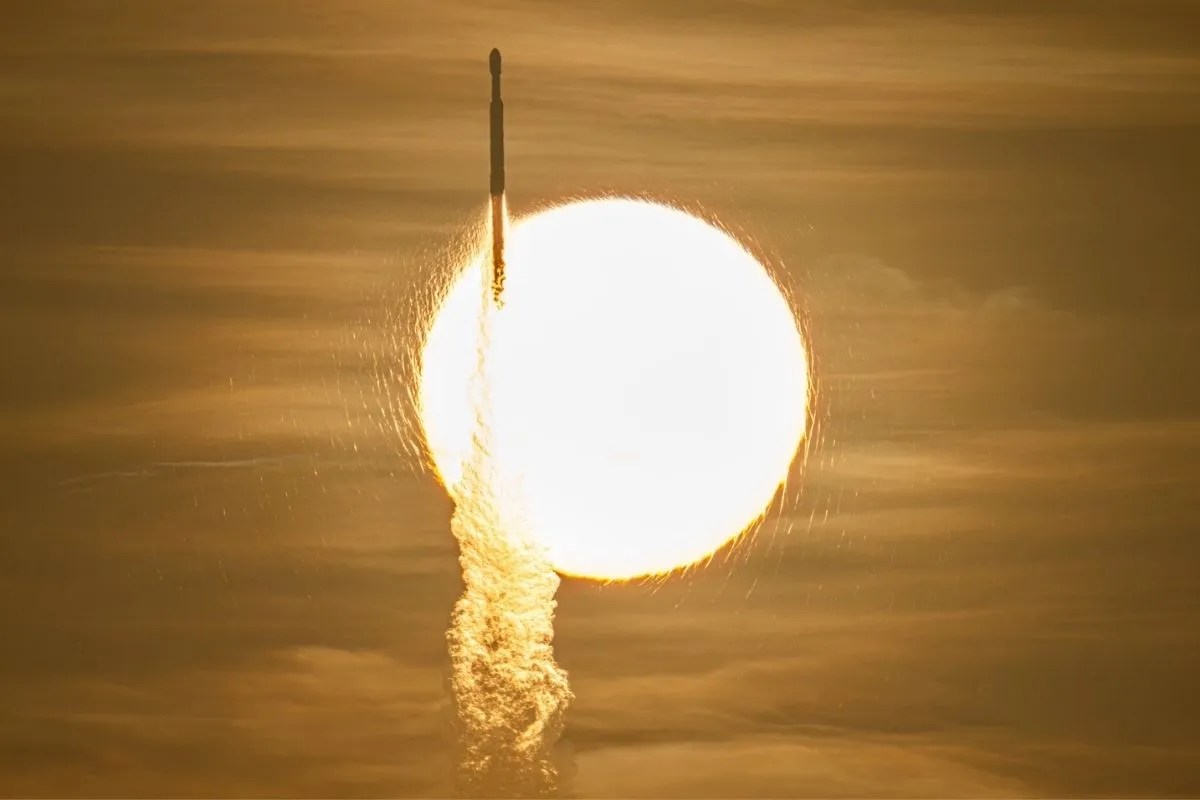
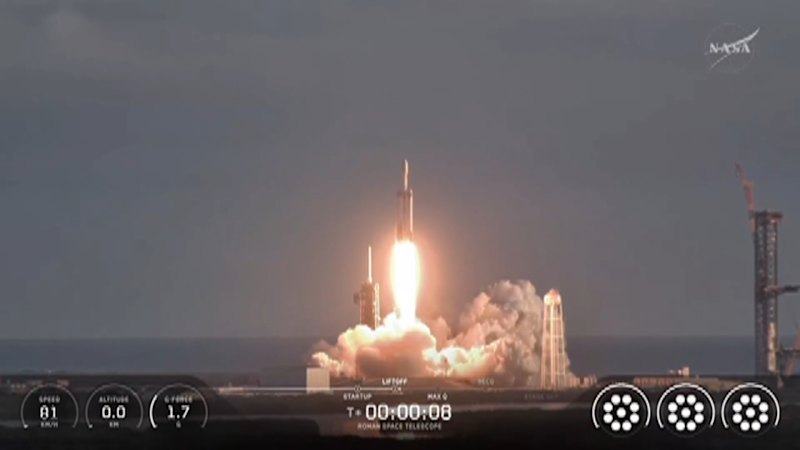
Ground-based interferometry combined with adaptive optics has already made massive strides that render monolithic space mirrors look like relics of nineteenth-century naval architecture. Laser guide stars, deformable mirrors, and ground arrays running real-time atmospheric corrections achieve resolution metrics that compete with orbiters at a fraction of the price tag. Yet, politicians prefer space telescopes because they make for better photo ops. A rocket launch looks great on evening television. A cluster of server racks processing phased-array radio or optical interferometry data in New Mexico does not.
Consider the opportunity cost. Every multi-billion-dollar flagship mission crowds out dozens of agile, high-risk planetary science programs, climate observation satellites, and fundamental materials research projects that could directly impact life below. We are obsessing over light that left its source thirteen billion years ago while ignoring the atmospheric chemistry of the planet we are currently rendering uninhabitable.
Let us address the most common defense of these missions. People argue that space telescopes drive technological spinoffs, pointing to consumer electronics and medical imaging sensors derived from aerospace research. This is the broken window fallacy dressed up in a lab coat. If you hand engineers ten billion dollars and tell them to solve a hard problem, they will invent things. They would invent things just as fast if that money were funneled directly into high-temperature superconductivity, grid-scale energy storage, or advanced desalinization. We do not need to orbit a golden honeycomb to invent better CMOS sensors.
Imagine a scenario where we diverted just half of our planetary observation budget toward closed-loop life support systems and ocean acidification mapping. We would have immediate, actionable data to prevent ecological collapse at home. Instead, we chase ancient photons because it feels safer to stare at the edge of the observable universe than to fix our own backyard.
The truth is that Big Astronomy has become an institutional religion. It relies on faith, spectacle, and emotional manipulation to secure funding without accountability for schedule overruns or budget explosions. When a commercial enterprise misses a launch window by five years and doubles its budget, heads roll. When a space telescope program does it, Congress just holds another hearing to praise the resilience of the science team.
Stop treating distant starlight as a substitute for actual progress. The universe is not going anywhere. It can wait while we learn how to manage our own planet and build more efficient, distributed ways of observing the cosmos without bankrupting taxpayers for a few pretty pictures.
Cancel the next flagship orbiter. Scale the arrays on the ground. Build smarter, not bigger.