The heat in the North Kivu province of the Democratic Republic of Congo does not just sit on your skin. It heavy-packs your lungs, thick with the scent of red clay and charcoal smoke. In the clinic outside Beni, the silence is what unnerves you. It is a fragile, defensive silence, broken only by the rhythmic, plastic rustle of protective suits and the occasional, sharp cry of a child from behind a plastic tarp.
We look at outbreaks through the lens of data. We talk about standard deviations, transmission vectors, and reproduction numbers. But when you are standing in the dust, the numbers dissolve. You are left with the reality of a mother named Alphonsine, a hypothetical archetype of a hundred real women I have watched through the thick fog of a protective visor. She is sitting on a wooden bench, clutching a colorful wrap that is entirely empty. Her youngest son died three hours ago. Her oldest daughter is shivering inside the isolation ward.
The World Health Organization recently issued a warning that felt like a cold dread dripping down the spine of the global health community. Ebola cases in the DRC are rising with a sharp, aggressive velocity. The word they use in Geneva is "scale." The word they use in the field is "evacuation."
This is not a slow burn. It is a flash flood.
The Physics of a Contagion
To understand why the WHO is terrified, you have to understand how Ebola moves. It is an opportunistic predator that relies entirely on human love and community. It spreads through contact with bodily fluids. In many traditional communities along the Congo River, when a person dies, their body is washed by their loved ones. Hands touch cold skin. Tears are wiped away.
In that final act of grief, the virus finds its next home.
The current outbreak is moving faster than previous iterations, and the reason points to a complex web of geography and human displacement. The eastern region of the DRC is a crowded corridor of trade, migration, and conflict. Militia groups control various pockets of the jungle. Millions of people are constantly on the move, fleeing violence or seeking work in informal gold mines.
When a virus hitches a ride on a motorcycle taxi, it bypasses the traditional barriers of distance. A person can infected in a remote village in the morning and be in a bustling market city of one million people by nightfall.
The math changes instantly.
Consider the curve. In typical outbreaks, epidemiological curves look like a hill—a gradual climb, a peak, and a descent as health workers isolate cases and trace contacts. Here, the graph looks like a sheer cliff face. The World Health Organization noted that the spike in confirmed cases over a two-week period surpassed the total numbers seen over previous months.
That is not just a statistical anomaly. It is a sign that the virus has broken containment lines.
The Sound of the Tarp
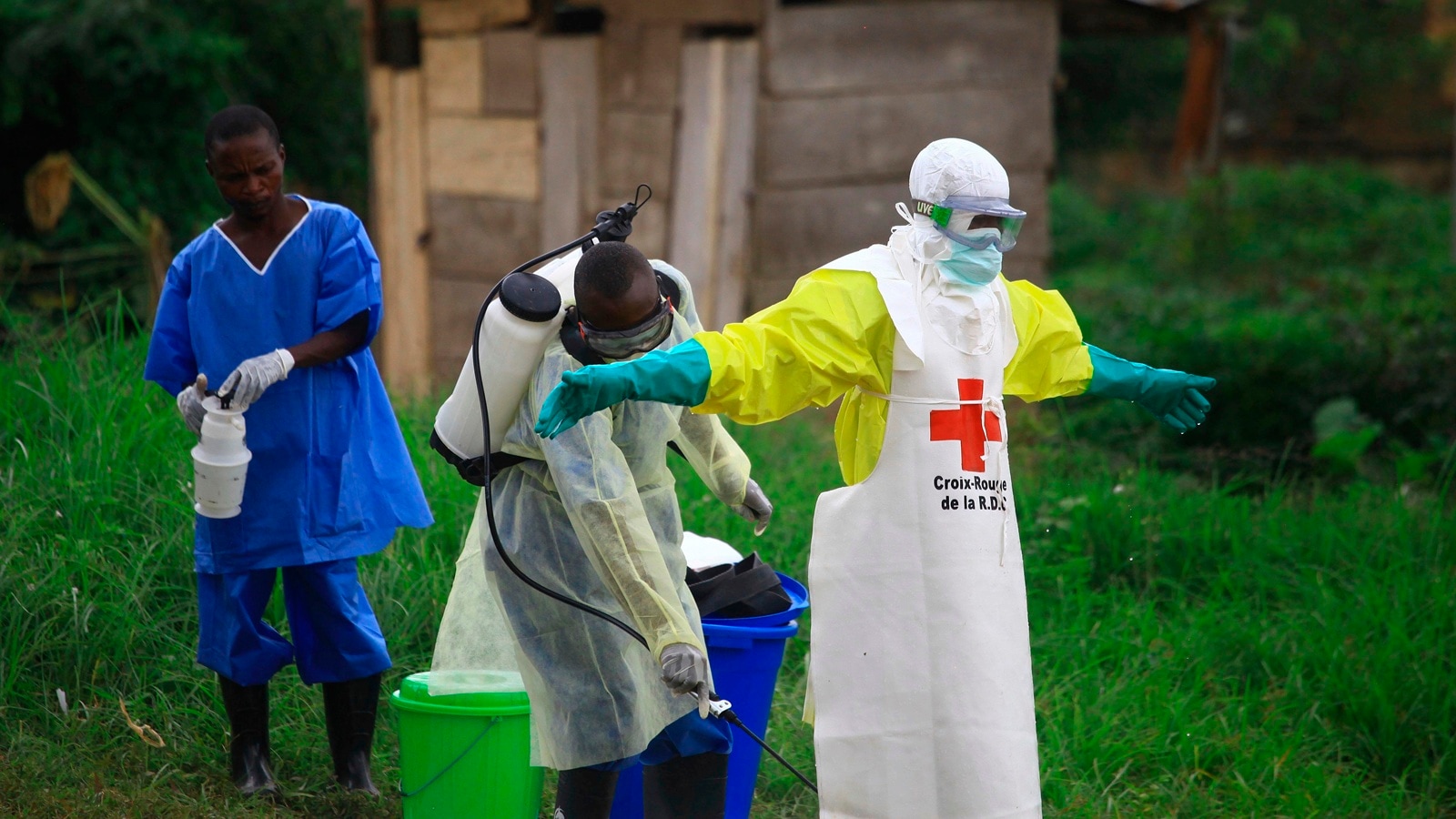
Inside the treatment centers, the environment is defined by sensory deprivation and hyper-vigilance. You wear three layers of gloves. The chlorine spray burns your throat even through a mask. Every movement must be calculated, slow, and deliberate. A single mistake—touching your exposed forehead with a contaminated glove—can be a death sentence.
The most difficult part is the barrier it creates between the sick and the healed.
Imagine being a five-year-old child, burning with a fever that feels like boiling water in your veins. Everyone who approaches you looks like an astronaut. They have no faces, only eyes peering through scratched plastic lenses. They speak a language you might not fully understand through the muffling of their respirators. You cannot see a smile. You cannot feel the bare skin of a hand comforting you.
We try to use intuitive analogies to explain the science to communities that mistrust foreign interventions. We tell them the virus is like an invisible fire that jumps from branch to branch. If you touch a burning branch, you catch fire too. But it is hard to believe in invisible fire when your immediate reality is political instability, poverty, and a deep-seated suspicion of the central government and international organizations.
For years, these communities have faced massacres and displacement without the world paying much attention. Then, an Ebola outbreak occurs, and suddenly millions of dollars in foreign aid arrive, accompanied by armed escorts and people in white suits.
The locals ask a logical question: Why do you care about us only when we are dying of something that might kill you?
That distrust is the true fuel of the epidemic. It causes families to hide their sick relatives in the jungle. It leads to secret burials at midnight. Every hidden case is a new ember blown into dry brush.
Tracking the Unseen
The mechanics of stopping an outbreak rely on a tedious, grueling process called contact tracing. It is detective work of the highest stakes. If an individual tests positive, health workers must identify every single person that individual has interacted with over the past twenty-one days—the maximum incubation period of the virus.
If a patient rode a crowded bus, you must find the bus driver and the passengers. If they attended a wedding, you must find the guests.
But the process breaks down when the ground beneath your feet is constantly shifting. In North Kivu, a contact tracer might list thirty names in a notebook, only to return the next morning and find the village deserted because a local rebel group launched a midnight raid. The contacts scatter into the forest, carrying the invisible incubation inside them.
The scale of the current outbreak means the tracing teams are overwhelmed. The World Health Organization’s alarm stems from this exact breakdown. When you can no longer trace the contacts, you are no longer fighting a contained fire. You are standing in a smoke-filled room, waiting for the walls to ignite.
The medical community does have weapons now that it lacked during the devastating West African outbreak a decade ago. There are highly effective vaccines. There are monoclonal antibody treatments that can save lives if administered early.
But a vaccine is useless if it stays in a specialized freezer in Goma because the roads to the epicenters are targeted by snipers. A therapeutic drug cannot save a patient who arrives at the clinic only when their organs are already failing.
The Weight of the Shift
The sun sets early near the equator, dropping like a stone behind the tree line. The temperature drops a fraction, but the humidity remains, locking the heat against the earth.
Outside the isolation zone, the local staff sits on plastic chairs, drinking sweet tea. They are the true heroes of this narrative—not the international experts who fly in for six-week rotations, but the Congolese nurses, burial technicians, and drivers who risk their lives every single shift for a fraction of the pay. They go home to their own neighborhoods knowing that their neighbors might shun them out of fear.
One nurse, a man named Jean-Paul, showed me the palms of his hands. They were raw and peeling, bleached white in patches from the constant application of high-concentration chlorine water. He spoke about his children, whom he hadn't hugged in two months. He sleeps in a separate shack at the edge of his property to protect them.
"They think we are bringing the sickness," he said, his voice flat, stripped of emotion by sheer exhaustion. "They see the trucks, they hear the sirens, and they think the white suits are the ones creating the disease."
The misunderstanding is tragic, but it is a rational response to an irrational situation. When your world is chaotic, you look for patterns to make sense of the horror.
The scale of an outbreak is not measured just by the final body count. It is measured by the destruction of social tissue. It is measured by the schools that close, the markets that go empty, and the deep, abiding fear that turns neighbors into suspects and mothers into vectors.
A young girl in a bright yellow dress stands just outside the perimeter fence of the Beni clinic. She is watching the sunset through the chain-link diamonds. She does not look at the treatment tents. She does not look at the workers spraying down the wheels of an ambulance with bleach. She looks up, past the smoke, toward the sky where the first stars are beginning to pierce the purple dusk.
The shadow of the virus is long, but it moves only as fast as human movement allows. The real battle is not happening in the blood under a microscope. It is happening in the space between people—in the restoration of trust, the courage of the cleaners, and the willingness to look through the plastic visor and see the human being on the other side.