Corporate philanthropy usually follows a predictable, boring script. A billionaire cuts a check, gets a tax write-off, and releases a sterile press statement written by a committee of public relations lawyers. What just happened with the SpaceX stock gift to Trump Accounts completely shatters that mold.
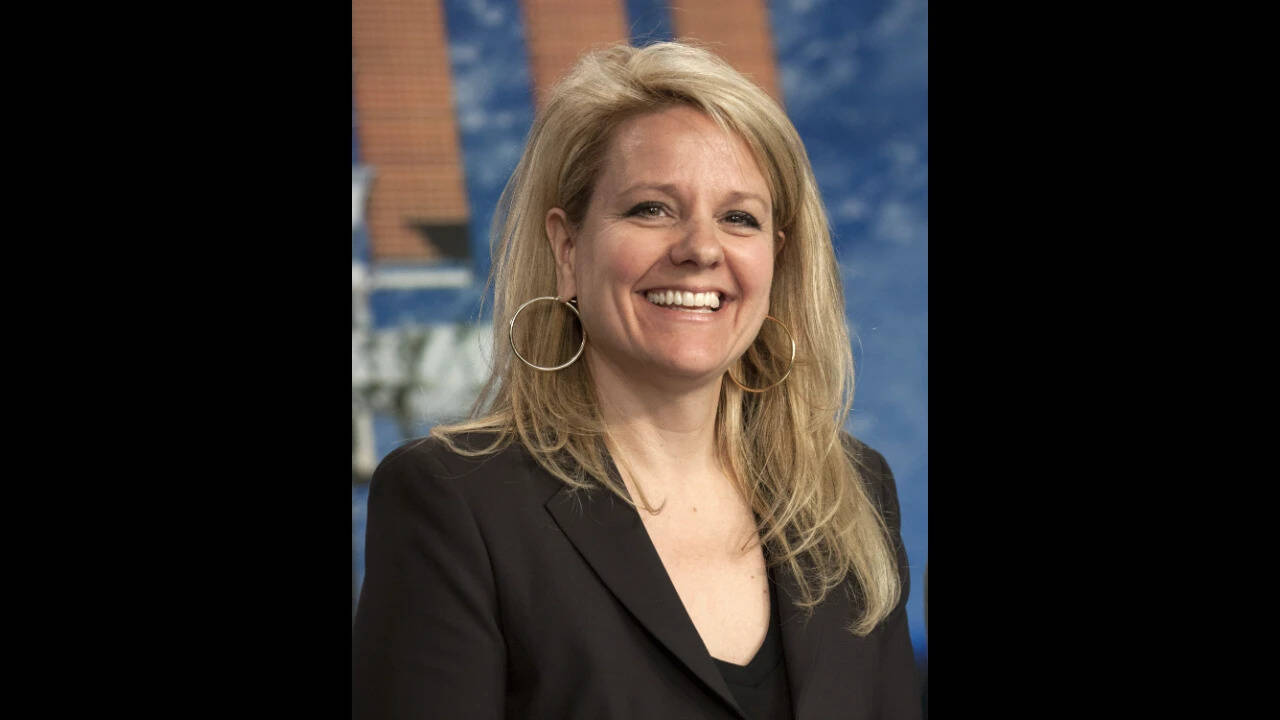
When Gwynne Shotwell, the president and long-term operating mastermind behind Elon Musk's aerospace empire, announced that she and her husband Robert Shotwell would transfer private equity directly into these new child savings accounts, she didn't just make a charitable gesture. She signaled a major realignment between America's most valuable tech entities and federal wealth-building initiatives. Read more on a connected topic: this related article.
Commentators quickly scrambled to do the math. Katie Miller put the value of the donation at a staggering $325 million based on recent post-initial public offering valuations. This isn't just pocket change. It represents a massive slice of personal equity from one of the most powerful executives in aerospace history, directed exactly where she believes it can do the most structural good.
The Reality Behind the SpaceX Stock Gift to Trump Accounts
Understanding this donation requires looking closely at how it targets real people. Shotwell didn't set up a general fund or pass the money to a traditional bureaucratic charity. The stock specifically targets the accounts of more than two million American children. Additional analysis by MarketWatch delves into related perspectives on the subject.
The criteria here are incredibly specific. Shotwell explicitly noted that the gift will head toward kids between the ages of 11 and 17 who live in lower-income household areas. There is an even tighter geographic focus on families living near SpaceX's central Texas operations. Think about the communities around Brownsville, Boca Chica, and McGregor. These are areas that have watched rockets fly into the sky for a decade while struggling with systemic financial stagnation on the ground.
Shotwell and her husband, a veteran engineer at NASA's Jet Propulsion Laboratory, are trying to connect those two worlds. They want kids who watch Starship launches from their backyards to have a literal, financial stake in the company building those vehicles. It's an attempt to tie local industrial success to personal economic mobility.
Breaking Down the Math and the Stock Structure
Many people wonder how a private citizen gives away stock in a newly public company to millions of children without collapsing the asset value. The logistics rely entirely on the newly functional architecture of Trump Accounts.
The federal program went live on July 4, 2026. The Treasury Department reports that families have already opened over six million accounts for children under 18. The foundational structure works like this. The government seeds accounts for newborns with a $1,000 pilot contribution. Parents can manage the investments, but the assets belong strictly to the child and remain locked in low-fee equity index funds until they hit adulthood.
Shotwell's $325 million contribution injects actual equity into a targeted subset of these accounts. Instead of buying generic market trackers, these specific lower-income teenagers will hold fractional shares tied to the destiny of the world's leading aerospace firm.
The Trump and Musk Dynamic Takes Center Stage
You can't talk about this donation without addressing the obvious political theater happening in the background. Just days before Shotwell made her post, President Donald Trump sat down for an interview with CNBC and openly mused about whether Elon Musk would donate his own massive wealth to the program.
Trump bluntly stated that he expects Musk to chip in a portion of his aerospace empire. Musk recently breached the historic milestone of becoming the world's first trillionaire following the record-breaking SpaceX public market debut. Trump's public pressure was classic leverage. He essentially dared the world's richest man to match the administration's new signature domestic initiative.
Musk himself has remained completely silent on the matter. He hasn't posted a single confirmation or denial. Instead, his second-in-command stepped up to make the first move.
A Corporate Relationship Rebuilt on Practical Ground
This corporate dance comes after a highly publicized stretch of friction between Musk and the White House. The tension peaked when the administration moved to dismantle federal electric vehicle subsidies and production mandates. That policy shift hit Tesla hard and visibly frustrated Musk, who had been a high-profile backer during the campaign cycle.
Trump brushed off that past corporate dispute during his CNBC appearance. He noted that Musk backed him completely and still likes him, even if he wasn't thrilled about losing the EV tax incentives.
Shotwell's independent move shows how SpaceX operates on a different track than Tesla. SpaceX is fundamentally a government partner. The company secured massive transactions worth billions with federal agencies in the past year alone, including a recent multi-billion dollar contract from the U.S. Space Force to build secure communication satellites. Maintaining a flawless, collaborative relationship with the administration isn't just good optics for SpaceX. It's a foundational requirement for their core business model.
The Corporate Heavyweights Backing the Trend
Shotwell is far from the only executive putting serious capital behind this national wealth experiment. A growing list of tech founders and corporate institutions are writing massive checks to support the Treasury's new platform.
Michael and Susan Dell led the private sector charge with an enormous $6.25 billion pledge. Micron followed up with a $250 million commitment of its own. Major financial and industrial employers like BlackRock, Intel, and JPMorgan Chase announced they will directly match the government's $1,000 deposit for the children of their own employees.
The sheer volume of private capital pouring into these childhood accounts indicates a shift in corporate social responsibility. Companies are choosing to seed early-stage retail wealth rather than funding traditional corporate foundations.
Who Qualifies for the Broader Federal Program
If you are trying to understand how your own family fits into this new framework, the rules set by the Treasury Department are clear and rigid.
- The child must be a verified U.S. citizen.
- A valid Social Security number is required for registration.
- No child can hold more than one account under any circumstance.
- The one-time federal pilot contribution applies strictly to children born between January 1, 2025, and December 31, 2028.
For families with older children, like the 11-to-17 demographic targeted by Shotwell, the accounts don't receive the automated federal seed money. They rely instead on private deposits, state-level matching programs, or targeted corporate equity donations exactly like this SpaceX initiative.
How to Check Your Status and Prepare Your Kids
If you live in central Texas or meet the lower-income household criteria, you need to act to ensure your children can actually receive these types of corporate equity distributions. Private donors can't transfer stock into an account that doesn't exist yet.
First, log on to the official Treasury portal and verify that your child's Trump Account is fully registered and active. Second, review the asset allocation settings. The platform allows parents to oversee the investment mix until the child reaches 18, meaning you need to ensure the account is set up to accept individual corporate equity transfers alongside standard index funds.
Finally, use this as a direct tool for financial literacy. Showing a teenager that they own an actual fraction of a rocket company that operates down the road is worth more than any textbook lesson on compound interest. Check your portal status today, confirm your registration, and make sure your family is positioned to capture these shifting corporate investments.