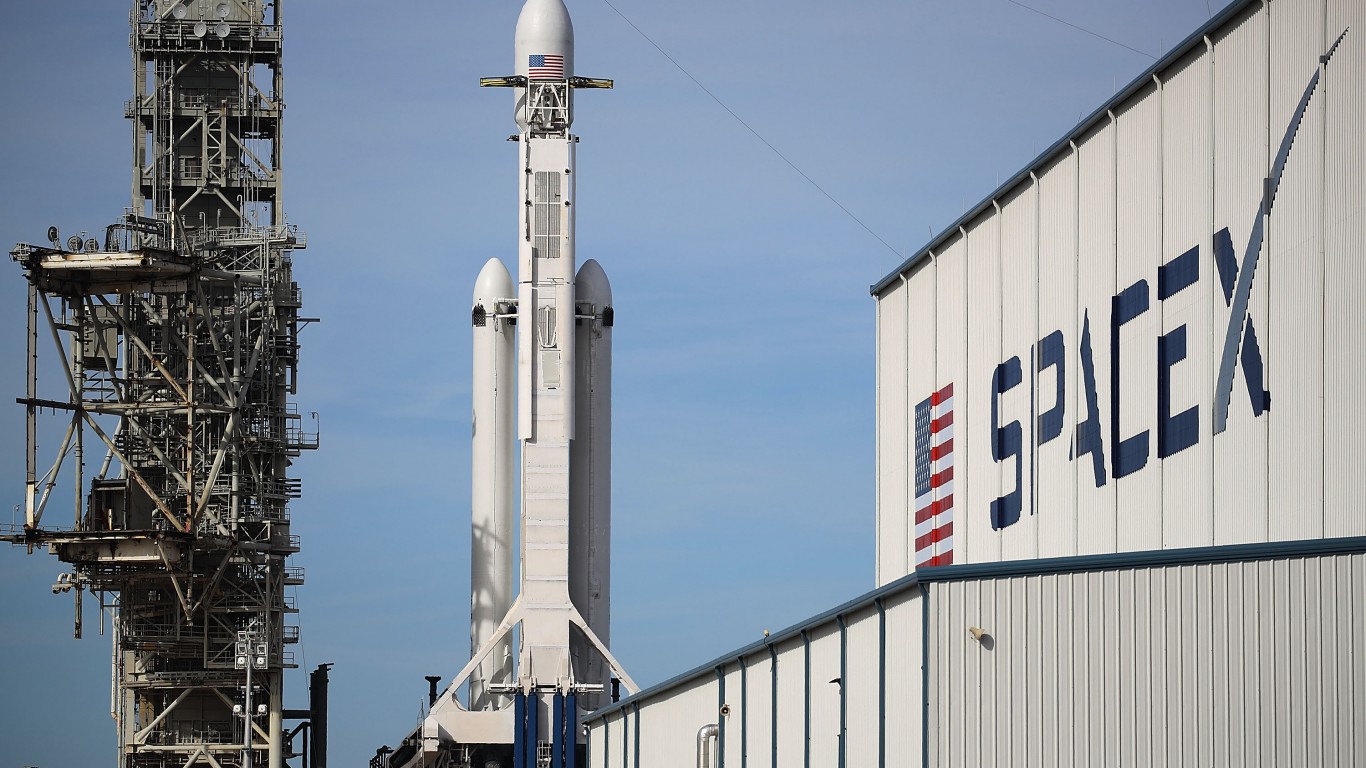
Achieving orbital insertion with a fully integrated heavy-lift vehicle like SpaceX's Starship represents a structural inflection point in aerospace engineering. For decades, the economics of orbital mechanics have been dictated by expendable hardware architectures, where the vast majority of capital expenditure is incinerated in the upper atmosphere or abandoned in marine trenches. The successful orbital flight test of the Starship and Super Heavy booster system shifts the unit economics of payload delivery from a marginal-cost-plus model to a high-fixed-cost, low-variable-cost infrastructure paradigm. To understand the gravity of this milestone, one must deconstruct the underlying engineering constraints, the scaling limitations of staging ratios, and the economic feedback loops enabled by rapid, full reusability.
The Scaling Problem of Orbital Launch Architecture
Traditional launch vehicle design is bounded by the tyranny of the Tsiolkovsky rocket equation. As payload mass increases, the required propellant mass grows exponentially due to the mass fraction penalty of carrying fuel to burn later in the flight profile. Prior to the advent of reusable first and second stages, scaling up payload capacity meant building larger, more expensive expendable systems, driving launch costs per kilogram into figures that restricted commercial access primarily to high-margin government satellites or heavily subsidized institutional payloads.
SpaceX bypassed this physical ceiling through two interdependent design choices: massive scale via stainless steel construction and complete reusability of both primary propulsion stages. Stainless steel offers distinct metallurgical advantages over traditional carbon composites or aluminum-lithium alloys at cryogenic temperatures. It exhibits superior ductility, a higher melting point, and a predictable thermal degradation profile, which simplifies the manufacturing process and drastically reduces raw material costs.
However, scaling up a vehicle to over 120 meters in height introduces severe structural dynamics challenges. The bending moments experienced during Max-Q (maximum dynamic pressure) require precise thrust vector control and active load relief algorithms. The Super Heavy booster, powered by 33 Raptor engines utilizing sub-cooled liquid methane and liquid oxygen, creates an unprecedented acoustic and thermal environment on the launch mount. The successful integration of these systems during orbital attempts demonstrated that cluster engine management—maintaining stability, gimballing, and ignition reliability across dozens of simultaneous combustion chambers—is a solvable control problem rather than a physical barrier.
The Staging Dynamic and Thermal Protection Systems
The mechanics of reaching orbit require an orbital velocity of approximately 7.8 kilometers per second. Achieving this without staging is physically impractical for chemical rockets, which is why multi-stage architectures remain mandatory. Starship utilizes a hot-staging ring, allowing the second stage engines to ignite while the first stage is still decelerating and separating. This technique preserves momentum and maximizes Delta-V efficiency, avoiding the gravity losses associated with traditional coast-and-flip maneuvers.
Once the second stage achieves orbital trajectory, the primary engineering challenge transitions from propulsion to thermal protection during atmospheric reentry. Traditional thermal protection systems, such as the reinforced carbon-carbon or silica tile arrays used on the Space Shuttle, proved brittle, expensive to inspect, and labor-intensive to maintain between flights. Starship approaches this via hexagonal ceramic tiles mounted to the windward side of the stainless-steel hull, backed by a mechanical gap and underlying insulation blanket.
The mechanics of reentry for a vehicle of this scale involve hypersonic gliding at high angles of attack. Instead of diving steeply into the denser layers of the atmosphere, the ship uses its broad aerodynamic profile to bleed off velocity in the upper stratosphere, utilizing atmospheric drag rather than pure retro-propulsion to shed kinetic energy. The structural resilience of the steel airframe acts as a secondary heat sink, mitigating localized tile failures that would otherwise cause catastrophic burn-through on a composite or aluminum structure.
The Economic Mechanics of Full Reusability
The transition from partial reusability (exemplified by the Falcon 9 first stage) to full system reusability alters the cost function of orbital flight. In a partial reusability model, the second stage and fairing represent significant recurring manufacturing costs. By making the upper stage entirely reusable—and eventually targeting rapid turnaround times measured in hours rather than months—the marginal cost of launching a kilogram to low Earth orbit approaches the marginal cost of the propellant consumed.
This cost compression triggers a second-order economic effect: demand elasticity. When launch costs drop by an order of magnitude, use cases that were previously economically unviable become baseline requirements. These include large-scale orbital manufacturing, heavy-satellite constellations for global low-latency computation, deep-space staging infrastructure for lunar and Martian transit, and point-to-point suborbital terrestrial transport.
The primary bottleneck shifts from manufacturing capacity to operational cadence. Reusability without rapid turnaround achieves little more than amortizing hardware costs over a longer depreciation schedule. True operational leverage requires inspecting, fueling, and recertifying the vehicle with minimal human intervention. The hot-staging ring design, quick-disconnect umbilicals, and automated catch mechanisms via the launch tower arms (colloquially known as "chopsticks") represent the physical manifestation of this operational velocity strategy.
Structural Bottlenecks and Operational Risks
Despite the successful orbital flight test, several systemic risks and physical limitations remain unresolved at scale.
First, the propellant transfer mechanism required for lunar and interplanetary missions—orbit-to-orbit ship-to-ship refueling—remains unproven at operational scale. Liquid methane and liquid oxygen are cryogenic fluids subject to boil-off, sloshing dynamics, and thermodynamic equilibrium challenges in microgravity. Without reliable orbital propellant depots, Starship's payload capacity for beyond-Earth-orbit missions is severely truncated.
Second, the environmental and regulatory constraints of operating a 5,000-metric-ton thrust vehicle will face increasing friction. Acoustic mitigation, overpressure wave management, and marine exclusion zones during launch and catch operations impose geographical limits on launch site selection.
Third, the fatigue life of the Raptor engines under repeated high-stress thermal cycles needs to be proven across hundreds of reuses. While static fire testing provides component-level data, the integrated thermo-mechanical stresses of launch, supersonic reentry, and hot-recession landing present a complex metallurgy challenge that can only be resolved through empirical attrition and iterative hardware redesign.
Strategic Outlook
The validation of Starship's orbital architecture marks the end of the development phase and the beginning of the industrialization phase for heavy-lift reusability. Competitors relying on expendable architectures or partial-reusability models face an insurmountable structural cost disadvantage. The decisive variable over the next decade will not be whether heavy-lift orbital insertion is technically feasible—that has been established—but rather how rapidly operational turnaround times can be compressed to saturate orbital slots and deploy deep-space logistics networks at scale.