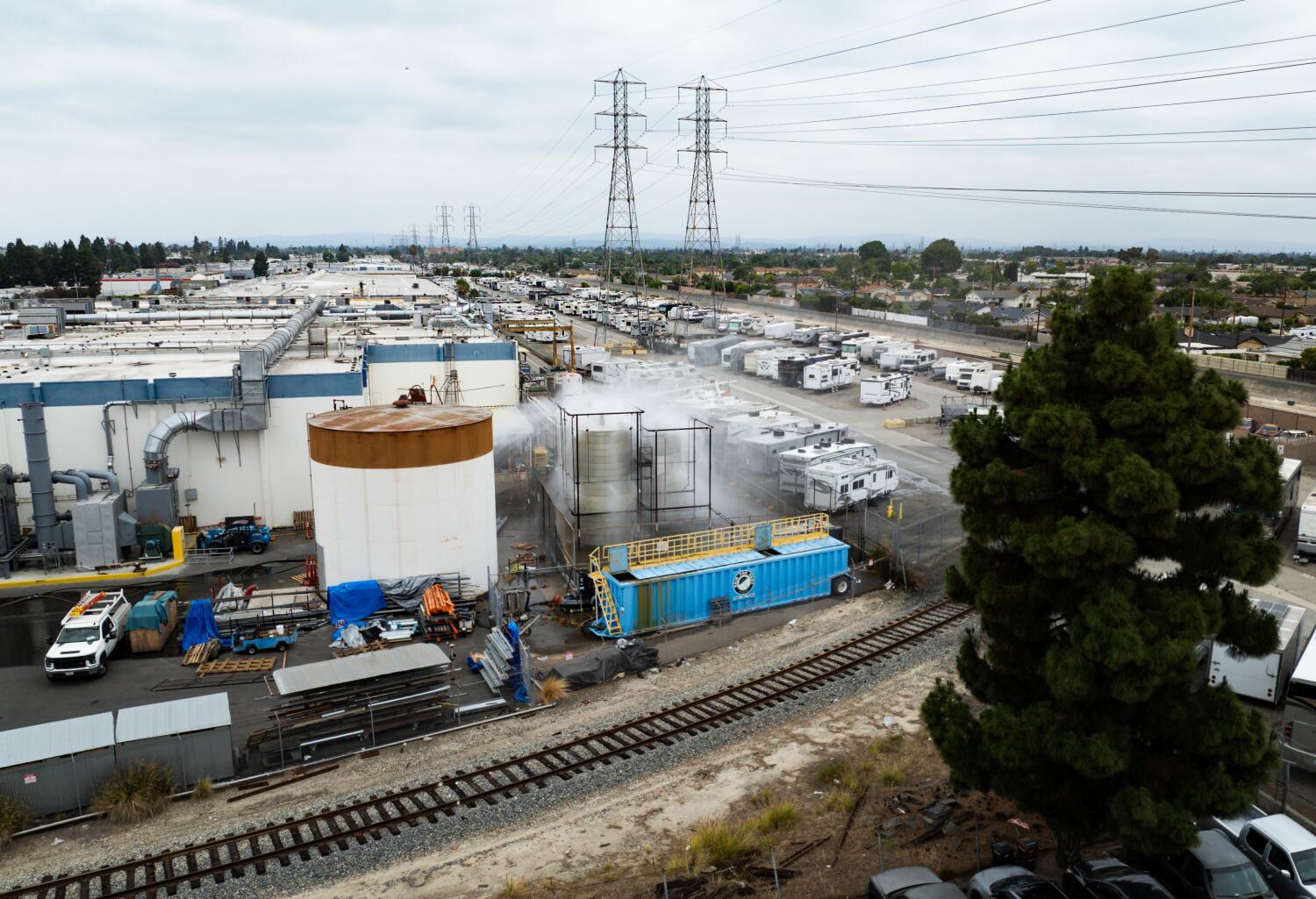
We almost watched a piece of North Orange County go up in smoke over Memorial Day weekend, and honestly, nobody should be surprised.
When a 35,000-gallon chemical storage tank at the GKN Aerospace facility in Garden Grove began overheating on May 21, 2026, it didn't just trigger the chaotic evacuation of 50,000 residents across six cities. It exposed a brutal reality that Southern California has ignored for decades. We live in a region where heavy industrial manufacturing sits right next door to densely packed suburban neighborhoods, schools, and strip malls.
The immediate emergency ended on May 26 when the final evacuation orders were lifted, but the underlying threat isn't gone. It's just waiting for the next valve to break.
The Illusion of Suburban Safety
If you drive down Western Avenue in Garden Grove, you don't feel like you're navigating a high-risk industrial zone. You see residential streets, local businesses, and schools. This area, alongside neighboring Westminster, forms the heart of Little Saigon, a vibrant community of families, restaurants, and hair salons. Disneyland is literally less than a mile away.
Yet tucked right into this suburban landscape is a facility that manufactures cockpit windows and canopies for military and commercial aircraft. To make those high-tech transparent plastics, you need massive quantities of methyl methacrylate (MMA).
MMA is a highly volatile, flammable monomer. It requires constant, active refrigeration to keep it stable. When the cooling system failed and a critical valve malfunctioned inside the GKN facility, the tank temperature began to climb. What followed was a terrifying chemical reaction known as exothermic self-polymerization.
Think of it as a runaway train. As MMA heats up, it transforms from a liquid into a gas, which builds immense pressure. That heat accelerates the reaction, creating even more heat and pressure.
Orange County Fire Authority officials found themselves staring down a nightmare scenario. They had two choices: watch the tank structurally fail and dump thousands of gallons of toxic liquid into the neighborhood, or witness a Boiling Liquid Expanding Vapor Explosion (BLEVE). A BLEVE is the technical term for a catastrophic blast that flings lethal projectiles and a toxic chemical plume across a wide area.
A History of Cutting Corners
First responders didn't pull off a miracle by fixing the tank. A crack formed naturally in the overheated container over the weekend. That accidental fracture relieved the built-up pressure and stopped a catastrophic blast from happening.
We got lucky. Pure and simple.
But if you look at the track record, this crisis was completely predictable. GKN Aerospace has been collecting safety and environmental citations at this exact Garden Grove plant for years.
- 2018: The California Department of Industrial Relations penalized the company because it failed to inspect active machinery and didn't properly cool or cover its chemical tanks. OSHA slapped them with ten violations during the same period.
- 2019: The company faced further state fines for unpaid civil penalties linked to those failed safety checks.
- 2021: GKN shelled out nearly $1 million to the South Coast Air Quality Management District for severe environmental violations. They operated equipment without permits, used toxic chemicals illegally, and failed to keep emission records for volatile organic compounds.
- 2025: Just last year, regulators hit them with fresh notices to comply regarding poor operating records and equipment registration.
When a company repeatedly ignores tank cooling regulations and gets fined for sloppy maintenance, an overheating storage tank isn't an act of God. It's the logical result of systemic corporate negligence.
The True Cost of Local Industrial Hazards
When the evacuation orders hit, residents didn't have time to process the regulatory failures of the aerospace industry. They just had to run.
Families slept on the floors of hair salons or packed into local high school gyms turned into makeshift shelters. Thousands of people had their holiday weekend completely upended, leaving behind pets and belongings to escape a potential blast zone. Even though air monitoring devices didn't catch a major toxic vapor leak this time, the short-term exposure to MMA vapors can cause severe respiratory distress, burning eyes, skin irritation, and neurological issues like intense headaches or dizziness.
Class-action lawsuits are already piling up against GKN Aerospace. Residents are furious, and they have every right to be. Beyond the immediate chaos, these events leave behind a permanent economic and environmental stigma that depresses local property values.
The real problem is that the Garden Grove plant isn't an anomaly. Southern California is dotted with thousands of small, specialized manufacturing hubs that utilize hazardous chemicals. They are embedded in neighborhoods in Anaheim, Santa Ana, Torrance, and El Monte. We walk past them every day without realizing that a single mechanical failure could force us out of our homes.
How to Protect Your Household Right Now
You can't personally audit the safety valves at the local aerospace plant, but you don't have to sit around acting like a helpless bystander either. If you live anywhere near an industrial corridor in Southern California, you need to take basic steps to protect your family before the next emergency sirens start blaring.
Look Up Your Local Facility Risks
Stop guessing what's inside the warehouse down the street. Under the Emergency Planning and Community Right-to-Know Act (EPCRA), you have a right to know what hazardous substances are stored in your area. Use the EPA's Toxics Release Inventory (TRI) program database to search your zip code. Find out exactly who is operating near your home and what chemicals they keep on site.
Set Up Redundant Emergency Alerts
During the Garden Grove incident, communication was fragmented across multiple cities. Don't rely on a single source for safety information. Download the AlertOC app if you live in Orange County, or register for your specific county's mass notification system. Pair this with a dedicated NOAA weather radio that features Public Alert certification to catch immediate hazmat warnings even if local cell towers get overloaded.
Keep a Evacuation Go-Bag Staged
When 50,000 people are trying to leave an area simultaneously, every minute matters. Keep a duffel bag in your closet packed with a three-day supply of essential medications, copies of critical legal documents, portable power banks, and specialized safety gear like N95 or P100 respirators. They won't stop all chemical vapors, but they can protect your lungs from heavy particulate matter and smoke during a chaotic exit.
Know Your Local Shelter Hubs
Don't wait for a crisis to figure out where you will go. Identify the major regional high schools and community centers in your area that routinely serve as evacuation centers. Keep a list of pet-friendly hotels outside your immediate area, because as thousands of local evacuees discovered, community shelters fill up fast, and local accommodations disappear within hours of an evacuation order.