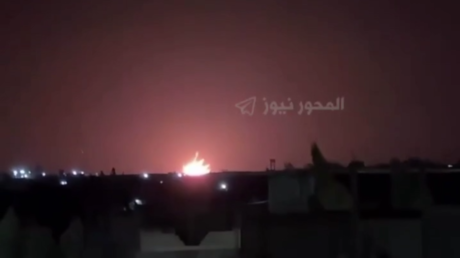
The air inside a military bunker during a rocket attack does not smell like heroism. It smells like burning insulation, old sweat, and the sharp, metallic tang of pressurized dust shaken loose from concrete walls that were never meant to hold back the sky.
When the early warning systems hummed to life across the remote outpost, nobody was thinking about geopolitics. Nobody was contemplating the strategic balance of the Middle East or the calculated posturing between Washington and Tehran. A young sergeant named Miller—a composite of the men and women who stood watch that night—was thinking about a lukewarm bottle of water and a half-finished letter home. Then the world tore open.
We read the headlines as mathematical equations. A brief news flash notes that ballistic missiles struck a base. A spokesperson confirms that service members are undergoing evaluation for traumatic brain injuries. We nod, process the data, and scroll down. But statistics are clean. War is remarkably dirty.
To understand what happened during the recent strikes on US installations, you have to leave the briefings behind. You have to stand in the pitch-black dark, feeling the ground ripple like water under your boots.
The Shockwave You Cannot See
The human brain is an exquisite, fragile thing. It floats in a protective bath of cerebrospinal fluid, shielded by a thick skull, perfectly optimized for life on earth. It is not optimized for the physics of an explosion.
When a missile hits, the destruction happens in distinct stages. First comes the flash and the immediate fragmentation—the shrapnel that tears through steel and flesh. That is the injury everyone understands. It bleeds. It leaves a visible mark. But the second wave is invisible, and in many ways, far more insidious.
It is the blast overpressure wave.
$$P(t) = P_s + P_so \left(1 - \frac{t}{t_d}\right) e^{-\alpha \frac{t}{t_d}}$$
This mathematical reality represents a wall of compressed air moving faster than the speed of sound. When this invisible wall strikes a human body, it passes right through. It compresses the chest, sending a violent pressure pulse through the blood vessels straight to the brain. Simultaneously, the wave hits the skull, causing the brain to slam forward and backward against its bony housing.
Think of a plastic container filled with water and a single egg yolk. Shake it hard enough, and the shell remains perfectly intact, but the yolk inside breaks.
In the immediate aftermath of the Iranian strikes, dozens of soldiers reported feeling fine. They pulled themselves out of the rubble. They checked their limbs. No blood. No missing fingers. They helped their buddies clear debris. They breathed sighs of relief, believing they had cheated death.
They were wrong. The damage had already been done, written in microscopic tears across their neural pathways.
The Slow Creep of the Aftershock
Hours later, the adrenaline fades. The silence returns to the desert, heavy and ominous. That is when the true toll of the strike begins to manifest.
It starts with a subtle distortion of the senses. A soldier tries to read a standard manual, but the words blur and dance across the page. Another walks toward the mess hall and suddenly loses their balance, veering to the left as if the earth had tilted five degrees. Then comes the headache. It is not a normal tension ache from a long day; it is a rhythmic, pounding pressure behind the eyes that feels like a physical weight.
Medical personnel call these symptoms mild traumatic brain injury, or mTBI. The word "mild" is a clinical deception. It only means the injury is not immediately fatal. It does not mean the impact on a human life is small.
Consider the reality of a modern military hospital unit in the wake of such an event. The rooms are dimly lit. Light hurts. Sound hurts. The scratch of a pen on a clipboard can sound like sandpaper grinding against the temple. Young men and women, highly trained and fiercely independent, sit in dark corners, struggling to remember the name of their childhood pets or the date of their mother’s birthday.
The uncertainty is the heaviest burden. If you lose a leg, you know what the journey looks like. You see the wound, you get the prosthetic, you learn to walk again. You look in the mirror and understand exactly what has changed. But when your brain is injured by a pressure wave, the wound is hidden. You look exactly the same to the outside world. Your friends expect you to be the person you were yesterday. Your commanders expect you to return to duty. Yet, inside your own mind, the lights are flickering.
The Geography of Risk
These strikes did not happen in a vacuum. They took place at isolated facilities where service members live in close quarters for months at a time. These bases are communities, built on routine and mutual reliance. When a missile tears through that routine, it shatters the illusion of safety that keeps the isolation bearable.
The public often views these events through the lens of international retaliation. We debate the efficacy of air defense systems and analyze the political motivations of the actors involved. We talk about deterrence. We talk about red lines.
But for the personnel on the ground, the reality is measured in meters and seconds. It is the distance between a bunk and the nearest hardened shelter. It is the three seconds between hearing the distinct screech of an incoming projectile and hitting the dirt.
The physical structures can be rebuilt. Concrete can be poured again. Tents can be replaced. The military machine is exceptionally good at logistics, and within days of an attack, a base can look almost identical to how it did before the sirens wailed. The invisible scars, however, travel home in the dress uniforms of the injured.
The Return Journey
Months after the smoke clears, the true cost of the Iranian strikes becomes apparent in living rooms across America.
A husband returns home, but he jumps when the toaster pops. A mother tries to play with her children, but the noise of their laughter triggers an intense, nauseating migraine that forces her into a dark bedroom. The memory lapses persist. The irritability grows. The person who left for the deployment is not entirely the person who returned.
This is the human element that gets lost in standard news reporting. We get caught up in the videos of explosions, the plumes of black smoke, and the statements from official podiums. We treat war like a spectator sport with a scoreboard determined by casualties and territory.
The real story is found in the quiet persistence of those working to put their minds back together. It is found in the clinics where specialists help soldiers retrain their eyes to track a moving target, or teach their brains to manage the sensory overload of a simple grocery store.
The strikes may last only a few minutes, but the impact ripples outward for decades, changing the trajectory of families, careers, and lives. The true measure of the event is not found in the crater left in the desert floor, but in the enduring resilience of those who must live with the echo of the blast for the rest of their days.


