The Desert Storage
Silence in an airport terminal has a specific weight.
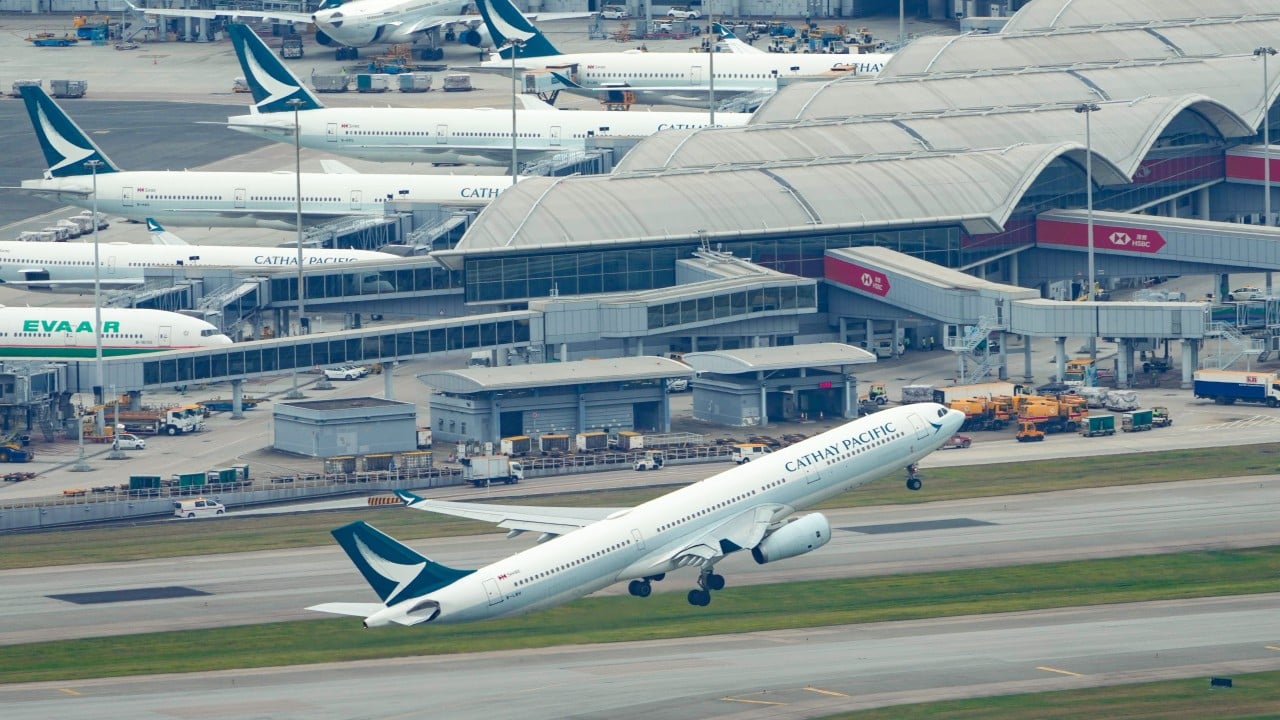
Anyone who walked through Hong Kong International Airport in the middle of 2021 remembers it. It was not the peaceful quiet of a library at dusk or the stillness of a cathedral. It was the eerie, hollow echo of a giant machine that had suddenly ground to a halt. Boarding gates stood like abandoned monuments. The vast glass arches, designed to catch the subtropical sunlight and frame hundreds of rising jets each day, reflected only empty tarmac.
Thousands of miles away, in the red desert outside Alice Springs, Australia, dozens of Cathay Pacific passenger jets sat parked in tight, disciplined rows. The dry desert air was good for them; it kept corrosion at bay. But an airplane in storage is a sad sight. Mechanics covered the engines with thick plastic shields, sealed the pitot tubes, and checked the tires month after month.
They were waiting. The airline was waiting. The entire city of Hong Kong was waiting.
When an international hub loses its wings, it does not just lose money. It loses its identity as the crossroads of Asia. For nearly three full years, the carrier burned through cash at a terrifying rate, slashing routes, grounding fleets, and watching its passenger numbers plummet to a tiny fraction of pre-pandemic levels. Survival was not guaranteed.
Then, slowly, the air began to move again.
The Mathematical Pivot
Numbers on a balance sheet rarely capture the sheer relief of a boardroom that has spent years staring into an abyss. Yet the figures that emerged from Cathay Pacific’s headquarters this season carry a unmistakable emotional resonance.
The airline projects a first-half profit reaching HK$6.5 billion.
That is not a minor adjustment. It represents a dramatic jump of roughly 75 percent compared to the same six-month period a year earlier. To understand how a legacy carrier turns an agonizing streak of losses into a multi-billion-dollar surge, you have to look past the spreadsheets and examine the mechanics of human movement.
Consider a hypothetical traveler named David. In early 2022, David sat in a quarantine hotel room in Kowloon, watching ships glide across Victoria Harbour through sealed glass. Flying to see family in Vancouver or attending a trade summit in Singapore was not merely expensive; it was a grueling test of endurance involving stacks of paperwork, uncertain flight cancellations, and weeks of isolation.
Fast forward to mid-2023 and into 2024. The restrictions vanished. The pent-up demand did not simply trickle back into the market. It flooded in.
David did not just book one flight. He booked three. Millions of travelers across East Asia did the exact same thing. Families reconnected after years of forced separation. Business executives threw out their videoconferencing schedules and demanded face-to-face meetings. Tourists rushed back to Asia’s world city.
Cathay Pacific found itself sitting on the receiving end of a global tidal wave of travel appetite.
The Cost of Bringing a Fleet Back to Life
Turning an airline back on is vastly more difficult than flipping a light switch.
When a jet sits in the Australian Outback for two years, getting it back into the sky requires hundreds of man-hours of precision engineering. Mechanics must remove protective wraps, flush fuel lines, test avionics, inspect control surfaces, and conduct test flights before a single passenger ever steps onto the carpet.
Then comes the human capital.
Flight crews had moved on to other careers. Experienced pilots had retired early or relocated across the globe. Cabin attendants had taken jobs in hospitality, retail, or tech. Rebuilding that crew roster meant launching massive recruitment drives, putting hundreds of crew members through rigorous simulator retraining, and competing fiercely for talent in a tight labor market.
Every extra flight scheduled required delicate balance. Add too many flights too quickly without enough staff, and delays cascade through the system, destroying customer trust. Add them too slowly, and rivals swallow your market share while yields drop.
Cathay chose a measured, calculated ramp-up. They focused on rebuilding key trunk routes to London, New York, Tokyo, and Sydney, maximizing the revenue earned on every single departure. Premium cabins filled up fast. Corporate travel budgets reopened, and leisure travelers who had saved money during lockdown proved surprisingly willing to pay higher fares for extra legroom and peace of mind.
Yields—the average fare paid per passenger per kilometer—remained exceptionally strong across the industry. When supply is tight and demand is sky-high, the economics turn dramatically in favor of the operator.
What Cargo Taught the Sky
While passenger cabins were empty during the darkest months, the bellies of Cathay’s aircraft were doing heroic heavy lifting.
Air cargo became the lifeline that kept the company breathing. When global supply chains choked and sea freight ports backed up with long queues of container ships, urgent goods shifted to the air. Everything from fresh produce and high-end consumer electronics to medical supplies moved through Cathay Cargo’s dedicated freighter fleet.
That cargo operation did something vital: it taught the airline’s management how to operate with absolute lean efficiency. Every pallet was optimized for weight and volume. Every flight path was polished to minimize fuel burn.
As passenger travel roared back, that cargo operational discipline remained embedded in the company's DNA. Today, even as air freight rates normalize from their historical peaks, the combination of a thriving passenger business and a reliable cargo baseline creates a far more balanced financial foundation.
The Ripple Effect Across Victoria Harbour
An airline forecast of HK$6.5 billion in half-year profit is not an isolated win for a single company. It is a bellwether for an entire regional economy.
When Cathay's twin-engine jets line up on the runways at Chek Lap Kok, they carry more than holidaymakers and executives. They carry the economic vitality of Hong Kong itself. Hotels fill up. Financial conferences sell out. Restaurants in Lan Kwai Fong stay busy past midnight. Freight forwarders clear warehouses, and local logistics firms hire drivers.
The city's status as a premier global aviation hub depends on the health of its home carrier. Without a strong network carrier feeding traffic from mainland China to North America, Europe, and Australasia, a hub risks becoming a regional backwater.
The 75 percent profit leap signals that the hub model is far from dead. Critics who predicted during the pandemic that business travel would permanently shrink by half have been proven largely wrong. Human beings are inherently social, tactile creatures. We want to look partners in the eye before signing a contract. We want to stand in unfamiliar streets and taste new food.
No video call can replace the feeling of a cabin crew member handing you a hot towel as the engines spool down in a new city.
The Unseen Turbulences Ahead
Celebration inside corporate headquarters must always be tempered by reality. Aviation remains one of the world's most unforgiving industries.
Fuel costs remain volatile, swinging on global geopolitical tension. Fleet delivery delays from major aircraft manufacturers continue to complicate long-term capacity plans for airlines worldwide. Competition from regional carriers in Singapore, Doha, and mainland China is relentless, with every rival competing for the exact same high-yielding transit passengers.
Operational costs have also risen. Staffing expenses, airport charges, and maintenance fees are significantly higher than they were five years ago. Maintaining a HK$6.5 billion profit pace requires flawless execution, high load factors, and continuous discipline.
Yet, comparing today's challenges to those of a few years ago puts everything in perspective. Dealing with high fuel prices and supply chain bottlenecks is a high-class problem compared to staring at empty terminals and grounded fleets.
The View From the Window Seat
Next time you step onto a widebody jet bound for East Asia, take a moment to look out the window as the aircraft climbs through the clouds.
Below, thousands of moving parts align to make that flight possible: air traffic controllers pacing radar screens, ground crews loading baggage in sweltering heat, caterers packing thousands of meals, and engineers certifying every bolt and hydraulic line.
Cathay Pacific’s surge back into deep profitability is more than just a triumphant headline on a financial wire. It is the story of an institution that took one of the hardest punches in corporate history, retreated to the desert to preserve its resources, and fought its way back into the light.
The silence in the terminals is finally gone. It has been replaced by the steady, comforting roar of jet engines taking to the skies once more.


