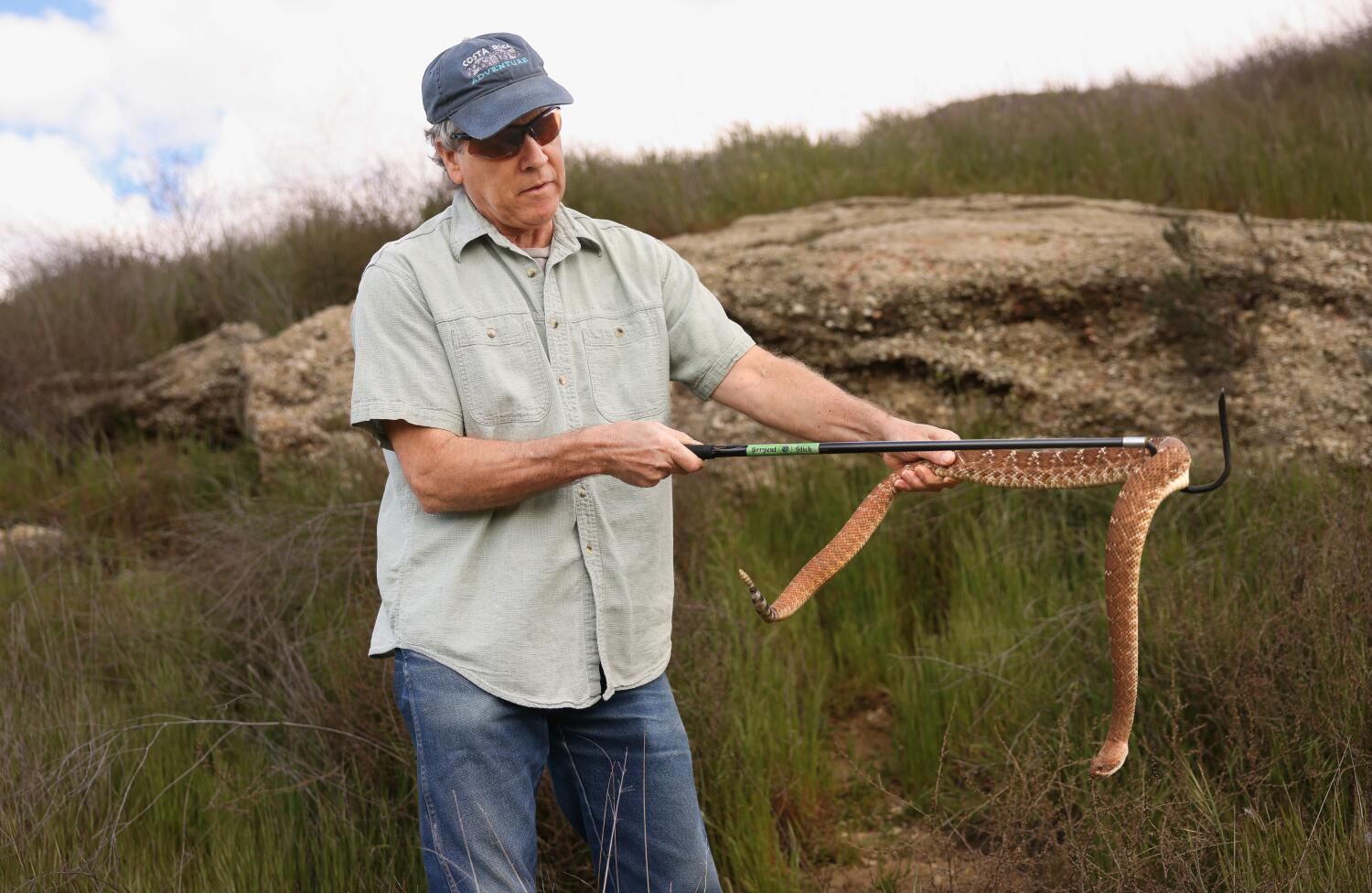
The golden hills of Ventura County have a specific rhythm in the late afternoon. It is the sound of scrub brush swaying in a coastal breeze and the occasional crunch of a hiking boot against parched earth. Most people walking the trails of Thousand Oaks or the Santa Monica Mountains are looking up at the hawks circling the thermal drafts. They aren’t looking at the dust.
But the dust is where the danger lives.
It happens in a fraction of a second. One moment, you are thinking about what to cook for dinner or the deadline waiting at the office. The next, a sharp, searing heat blooms in your ankle. It feels like a localized electric shock, or perhaps the puncture of two red-hot needles. By the time you look down, the culprit is often already recoiling, a coil of diamond-patterned scales disappearing into the brush.
The recent emergency in Ventura County, where a woman became the seventh victim of a rattlesnake strike this season, isn’t just a statistic for the local fire department. It is a reminder of a delicate, often violent friction between a growing suburban sprawl and a wild, ancient resident that has nowhere else to go.
The Biology of a Shadow
To understand why this is happening with increasing frequency, we have to look past the fear. A rattlesnake is not an aggressor. It is a master of economy. Producing venom is an expensive biological process; it requires significant metabolic energy to create the complex proteins that comprise its chemical cocktail. The snake would much rather use those drops on a squirrel than on a human being who is too large to eat.
In a hypothetical scenario, let’s call our hiker Sarah. Sarah is cautious. She stays on the path. But the path is not a neutral zone. When the heat of the day settles into the rocks, the Southern Pacific Rattlesnake—the most common species in this region—seeks the edges. It finds the "ecotone," the place where the tall grass meets the dirt path. It is waiting for a meal to walk by.
When Sarah’s foot lands inches from its head, the snake doesn’t think. It reacts. This is a neuro-muscular reflex that occurs faster than the human eye can track.
The Chemistry of the Burn
What follows is a terrifying race against the clock. Rattlesnake venom is a hemotoxic and sometimes neurotoxic soup. Once injected into the tissue, it begins to break down cellular walls. It disrupts blood clotting. It causes the limb to swell with a speed that defies logic, the skin turning a bruised, angry purple within minutes.
This seventh bite in the county highlights a growing trend that local hospitals are seeing more frequently. We are entering their living rooms. As we build further into the canyons and hike deeper into the hills, the encounters shift from rare to inevitable. The local emergency rooms in places like Simi Valley and Oxnard are becoming experts in CroFab, the antivenin used to neutralize the toxins.
But antivenin is not a magic wand. It is a bridge. A single vial can cost thousands of dollars, and a severe bite might require dozens of them. The financial cost of a bite is often as staggering as the physical trauma, leaving survivors with medical bills that can spiral into the six-figure range.
The Invisible Stakes of Coexistence
We often treat the wilderness as a playground, a curated space for our weekend recreation. We forget that the "wilderness" is actually a functioning workplace for the apex predators of the undergrowth.
Consider the landscape of the modern California drought. When the rains fail, rodents move closer to human habitations in search of water. The snakes follow the rodents. This brings the predators into backyards, under porch swings, and into the woodpiles of unsuspecting homeowners. The woman bitten on her ankle was simply the latest casualty in this migration.
The real problem lies in our perception of safety. We assume that a rattle will always precede a strike. This is a dangerous fallacy. Many bites occur when the snake is surprised or "cold," meaning its body temperature is too low for it to give a vigorous warning. Sometimes, they simply choose not to. They rely on their camouflage to remain invisible, and when that fails, they strike from a place of pure, cold-blooded survival.
The Protocol of Survival
If you find yourself in the position of that seventh victim, the world narrows down to a very small set of choices. The old myths—the ones about cutting the wound or trying to suck out the venom—are more than just useless; they are actively harmful. They introduce bacteria and concentrate the venom in a way that accelerates tissue death.
The only real treatment is a set of car keys and a cell phone.
Survival is about stillness. If the heart rate climbs, the venom travels faster. The goal is to keep the affected limb level with the heart—not above it, which can speed the toxins toward the core, and not below it, which can increase the localized pressure and swelling. It is a brutal, agonizing test of patience while waiting for an ambulance or a ride to the nearest trauma center.
A Resident of the High Grass
We are not going to win a war against the rattlesnake, nor should we want to. They are the silent regulators of our ecosystem, keeping the hantavirus-carrying rodent populations in check. Without them, the hills would be overrun.
But as the count of bites in Ventura County continues to climb, the message is clear: the margin for error is shrinking. We are sharing a narrowing strip of habitable land. Every step off a marked trail, every hand placed blindly into a rock crevice, and every evening stroll without a flashlight is a roll of the biological dice.
The woman who felt that phantom heat on her ankle will likely recover, but her relationship with the hills will be forever altered. She will never again hear the wind in the dry mustard stalks without wondering if there is a secondary rhythm hidden underneath.
The hills are not empty. They are occupied by a neighbor that doesn't want to meet us, but won't hesitate to defend the six inches of dirt it calls home. Respect is not just an abstract concept out here; it is the difference between a sunset hike and a life-altering emergency.
When you walk into the golden light of the canyon, remember that you are a guest. Look down. Watch the edges. Listen for the sound that isn't the wind. There is a weight in the grass, a coiled tension that has existed since long before the first road was paved through the pass. It is still there, waiting for the next footfall.