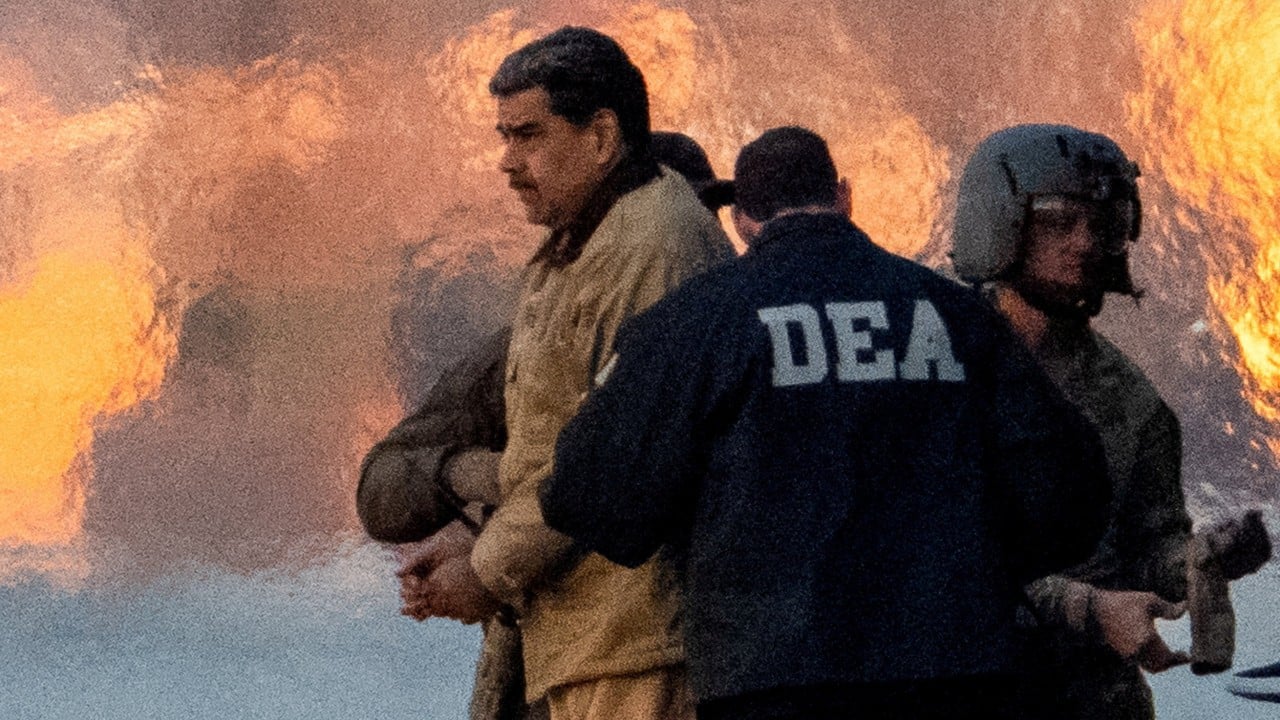
A United States Army analyst thought he found the ultimate loophole in the intersection of geopolitics and gambling. By allegedly using classified access to monitor the movement of high-value targets, the soldier placed a massive bet on the capture of Venezuelan leader Nicolás Maduro. He didn't just win; he triggered a federal investigation that exposes the terrifying vulnerability of modern prediction markets to state-sponsored insider trading.
The case involves a specialist who reportedly funneled non-public intelligence into a US$400,000 windfall on a decentralized betting platform. While the public saw a high-stakes gamble on a South American dictator, the Department of Justice sees a profound breach of national security protocols and a new frontier for financial crime. This isn't just about one soldier's greed. It is about how the digital age has turned classified secrets into tradeable assets for anyone with a login and a clearance.
The Mechanics of a Classified Wager
Prediction markets operate on a simple premise: the collective wisdom of the crowd is more accurate than any single expert. Users buy "shares" in the outcome of future events, from election results to the timing of a central bank rate hike. On platforms like Polymarket or various offshore equivalents, the capture or removal of a foreign head of state is a common, if morbid, betting pool.
For an intelligence analyst, these markets represent a massive temptation. They have access to the Signal Intelligence (SIGINT) and Human Intelligence (HUMINT) that drives US foreign policy. If you know a special operations team is spooling up for a specific extraction, or if you see the real-time movement of a target via drone feeds, the "gamble" disappears. It becomes a sure thing.
In this specific instance, the soldier didn't just stumble upon the information. He allegedly used his position to track the status of the $15 million bounty placed on Maduro by the US State Department. By monitoring the specific internal markers that indicate an operation is imminent or a target's perimeter has been breached, he could buy "Yes" shares at a fraction of their eventual value.
Why the House Didn't Win
In a traditional casino, the house monitors for "advantage players." In the world of blockchain-based prediction markets, the oversight is often decentralized or nonexistent. This creates a vacuum where asymmetric information—the bread and butter of the intelligence community—can be liquidated for cash.
The problem for the soldier was the trail. Blockchain ledgers are permanent. When a single account suddenly drops six figures on a niche geopolitical outcome just hours before a major shift in that narrative, it sets off every alarm in the Treasury Department’s arsenal. The transparency of the medium, which many traders think provides anonymity, actually provided the rope.
Chasing the Maduro Bounty
The hunt for Nicolás Maduro has been a cornerstone of US-Venezuela policy for years, but the financialization of that hunt is a recent development. The US government maintains a "Rewards for Justice" program, offering millions for information leading to the arrest of Maduro and his inner circle on drug trafficking charges.
This bounty creates a "real-world" price floor for information. However, the prediction market creates a "derivative" of that bounty. The soldier wasn't trying to collect the $15 million from the State Department—that would require public identification and a level of proof he couldn't provide without burning his career instantly. Instead, he sought to skim off the top of the betting markets, where he could remain a faceless "whale" in a sea of speculators.
The Failure of Internal Audits
The military intelligence complex is designed to prevent secrets from reaching foreign adversaries. It is poorly equipped to prevent secrets from reaching a brokerage account. Every day, thousands of low-to-mid-level analysts handle data that could move markets.
- Geospatial Intelligence: Knowing a refinery is about to be struck before the missiles launch.
- Logistics Tracking: Seeing grain shipments diverted before the global price spikes.
- Targeting Folders: Monitoring the precise location of individuals under US sanctions.
The current audit logs are looking for "leaks"—the transfer of files to unauthorized persons. They are not looking for a soldier who reads a report, remembers a name, and then opens a betting app on his personal phone during his lunch break.
The Shadow Market for State Secrets
This case is a flare in the night for the intelligence community. It proves that the greatest threat to operational security might not be a foreign spy, but a bored analyst with a gambling debt or an appetite for easy money.
We are seeing the birth of a grey market for actionable intel. If a soldier can make $400,000 on a Maduro bet, what is the value of knowing the Federal Reserve's private internal sentiment? What is the value of knowing a specific Chinese tech firm is about to be hit with a surprise ban?
The barrier to entry for this kind of corruption is lower than traditional espionage. You don't have to meet a handler in a dark park or pass a thumb drive to a Russian agent. You just have to be right on a public forum. The "payout" is handled by a smart contract, often in stablecoins that can be laundered through mixers before hitting a bank account.
A Conflict of Interest Without Precedent
The Department of Defense has long struggled with the private financial interests of its top brass. We have seen generals retire and immediately join the boards of defense contractors. This, however, is a grassroots version of that same rot.
If the people tasked with executing US foreign policy have a financial stake in the outcome of that policy, the integrity of the mission evaporates. Does an analyst prioritize a report that could save lives, or does he prioritize the report that confirms his latest "all-in" bet on a crypto platform?
The legal framework is currently playing catch-up. Insider trading laws are largely built around corporate equities and commodities regulated by the SEC and CFTC. Applying these laws to a decentralized bet on the capture of a foreign leader requires a level of legal gymnastics that federal prosecutors are only now beginning to perform.
Tactical Oversight and the New Insider
The military's "Need to Know" principle is failing. In a world where information is the most liquid currency, the definition of a "sensitive asset" must expand to include anything that can be wagered upon.
The Pentagon's Counterintelligence and Readiness Support Office is reportedly looking into how prediction market activity can be monitored across the force. But the task is monumental. You cannot ban every soldier from every corner of the internet. You cannot stop the human brain from connecting a classified briefing to a financial opportunity.
The Risk of False Signals
There is a darker possibility that investigators must consider. If soldiers are betting on outcomes, they have an incentive to manipulate the data to ensure those outcomes happen.
Imagine an analyst who has bet heavily that a certain regional conflict will escalate by a specific date. They might be tempted to "massage" the intelligence reports to make escalation seem more likely, perhaps influencing commanders to take a more aggressive stance. This creates a feedback loop where the bet drives the policy, rather than the policy driving the bet. This isn't just a financial crime; it is a fundamental compromise of national security strategy.
The Regulatory Blind Spot
Prediction markets argue they provide a public service by aggregating data. They claim that even "insider" information helps the market reach a "true" price more quickly. While this might be true for the price of corn, it is a catastrophic philosophy for the conduct of war and diplomacy.
The platforms themselves often hide behind their decentralized nature. "We don't control the users," they say. "The code is the law." This defense is crumbling as the FBI and DOJ move to treat these platforms as what they are: unregulated shadow exchanges.
If the US government cannot control its own employees, it will eventually move to shutter the markets themselves. We are approaching a tipping point where the "fun" of geopolitical betting meets the hard reality of federal prison sentences.
The soldier in the Maduro case likely thought he was the smartest person in the room. He realized that a secret is only a secret until someone pays for it. He forgot that when you play in a market that never sleeps, the trail you leave behind is permanent, searchable, and eventually, a roadmap for your own indictment.
The immediate move for the Department of Defense is clear: include prediction market disclosures in every security clearance renewal. If you are betting on the outcomes you are paid to influence, you aren't an analyst anymore. You are a liability.