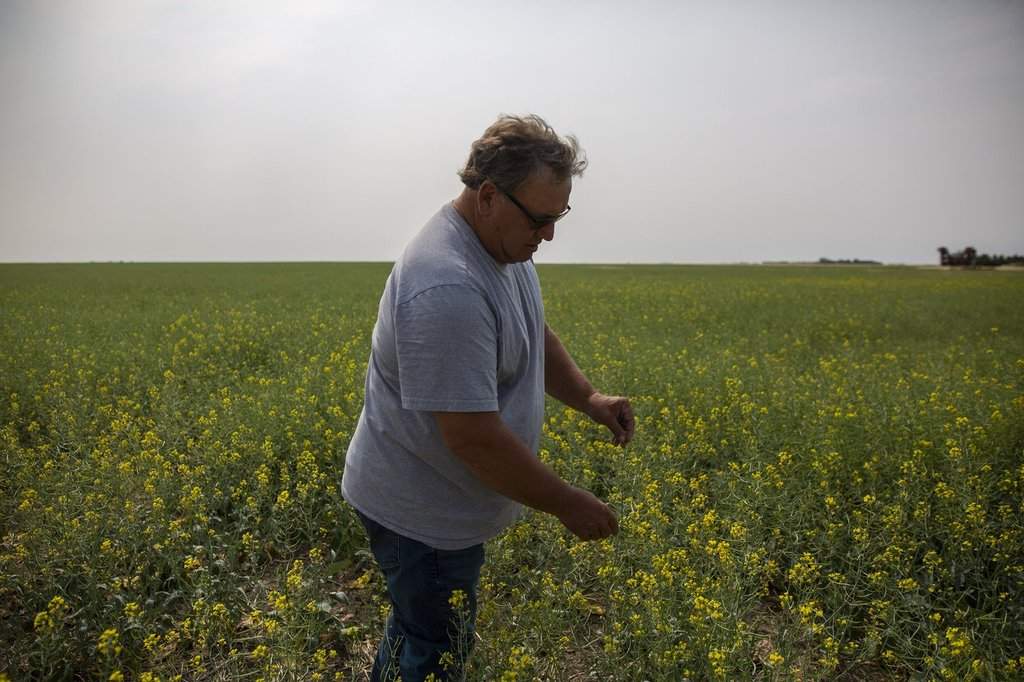
The earth remembers hands that do not rush. Outside Gray, Saskatchewan, forty kilometers south of the asphalt sprawl of Regina, the topsoil stretches like a dark, stubborn ocean under an indifferent sky. For over forty years, Todd Lewis watched that sky. He walked those fields as the fourth generation of his family to turn the furrow, learning early that the land does not care about political cycles, press releases, or the frantic pace of modern life. It cares about moisture, timing, and endurance.
When Todd Lewis died at the age of sixty-five, the news hit the red chamber in Ottawa and the gravel roads of the rural municipality of Lajord with the quiet, devastating thud of a heavy gate closing in an empty yard.
Most obituaries treat a life like a ledger. They tally titles, appointment dates, and committee memberships, reducing decades of sweat and sacrifice to a neat chronological row. They note that he was appointed to the Senate of Canada in February of 2025, that he served as president of the Agricultural Producers Association of Saskatchewan, and that he held leadership roles within the Canadian Federation of Agriculture. They mention his twenty-plus years on municipal council, his time on the local school board, his shifts as a volunteer firefighter, and his stewardship of the community rink.
These are facts. But they miss the texture of the life behind them.
Imagine standing on a combine in late August. The dust from the canola harvest coats your throat, the engine roars a steady, bone-shaking bass note, and the horizon is a three-hundred-and-sixty-degree reminder of your own smallness. Now imagine stepping off that machine, peeling off the dust-caked gloves, sliding into a suit that never quite felt comfortable on shoulders built for hauling seed-drills, and catching a red-eye flight to Ottawa to argue trade barriers and soil conservation before people who think milk comes from a carton and food comes from a grocery aisle.
That was Todd Lewis’s reality.
He was never a creature of political salons. He was a man who understood that policy is not an abstract intellectual exercise; it is the difference between a family farm surviving a hailstorm or going under the auctioneer's hammer. When he spoke, whether across a battered wooden table in a municipal hall or under the ornate gilded ceilings of Parliament, he carried the smell of diesel and dry earth with him. He did not speak in the slippery syntax of career bureaucrats. He spoke because he had too much skin in the game not to.
Consider what happens when a community loses a man who fixes the boards at the local hockey rink and argues for national agricultural safety nets in the exact same week. The fabric frays. Rural Canada is a place of vast spaces and razor-thin margins. Towns like Gray rely on a dying currency: ordinary people doing extraordinary amounts of unpaid, unglamorous work to keep the lights on. A volunteer firefighter. A school trustee. A municipal councillor who spends a Tuesday night mediating a bitter dispute over a drainage ditch between neighbors who have known each other for fifty years.
Todd Lewis spent his entire life paying that civic rent.
When he arrived in the Senate, he brought a perspective that Ottawa desperately needed, yet rarely knew how to ask for. Urban centers dominate the political imagination. They set the cultural weather, dictate the media trends, and consume the lion's share of legislative attention. But the groceries on the shelf, the fuel in the tank, and the economic foundation of the country still rest on the backs of people who have to check the weather app before they plan their Tuesday.
Prime Minister Mark Carney noted upon his passing that Lewis understood farming was never just a livelihood. It was a covenant. A generational trust passed down from grandfather to father, from father to daughter and son, with the unspoken rule that you leave the dirt a little healthier than you found it.
That conviction is rare in public life. It requires a long-term vision that rejects the frantic, quarterly-report mentality of modern institutions. Farmers live on a timeline measured in decades, not election cycles. A bad year hurts; a bad decade breaks you. Todd Lewis survived the dry years, the market crashes, the policy shifts, and the endless bureaucratic friction because he possessed an innate, immovable resilience.
When the Senate announced his passing, tributes poured in from across the political spectrum. Premiers, MPs, and senators used words like steadfast, champion, and trusted voice. But back home in Saskatchewan, where the combines are parked and the dust has settled on the steering wheels, the grief is quieter. It is measured in empty seats at community meetings and the sudden, heavy silence of a voice that won't be calling in with advice on the next harvest.
The fields near Gray will green again next spring. The canola will bloom in its violent, beautiful yellow, swaying under the vast prairie sky, indifferent to the absences we carry. But the soil remembers the weight of those who walked it with respect.
The Senate benches in Ottawa are colder today. And a long way from the capital, a pair of work gloves sits on a workbench, empty, waiting for hands that are not coming back.