The sudden, violent loss of a child triggers a systemic shock that transcends individual mourning, activating a predictable sequence of communal synchronization. While media coverage often focuses on the emotional narrative of the tragedy, the mobilization of vigils across a continent represents a complex socio-biological mechanism. This process functions to re-establish communal safety benchmarks, distribute the psychological burden of a high-stress event, and signal a collective rejection of the breach in the social contract. To understand the vigils occurring for the five-year-old victim in Australia, one must analyze the structural components of mass grief: the activation of the hyper-local safety instinct, the digital-to-physical conversion of sentiment, and the function of ritual as a stabilizing force in the wake of an outlier event.
The Mechanism of Communal Synchronization
Public mourning on a national scale is not a random occurrence of empathy but a structured response to a "violation of the predictable." In sociological terms, the murder of a child represents the ultimate failure of the protective structures inherent in any civilized society. The subsequent vigils serve as a manual recalibration of these structures.
The synchronization of these events across geographically disparate locations—Sydney, Melbourne, Brisbane—relies on three primary drivers:
- Threat Assessment and Normalization: When a violent act occurs, the immediate psychological response of the population is an elevated perception of risk. Vigils act as a physical gathering point where individuals can observe others' reactions, thereby normalizing their own distress and verifying that the threat was an anomaly rather than a new systemic trend.
- The Redistribution of Moral Weight: A tragedy of this magnitude places an unsustainable emotional load on the immediate family and the local community. The broader national response functions as a distributive network, where the "weight" of the grief is partitioned across thousands of participants, preventing a localized psychological collapse.
- The Re-establishment of the Social Contract: By physically gathering, participants are engaging in a silent vote of confidence in the laws and norms that were violated. The ritual is an assertive act of reclaiming public space that has been "tainted" by the crime.
The Digital-to-Physical Conversion Pipeline
The scale of modern Australian vigils is a direct result of the efficiency with which digital sentiment is converted into physical presence. This is a multi-stage process that filters passive observers into active participants.
Initially, information dissemination creates a shared knowledge base. This is followed by a "sentimental saturation" phase, where the volume of digital discourse reaches a threshold that compels physical action. The transition from a social media post to a candle-lit gathering is governed by the proximity of the event to the user's personal identity markers—in this case, the universal vulnerability of childhood.
This conversion pipeline reveals a critical bottleneck in modern societal responses: the "slacktivism" threshold. For a tragedy to move from a trending hashtag to a physical vigil, the perceived moral stakes must outweigh the logistical friction of attendance. The age of the victim and the nature of the crime in this instance lowered that friction to near-zero, enabling a rapid, nationwide physical mobilization.
Ritual as a Functional Stabilizer
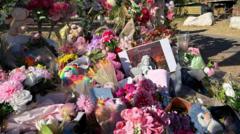
The anatomy of a vigil—the silence, the candles, the floral tributes—is often dismissed as mere tradition. However, from a structural perspective, these elements are functional tools for managing high-arousal emotional states.
The use of synchronous silence serves to lower the collective heart rate and cortisol levels of the group. It is a biological reset button. The floral tribute serves as a tangible, quantifiable representation of an abstract emotion; it allows the participant to "externalize" their grief and leave it behind in a designated physical space.
Furthermore, the hierarchy of the vigil provides a necessary social order during a time of perceived chaos. There is a clear distinction between the "core mourners" (the family and close associates) and the "peripheral supporters." This structure allows the community to offer support without infringing upon the private domain of the family’s acute trauma, creating a buffer zone that facilitates long-term recovery for the primary victims.
The Limitations of Public Memorialization
While vigils provide immediate stabilization, they possess inherent limitations as tools for long-term societal change.
- The Decay of Attention: The intensity of the vigil response is inversely proportional to its duration. High-intensity public grief is a finite resource. Once the ritual concludes, the communal energy often dissipates before it can be converted into policy changes or systemic improvements in child safety.
- Performative Homogeneity: The pressure to conform to a specific "mode" of mourning can occasionally suppress nuanced discussions about the root causes of the crime, such as gaps in mental health services or failures in judicial oversight.
- Geographic Disconnect: While national vigils signal solidarity, the actual resources required for recovery remain local. There is often a gap between the symbolic support offered by the capital cities and the tangible needs of the specific suburb where the event occurred.
Quantifying the Impact of Collective Presence
From a consultant’s perspective, the "success" of a vigil is measured by its ability to reduce the duration of the "societal paralysis" phase that follows a major tragedy. Data suggests that communities that engage in structured, public mourning processes return to baseline functionality faster than those that suppress the event or remain fragmented.
This recovery is facilitated by the "Social Cohesion Dividend." When individuals see their neighbors and strangers alike participating in a vigil, it reinforces a sense of shared values. This reinforcement is the primary defense against the cynicism and fear that violent crimes typically generate.
Strategic Framework for Communal Recovery
To maximize the efficacy of these public responses and ensure they move beyond temporary sentiment, the following structural steps are necessary:
- Immediate Transition to Advocacy: The momentum generated by a vigil must be channeled into a "Policy Conversion Taskforce" within 72 hours of the event. This prevents the energy from evaporating and focuses it on the systemic flaws that allowed the tragedy to occur.
- Resource Localization: Symbolic support must be coupled with a "Direct Support Fund" that is managed by local leaders, ensuring that the financial and emotional capital generated by the national response is deployed where it is most needed.
- The Institutionalization of Memory: To combat the decay of attention, the community must establish a permanent "Safety Benchmark" named after the victim. This moves the narrative from one of loss to one of ongoing vigilance and institutional accountability.
The vigils across Australia are not merely an expression of sadness; they are a sophisticated communal defense mechanism. They represent the physical manifestation of a society’s immune system responding to a pathogen of violence. The strategic objective now is to ensure that the "antibodies" produced by this grief result in a permanent strengthening of the societal body.
Focus should shift from the act of mourning to the architecture of prevention. Every candle lit in a park represents a citizen's demand for a revised safety protocol. The mobilization is the mandate. The next logical step is the audit of the systems—legal, social, and protective—that failed to intervene before the vigil became a necessity.