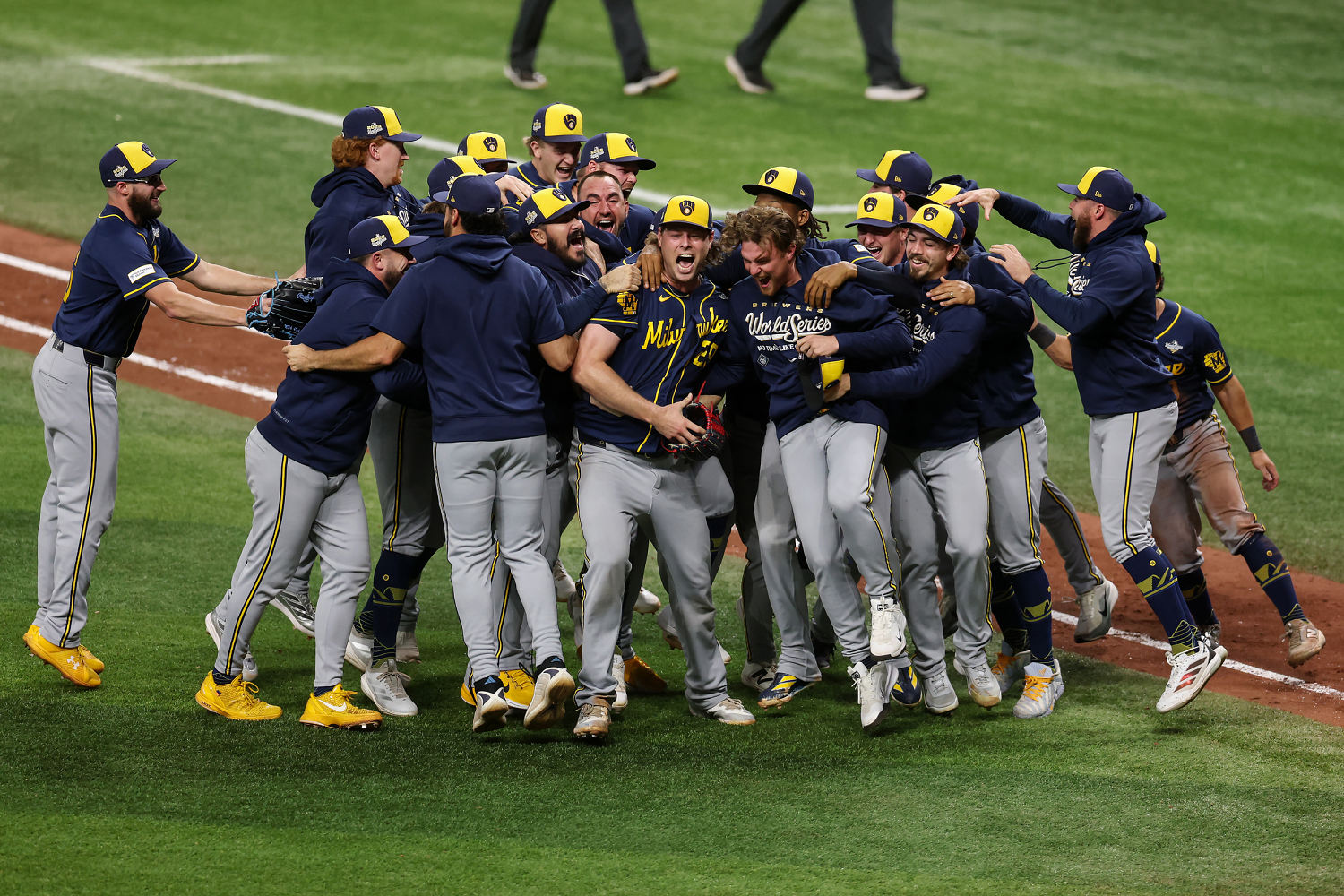
The Milwaukee Brewers defeating the Tampa Bay Rays to capture their first World Series title was never supposed to happen under the modern economic rules of Major League Baseball. Yet when two of the sport’s smallest media markets collided on the October stage, they dismantled decades of conventional front-office wisdom, proving that organizational efficiency, pitching biomechanics, and positional flexibility can outmaneuver nine-figure payrolls when the calendar turns to autumn.
For nearly thirty years, baseball's postseason architecture has been treated like a private club for coastal juggernauts. New York, Los Angeles, Boston, and Houston built dynasties by pairing massive local television revenues with aggressive free-agent spending. Small-market teams were expected to play the role of farm systems, developing young talent only to watch those stars depart for greener pastures once arbitration prices climbed. Milwaukee and Tampa Bay refused to accept that fate. Instead of complaining about an uneven playing field, both franchises spent fifteen years quietly rewriting the rules of roster construction, player valuation, and in-game tactical execution.
The Myth of the Payroll Ceiling
Money still buys margin for error in a 162-game regular season. A club spending $280 million can survive a torn ulnar collateral ligament to its ace or a two-month slump from its cleanup hitter simply by absorbing dead money and trading prospects for mid-season reinforcements. A club operating near the bottom third of league payroll has zero cushion. Every single roster spot must generate surplus value.
That constraint forced both Milwaukee and Tampa Bay to adopt a ruthless approach to asset turnover. Neither front office falls in love with the back of a baseball card. When a player reaches peak market value—often with two years of club control remaining—both organizations have historically shown a willingness to trade that star for three younger, cheaper, controllable assets. Fans hate it. Local talk radio hosts call it cheap. Front-office executives call it survival.
Look at the anatomy of both rosters during their championship run. Neither lineup featured a $300 million superstar whose contract would cripple the franchise five years down the road. Instead, both teams stacked their 26-man rosters with pre-arbitration athletes, discarded veterans resurrected through mechanical tweaks, and utility defenders capable of playing four positions at an above-average level. When the Brewers outlasted the Rays in the Fall Classic, it was not a fluke born of a hot week at the plate. It was the logical conclusion of two organizations maximizing every dollar spent per win above replacement.
Inside the Pitching Lab Revolution
If you want to understand how Milwaukee and Tampa Bay neutralized baseball's most expensive lineups, stop looking at the box score and start looking at high-speed camera data.
Ten years ago, small-market teams drafted safe, pitch-to-contact college arms and hoped their defense could turn ground balls into outs. Today, both organizations operate what industry insiders refer to as pitching labs—biomechanical and aerodynamic testing facilities that turn overlooked arms into late-inning weapons. They stopped shopping for finished products and started shopping for raw traits.
A pitcher with a 4.80 ERA in Double-A might look like organizational filler to a traditional scout. To an analyst in Milwaukee or St. Petersburg, that same pitcher might possess elite spin efficiency, unusual release extension, or a fastball with vertical carry that misses bats at the top of the strike zone. Acquire the arm for pennies on the dollar. Scrap his ineffective curveball. Teach him a sweeping slider or a pronated changeup designed specifically for his arm slot. Within six months, that minor-league afterthought is throwing 97 mph in the eighth inning of a World Series game.
This approach carries brutal physical costs, and ignoring that reality would be dishonest. Maximum-effort pitching paired with high-spin breaking balls has pushed elbow and shoulder injuries across baseball to epidemic levels. Both Tampa Bay and Milwaukee have weathered staggering waves of Tommy John surgeries over the past decade. Their solution was not to dial back the intensity, which would surrender their competitive edge. Their solution was depth. By treating the 40-man roster as an interchangeable assembly line of high-leverage relievers, both clubs ensured that when one arm broke down, another identically engineered arm stepped off the shuttle from Triple-A without a drop in stuff.
Why Short Outings Changed October Strategy
Traditional baseball fans still wince when a starting pitcher gets pulled after five scoreless innings and 78 pitches. They call it over-managing. Front offices call it the third-time-through-the-order penalty, and the data backing it up is airtight.
Across Major League Baseball, opposing hitters see their OPS jump dramatically the third time they face the same starting pitcher in a single game. By the fifth or sixth inning, hitters have calibrated the pitcher’s release point, velocity, and tunneling patterns. Small-market teams realized early on that paying $35 million a year for a workhorse ace who pitches into the eighth inning was an inefficient allocation of capital—especially when three pre-arbitration relievers throwing 99 mph from different arm angles could cover those final twelve outs more effectively.
During the World Series, both managers treated games like nine-inning bullpen puzzles rather than traditional narratives. Starting pitchers were deployed as openers or bulk-inning bridges, rarely allowed to linger once the lineup turned over a second time. Every pitching change was dictated by platoon splits, batted-ball profiles, and pitch-type matchups. It stripped away the romanticism of the complete-game shutout, certainly. It also suffocated some of the most dangerous offenses in baseball.
Defense as an Undervalued Currency
While big-market clubs spent billions chasing home run power, Milwaukee and Tampa Bay quietly cornered the market on run prevention.
In an era dominated by strikeouts and solo home runs, defensive metrics became the ultimate market inefficiency. Hitters who strike out 30 percent of the time but hit 35 home runs command massive salaries on the open market. Meanwhile, elite defensive shortstops, center fielders, and pitch-framing catchers often linger in free agency or get traded away because their batting averages hover around .235.
Both the Brewers and the Rays built their identities around out-of-zone strike creation and defensive range. A catcher who can steal three or four borderline strikes per game at the bottom of the zone alters the entire geometry of an at-bat. Suddenly, hitters are forced to swing at pitcher's pitches with two strikes, producing weak grounders and pop-ups instead of walks and loud contact. Pair that framing precision with an outfield trio that covers every square foot of gap space, and a pitcher's effective margin for error expands exponentially.
Consider a hypothetical example of how this compounds over a seven-game series. Suppose a right-handed sinkerballer induces a 102-mph ground ball up the middle with runners on first and second. Against an average infield defense, that ball sneaks into center field, scoring a run and keeping the inning alive. Against a positioning-obsessed infield stacked with plus defenders, that ball becomes an effortless 6-4-3 double play. One play erases a rally, saves fifteen pitches, and prevents a bullpen meltdown. Multiply that across twenty-seven outs per night, and the cumulative impact rivals a middle-of-the-order slugger.
The Cultural Friction of Constant Churn
Running a baseball team like a Wall Street quantitative fund solves financial problems, yet it creates massive human challenges inside a clubhouse.
Players are not algorithms. When a front office trades away a beloved clubhouse leader in July while the team is sitting in first place, resentment festers. Veterans question management's commitment to winning. Young players wonder how long they have before they become the next spreadsheet casualty.
Both Milwaukee and Tampa Bay have navigated public relations storms and private clubhouse tension over their transactional ruthlessness. Keeping a roster cohesive under those conditions requires a specific breed of manager—someone fluent in analytical terminology who can translate cold probability charts into human motivation without sounding like a corporate middleman.
The managers who guided these clubs to the World Series succeeded because they enforced a strict next-man-up accountability. Ego had no room to breathe. A player hitting cleanup on Tuesday might sit on the bench Wednesday against a tough left-hander, then enter as a defensive replacement in the seventh inning and draw a bases-loaded walk in the ninth. When players see that every tactical move is rooted in maximizing win probability rather than playing favorites, buy-in follows. Winning cures everything, and nothing validates an unconventional system faster than a championship parade.
What Big-Market Owners Get Wrong
The immediate reaction from casual observers after a Brewers-Rays World Series is predictable—people assume the sport's financial disparity has been solved. That conclusion is dangerously naive.
Major League Baseball still operates without a salary cap, and revenue disparities between top-tier markets and bottom-tier markets remain vast. The Los Angeles Dodgers, New York Mets, and New York Yankees can still outbid Milwaukee and Tampa Bay for any premier free agent by nine figures. What changed is not the availability of money, but the diminishing returns on how big-market teams spend it.
Many wealthy franchises suffer from what economists call institutional bloat. When you have endless cash, you get lazy with player development. You sign 32-year-old free agents to ten-year contracts to appease sponsors and sell season tickets, knowing full well the final five years of the deal will be dead weight. You trade away top-ten prospects for aging rentals at the deadline because your farm system is an afterthought rather than your lifeblood.
Even worse, several high-payroll teams tried to copy the Tampa Bay and Milwaukee model by hiring Ivy League analysts while retaining bloated, star-driven rosters—creating a fractured identity. You cannot preach platoon optimization and selfless role acceptance to a clubhouse full of veterans making $30 million a year with full no-trade clauses. Those players have earned the right to play every day, even when the matchup data screams otherwise. Small-market teams enjoy total tactical freedom precisely because nobody on their roster holds enough contractual leverage to veto a manager's lineup card.
The Looming Arms Race in Player Development
The victory by Milwaukee over Tampa Bay signals the end of an era where small-market teams could hide their analytical advantages in the shadows. Every front office in baseball has spent the past five years raiding the coaching staffs, scouting departments, and research divisions of both organizations.
That talent drain presents the hardest test yet for both franchises. When the wealthiest teams in the sport combine small-market developmental infrastructure with big-market financial muscle, the competitive gap threatens to widen all over again.
Staying ahead requires constant reinvention. The market inefficiencies of 2018—high-spin fastballs, infield shifting, catcher framing—are now standard operating procedure across all thirty clubs. The next frontier lies in biomechanical injury prediction, cognitive pitch-recognition training, and international amateur scouting in regions overlooked by traditional academies.
Milwaukee's championship proved that intelligence, discipline, and organizational alignment can still conquer raw financial brute force on baseball's biggest stage. Yet the moment a small-market champion stops innovating is the moment it becomes just another feeder club waiting for its best players to leave town.