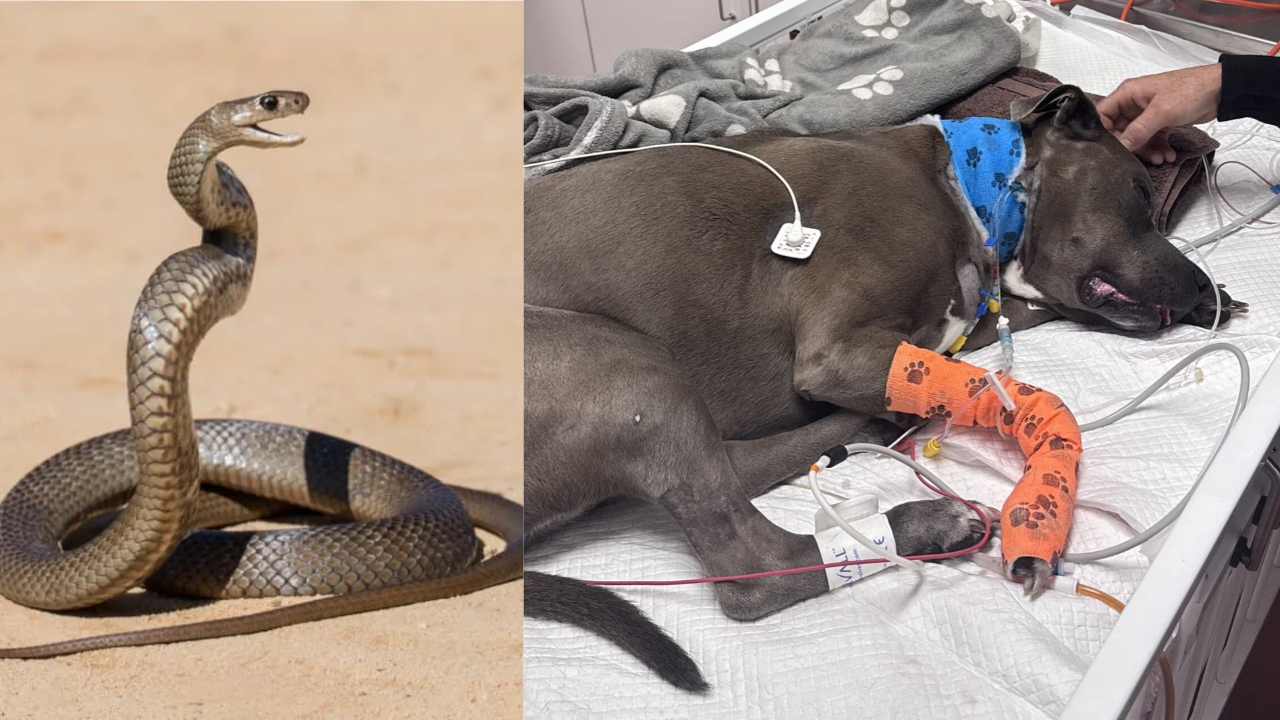
Most dog owners expect a venomous snakebite to look like a movie scene. You picture dramatic yelping, instant paralysis, or a leg swelling up like a balloon within seconds.
Reality is way quieter—and infinitely deadlier.
Sometimes, the only warning sign that a venomous snake just tagged your dog is a tiny, barely noticeable nosebleed while they act completely normal. If you brush that off as dry air or a minor scratch from a bush, you might lose your best friend within hours.
Why Dogs Act Normal After a Deadly Snakebite
It sounds crazy, right? How can a dog take a hit of lethal venom and just trot back inside looking for dinner?
It comes down to two things: canine stoicism and the specific biology of snake venom. Dogs are wired to hide pain. In the wild, showing weakness makes you a target, and domestic dogs haven't lost that instinct. A mild sting on the muzzle or paw might make them flinch for half a second, then they shake it off and keep sniffing the trail.
More importantly, not all snake venoms cause immediate tissue destruction.
When people think of snakebites, they usually picture pit vipers like rattlesnakes, copperheads, or cottonmouths. Those bites hurt immediately because the venom destroys local tissue and causes massive, rapid swelling. Even then, a "dry" or low-dose bite might not swell right away.
Elapids—a family that includes coral snakes in North America, brown snakes and tiger snakes in Australia, and cobras elsewhere—play by entirely different rules. Their venom often contains potent neurotoxins and procoagulants that barely irritate the skin at the bite site. There's no dramatic swelling. There's no agonizing pain at the puncture wound. Your dog literally doesn't know they've been poisoned, so they keep chasing tennis balls while their internal clotting system quietly shuts down.
The Science Behind That Slight Nosebleed
A trickle of blood from one nostril seems harmless. Dogs stick their noses into thorny bushes, foxtails, and dirt piles every single day. Naturally, your brain jumps to the simplest explanation.
When snake venom is involved, that slight nosebleed is actually a red alert for venom-induced consumption coagulopathy (VICC).
Certain snake venoms—especially from Australian brown snakes, tiger snakes, taipans, and even some rattlesnake species like the timber rattlesnake or Mojave rattlesnake—contain enzymes that hijack your dog's blood-clotting cascade. Here is what happens inside their bloodstream:
- The venom floods the blood with procoagulant proteins, forcing the body to form thousands of microscopic clots all at once.
- This massive, simultaneous clotting burns through the body's entire supply of fibrinogen and platelets within minutes.
- Once those clotting factors are depleted, the dog's blood loses all ability to clot anywhere in the body.
- Spontaneous bleeding begins at the weakest, most delicate mucous membranes first—most notably the tiny capillaries inside the nasal passages and gums.
That innocent little nosebleed isn't from a scratch. It's the first visible leak in a vascular system that can no longer seal itself. Left untreated, that same inability to clot leads to silent internal bleeding in the chest, abdomen, or brain.
Subtle Warning Signs You Might Miss
If a dog has a nosebleed after being outside, you need to play detective immediately. Don't wait for them to collapse. By the time a snakebitten dog looks visibly sick, their organ systems are often already in crisis.
Check their gums right away. Lift their upper lip and look closely at the tissue above their teeth. Normal gums are bubble-gum pink and slick. In a dog suffering from venom-induced clotting failure, you might spot petechiae—tiny, pinpoint red or purple dots that look like a rash under the surface. You might also see pale, ghostly gums indicating internal blood loss, or thin streaks of blood oozing around the gumline where the teeth meet the tissue.
Watch their behavior over the next thirty to sixty minutes with extreme skepticism. Many dogs experience what emergency veterinarians call a "transient collapse" right after a bite. They might stumble, vomit once, or lie down suddenly for two minutes, then pop back up acting totally fine. Owners constantly dismiss this as eating bad grass or getting overheated. In truth, that brief episode was an acute drop in blood pressure as the venom hit their bloodstream.
Other quiet clues include:
- Dilated pupils that don't shrink normally when you shine a light near their face.
- Mild hind-end wobbliness or a slightly drunken walk that comes and goes.
- Excessive drooling or swallowing repeatedly, which signals early throat muscle weakness from neurotoxins.
- Dark, tarry stool or blood-tinged urine, though these usually show up later in the timeline.
Why Finding Bite Marks Is a Waste of Time
Stop parting your dog's fur looking for two neat vampire fang holes. That's a myth that gets pets killed.
Snakes don't always strike cleanly. A glancing blow might leave a single tiny scratch, or the fangs might slip between skin folds without leaving a bruise. Even with a direct hit, a dog's dense coat hides puncture wounds smaller than a sewing needle. According to veterinary emergency specialists, bite marks are found in fewer than half of confirmed canine snakebite cases.
If you spend twenty minutes digging through your dog's fur trying to prove they were bitten before driving to the clinic, you're burning the exact window of time antivenom needs to work. Treat the symptoms, not the puncture site.
What to Do the Second You Suspect a Bite
If your dog develops a sudden nosebleed after being in the yard, on a hike, or near brush, assume the worst until a vet proves otherwise. Speed matters more than anything else here.
- Keep your dog completely still. Carry them to the car if you can, even if they want to walk. Muscle movement pumps lymphatic fluid and blood faster, accelerating how quickly venom spreads from the bite site into the central circulation.
- Call the nearest 24-hour emergency vet while en route. Not every local clinic stocks antivenom—it's expensive, has a short shelf life, and requires specialized monitoring. Calling ahead ensures they have vials ready or can redirect you immediately to a specialty hospital that does.
- Skip the folk remedies entirely. Do not apply a tourniquet, which traps tissue-destroying venom in one limb and causes necrosis. Do not try to cut the wound or suck out the venom. Do not give Benadryl or aspirin; antihistamines do zero to stop snake venom, and aspirin actually worsens bleeding by further impairing platelet function.
- Take a photo of the snake only if it's completely safe. Never try to catch, corner, or kill the snake. Most human snakebites happen when people try to play hero with a shovel. A quick zoom photo from ten feet away is plenty for a vet to identify the species, and modern clinics use blood clotting tests and venom detection kits anyway.
What Happens at the Emergency Vet
When you walk through those clinic doors and mention a sudden nosebleed after outdoor time, a good triage team won't make you wait in the lobby.
They'll immediately draw a small blood sample to check coagulation times—specifically tests like PT (prothrombin time) and aPTT (activated partial thromboplastin time). If your dog's blood fails to clot within normal seconds, or if a smear shows shattered red blood cells and zero platelets, you have your answer. Even if the initial test comes back borderline, vets will often repeat it an hour later because venom effects evolve rapidly.
Treatment centers around intravenous antivenom, aggressive IV fluid therapy to protect the kidneys from filtering damaged blood cells, and sometimes plasma transfusions to replace the clotting factors the venom destroyed. Antivenom neutralizes circulating venom, stopping further damage, though the dog's liver still needs 24 to 48 hours to manufacture fresh clotting proteins.
Dogs that get antivenom early—while they're still acting mostly normal aside from that telltale nosebleed—have an overwhelmingly high survival rate. Dogs whose owners waited until severe lethargy or heavy bleeding set in face brutal odds and massive ICU bills.
Protecting Your Dog Before It Happens
You can't bubble-wrap an active dog, especially if you live in snake country or love hitting trails. You can, however, stack the deck in your favor.
Keep your yard hostile to rodents, because mice and rats are the primary reason snakes hang out near your porch. Clear away woodpiles, rock gardens, and tall weeds along fence lines. On hikes, keep your dog on a fixed six-foot leash rather than a retractable one—a curious nose poking under a sunny rock ledge is how 80% of facial bites happen.
Consider snake aversion training led by a reputable trainer using live, muzzled snakes. Dogs learn through scent, sight, and sound to immediately retreat the second they detect a snake, rather than investigating it. Don't rely blindly on the rattlesnake vaccine; veterinary toxicology boards note that evidence for its effectiveness is limited, it offers zero protection against copperheads, cottonmouths, or coral snakes, and vaccinated dogs still require full emergency treatment and antivenom if bitten.
Save the phone number and address of the closest 24-hour veterinary emergency hospital in your phone favorites today, and call ahead right now to confirm they stock snake antivenom so you aren't guessing during an emergency.


