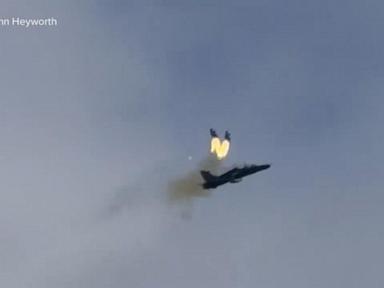
The cockpit of a modern supersonic fighter is not a quiet sanctuary. It is a cage of raw data, flickering amber warnings, and the relentless, mechanical heartbeat of a twin-spool turbofan spinning at tens of thousands of revolutions per minute. To sit inside one is to exist in a permanent state of controlled violence. Every instrument is a lifeline; every dial is a negotiation with gravity.
Then, the negotiation fails.
Imagine sitting in that seat—hypothetically speaking, through the lens of flight data recorders and the accounts of those who have walked away from the wreckage. One moment, you are tracing a waypoint across a digital horizon, breathing through an oxygen mask that smells faintly of plastic and dry air. The next moment, the world contracts to a single, blinding point of absolute terror. A low-frequency shudder rattles the airframe, followed instantly by the sharp, metallic shriek of a catastrophic hydraulic failure or a compressor stall choking the engine of its breath.
There is no time for panic. Panic requires a timeline, and at five hundred knots, time has dissolved.
In headlines across the world, an event like this is reduced to a clean, clinical summary: Pilots eject as military jet crashes. It sounds effortless. A clean separation of man and machine, as if slipping out of a wet jacket on a rainy afternoon. The reality is violently, agonizingly different.
To understand what happens when a military jet goes down and the crew is forced out, one must throw away every romantic notion of flight and confront the raw, unforgiving physics of survival.
The Anatomy of a Violent Departure
When a pilot decides to pull the ejection handle—often positioned between their knees or mounted above the helmet—they are not pressing a button. They are detonating a sequence.
Modern ejection seats, like the Martin-Baker series standard across much of global military aviation, are marvels of extreme engineering designed to cheat death by milliseconds. The moment the handle is pulled, a canopy fragmentation cord or explosive bolt shatters the thick acrylic glass above the cockpit, clearing a path through the slipstream. Milliseconds later, under-seat rocket motors ignite.
This is where the human body meets its physical limit.
As the rocket fires, it subjects the pilot to an instantaneous acceleration of twelve to twenty times the force of gravity (12g to 20g). For context, a roller coaster might briefly touch 3g or 4g, leaving riders breathless. At 20g, a pilot's blood drains instantly from their brain, vision narrows to a tiny, dark tunnel, and their spine compresses by up to several inches. Vertebrae crack under the sudden, crushing load. It is common for military aviators who survive ejections to walk away shorter than they were when they woke up that morning, their spines permanently reshaped by the sheer force of their escape.
Yet, compared to the alternative, a compressed vertebra is a bargain.
The seat clears the burning fuselage, trailing a plume of white smoke and rocket fire. In less than a second, small stabilization drogue chutes deploy to keep the seat from tumbling end-over-end in the supersonic wind. Barometric sensors and timer mechanisms work in absolute silence, calculating altitude and speed. Once the seat reaches a safer descent profile, the pilot is automatically separated from the heavy metal seat pan, and the main canopy blooms overhead with a bone-jarring snap that halts their descent.
Silence rushes in.
The roar of the afterburners is gone. The smell of burning jet fuel vanishes into the open air. Suddenly, the pilot is hanging suspended beneath a dome of silk, swaying gently above whatever landscape—mountains, open ocean, or dense forest—they happened to be flying over just seconds before.
The Cultural Weight of the Loss
Every time a military jet crashes and the crew ejects safely, a complex machinery of investigation grinds into motion behind the scenes. Aviation safety boards do not look for villains; they look for truths. They parse through gigabytes of flight data, recover shattered carbon-fiber composite shards from impact craters, and listen to the frantic, clipped radio chatter preserved in the black box.
There is a profound psychological toll that accompanies surviving a crash. Outsiders often assume relief is the only emotion. But aviators speak of a hollow, haunting grief. They have lost a machine they spent years learning to master—a multimillion-dollar marvel of aerospace engineering that was essentially an extension of their own nervous system. They carry the invisible weight of the investigation, the rigorous debriefs, and the haunting question that every professional asks in the quiet hours of the night: Could I have done something differently?
Military aviation is built on an unspoken contract. Society asks young men and women to operate complex, high-energy weapons systems near the absolute limits of human endurance. In return, the military establishment promises them two things: rigorous training that anticipates every conceivable failure, and the best possible escape systems when the unimaginable occurs.
When a jet goes down and the pilots walk away, that contract has been fulfilled. The multi-million-dollar airframe is a pile of smoking wreckage in a field or a trench on the seabed, replaceable through budget allocations and manufacturing lines. The human being inside the helmet is not.
The Silence After the Storm
Consider the quiet that follows.
On the ground, first responders race toward coordinates pinging from emergency locator transmitters. Smoke billows into the atmosphere, drawing the eyes of local residents who heard the sonic boom or the dull thud of impact moments earlier. To them, it is a spectacle—a brief, terrifying interruption of an otherwise ordinary day, captured on smartphones and broadcast across screens worldwide.
To the pilot, touching down in a farmer’s plowed field or a rocky ravine, it is the strange, surreal beginning of a second life. Unzipping the flight suit with trembling fingers, checking for fractures, listening to the wind rustling through the trees. They are alive. Their heart is hammering against their ribs like a trapped bird.
The jet is gone. The mission is aborted. But the sky remains, vast and indifferent, waiting for the next time humanity decides to challenge its boundaries.



