Rain does not merely fall in the Kathmandu Valley during the monsoon; it arrives with weight, a heavy, gray hand pressing down on slate roofs and mud-brick walls until the earth forgets how to drain itself.
Mud slides. Rivers swell, turning overnight from familiar, slow-moving ribbons into raging corridors of chocolate-brown fury that swallow bridges, livestock, and the fragile certainty of human dwellings.
Imagine waking to that roar. Imagine watching the floorboards of your kitchen vanish beneath three feet of churning, debris-choked water, wondering if the walls will hold until dawn.
Thousands faced that exact terror when relentless downpours triggered catastrophic floods across Nepal. Entire communities were cut off from the outside world, marooned on patches of high ground with dwindling supplies of clean water, medicine, and food. In moments like this, time fractures. Hours stretch into days while trapped families watch the skies for a break that refuses to come.
Help cannot simply walk through water like that. It must be carried.
Across the southern border, in the bustling hangars of the Indian Air Force, a different kind of urgency was taking shape. This was not a matter of diplomatic protocol or delayed paperwork. When a neighbor’s house is on fire, you do not wait for an invitation to hand over a bucket.
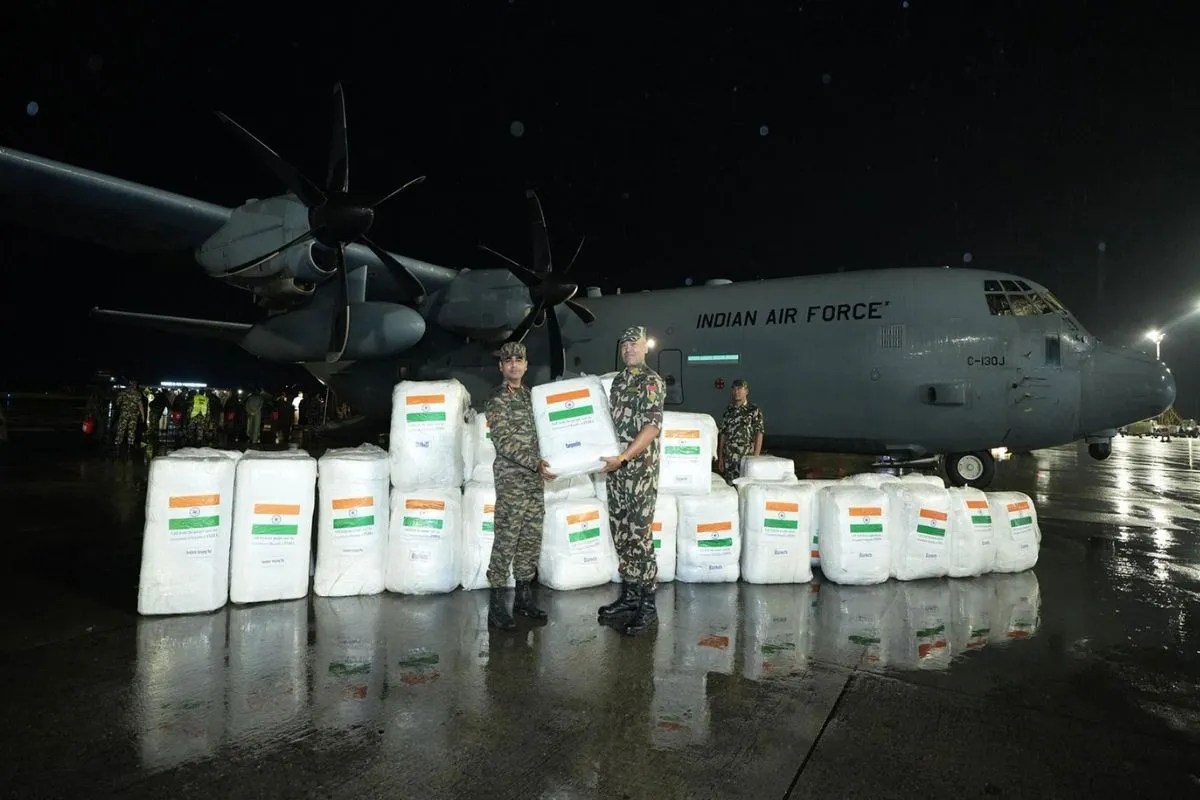
India’s response materialized in the form of a massive humanitarian airlift, culminating in the arrival of its fourth relief consignment in Kathmandu. Eleven tons of vital emergency supplies touched down on the tarmac, accompanied by a specialized rescue team trained to pull life from the wreckage of inundated zones.
Eleven tons sounds like an abstract statistic when printed in a morning newspaper headline. Break it down.
It is thousands of packets of water purification tablets designed to stop cholera before it takes root in the stagnant pools left behind by the receding floodwaters. It is heavy-duty plastic sheeting for makeshift shelters, dry rations that require no fire to eat, life jackets, and portable generators to power field clinics where injured children lie shivering under emergency blankets.
Behind every crate loaded onto those transport planes were logicians, pilots, and disaster management specialists working in sleepless shifts. Behind every crate unloaded in Kathmandu were rescue workers wading waist-deep into turbid currents, holding ropes, listening for the faint sound of a whistle or a cry for help from a submerged rooftop.
Geopolitics often gets reduced to handshakes, summits, and trade agreements. But the true measure of a relationship between two nations sharing a contiguous geography is revealed when the rivers overflow their banks.
India and Nepal share more than an open border; they share a shared hydrological fate. The same mountain ranges feed the rivers that rush down into the plains, bringing both fertile silt and devastating torrents. When disaster strikes, borders become invisible lines on a map, erased by the sheer universal language of human suffering and survival.
Consider what happens next in the quiet aftermath of a flood.
The cameras leave. The breaking news bulletins shift to other crises around the globe. But for the family returning to a home caked in two feet of silt, the hardest part is just beginning. How do you clean mud from the pages of a child's schoolbooks? How do you rebuild a well when the groundwater is contaminated?
Resilience is not a loud, cinematic quality. It is quiet. It is the sound of a metal shovel scraping against concrete. It is a neighbor sharing a pot of boiled water. It is the arrival of a foreign rescue team stepping off a transport plane, offering a hand to pull you out of the dark.
The monsoon will return next year. The rivers will rise again. That is the unchangeable rhythm of the earth in this corner of the world.
Yet, as long as neighboring hands reach across the border before the water crests, humanity manages to outlast the storm. The planes fly back, the empty crates are folded, and beneath the clearing skies of Kathmandu, the slow, stubborn work of tomorrow begins.