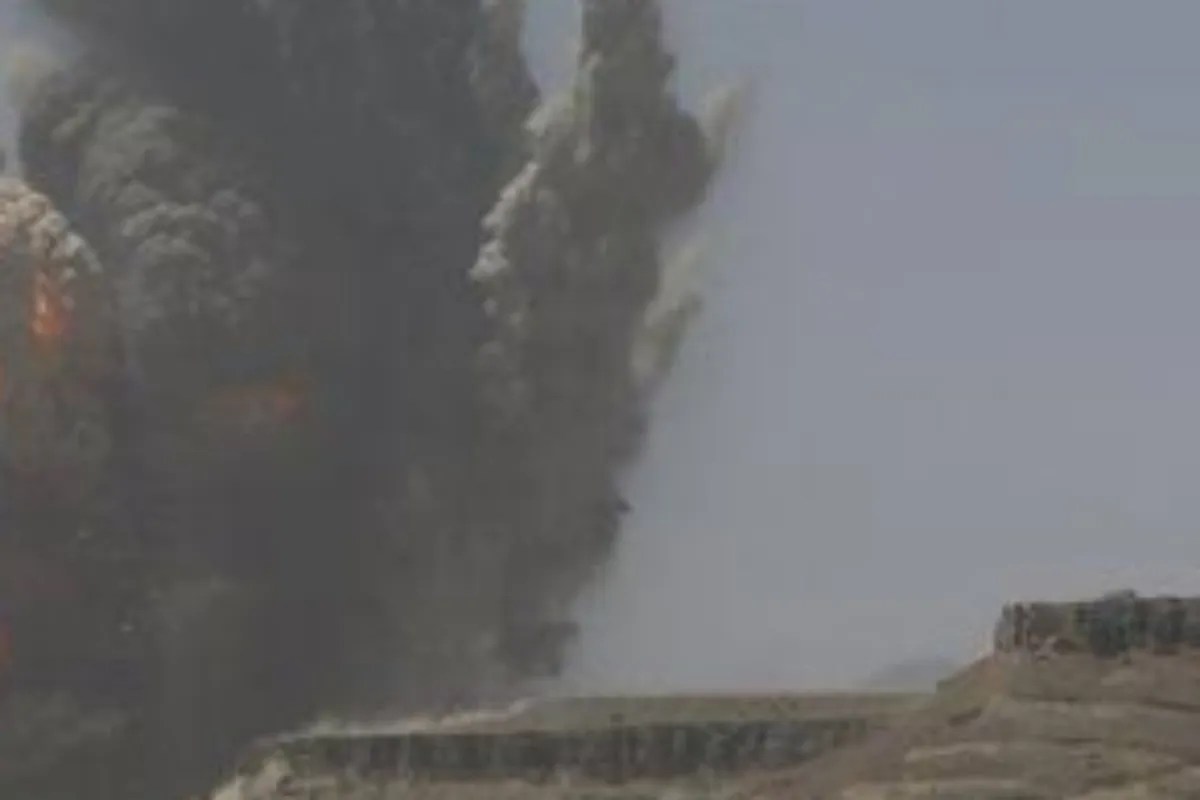
Sirens. That is the first thing you notice when a border war stops being a line on a map and becomes a sound in the air.
I have stood in rooms where diplomats traded crisp sentences over lukewarm coffee while, a few hundred miles south, a family sat in a hallway waiting to see if the ceiling would hold. Words are tidy. Diplomacy is neat. You put a formal condemnation on letterhead, you summon an ambassador, you issue a statement from the Gulf Cooperation Council, and on paper, order has been restored.
Except order does not sweep up shattered glass. It does not mend a fractured collarbone. And it does not tell a child why the lights went out at dusk.
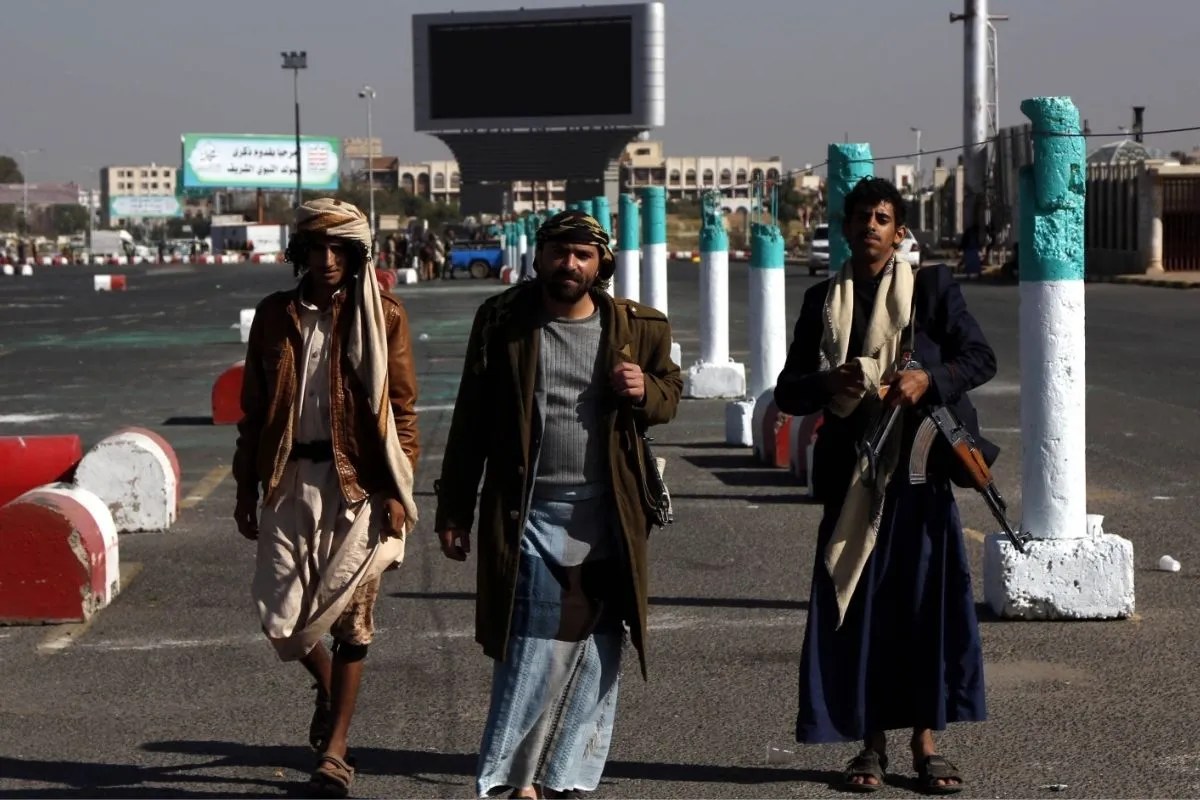
When fighting intensifies inside Yemen and cross-border strikes reach toward Saudi Arabia, headlines often flatten the conflict into acronyms and tallies. GCC. Houthi. Drones. Missiles. Condemnation. Read fast enough, the news feels like weather happening somewhere else. Yet behind every diplomatic communique sits a web of ordinary lives stretched thin by a conflict that has dragged on for years, turning neighborhoods into front lines and supply routes into lifelines.
To understand why a formal condemnation from the Gulf Cooperation Council matters—and why, by itself, it so often feels incomplete—we have to look past the press releases. We have to trace what happens when intense ground fighting inside Yemen collides with cross-border attacks aimed at Saudi territory.
Two Fronts, One Shared Strain
War rarely stays inside neat boundaries. Even when fighting flares hardest along active front lines inside Yemen, its shockwaves travel outward. Cross-border drone and missile launches toward Saudi Arabia do not happen in a vacuum; they surge and ebb alongside shifts on the ground, shifting alliances, and stalled truces.
Consider a hypothetical scene—purely an illustration to make the mechanics of this escalation tangible, though grounded in real patterns of regional conflict. Picture Tariq, a municipal water technician in a southern Saudi border city, checking pressure gauges before sunrise. His job is unglamorous. Clean water only gets noticed when it stops flowing. Down the road, his cousin Samir works at a small logistics depot moving food staples toward towns near the frontier. Neither man chose geopolitical strategy. Both wake up listening to the sky.
Now shift the frame across the border into Yemen, where intense fighting has uprooted families more times than they can count. Picture Layla, a clinic nurse trying to stretch dwindling medical supplies while artillery and clashes echo through nearby districts. When fighting intensifies inside Yemen, hospitals fill up faster than shipments can arrive. Roads become hazardous. Prices jump at the market before the morning is over.
This is a hypothetical scenario built to show how escalation ripples outward, yet every element reflects the recurring reality of prolonged conflict. When ground battles harden inside Yemen and attacks reach toward Saudi Arabia, pressure builds on both sides of the frontier. Infrastructure becomes a target or a casualty. Civilians absorb the shock.
Why, then, does the GCC step forward with sharp, public condemnations at moments like these?
At its core, the Gulf Cooperation Council—bringing together Bahrain, Kuwait, Oman, Qatar, Saudi Arabia, and the United Arab Emirates—is more than a diplomatic club. It is a regional security and political bloc whose members watch closely whenever cross-border strikes test air defenses, commercial confidence, and regional stability. When attacks target Saudi Arabia amid intensifying fighting in Yemen, a collective GCC condemnation signals solidarity. It puts the weight of six Gulf states behind Riyadh and warns that cross-border escalation crosses a line they refuse to treat as routine.
The Architecture of a Condemnation
Diplomacy has its own grammar. To an outsider, a formal statement condemning an attack can sound repetitive, almost ritualistic. Leaders denounce the strikes. They call for restraint. They reiterate support for sovereignty and security.
If you have ever watched a crisis unfold up close, you know how frustrating that language can look on screen. You want a switch flipped. You want the noise to stop.
Yet diplomatic language is not meant to be a magic wand. Think of a condemnation like the foundation bolts under a bridge in earthquake country. Bolts do not stop the ground from shaking. They do not keep the concrete from cracking under severe stress. Still, without them, the deck shifts loose the moment tremors start.
When the GCC condemns Houthi attacks on Saudi Arabia during periods of heightened fighting in Yemen, those statements serve several practical purposes at once:
- Signal alignment: They show that regional neighbors are publicly standing together rather than fracturing over how to respond.
- Raise political costs: They frame cross-border attacks as unacceptable violations of regional norms and security.
- Keep channels open with outside powers: They give partners in the Middle East, Europe, and Washington a clear diplomatic anchor to reference in negotiations, sanctions discussions, and de-escalation talks.
But the real problem lies elsewhere. Condemnation establishes a posture; it does not resolve the underlying war. As long as fighting inside Yemen remains fierce and political settlements stay out of reach, cycles of retaliation and escalation keep finding oxygen.
What Happens When Fighting Intensifies Inside Yemen
Ask anyone who has worked in humanitarian relief during a flare-up, and they will tell you the same thing: escalation hits the vulnerable first and hardest.
When fighting intensifies in Yemen, military objectives dominate the news cycle. Analysts trace troop movements, control of key districts, and strategic corridors. On the ground, however, escalation looks like a bakery closing because flour trucks cannot get through. It looks like a generator running out of fuel in a health center. It looks like families packing a single bag because a neighborhood that felt quiet yesterday suddenly feels too close to the line.
I remember the smell of diesel and dust in conflict zones—how heavy the air feels when generators hum through the night because the municipal grid is unreliable, and how quickly a minor illness turns serious when clinics lack basic antibiotics. You do not need a degree in international relations to understand what happens when supply lines tighten. Hunger is math. Fuel is math. Medicine is math. When routes close or grow dangerous, the numbers turn against ordinary people immediately.
And what about the people living on the Saudi side of the border when cross-border attacks spike?
Even when air defenses intercept incoming threats, living under the shadow of sirens and falling debris carries a psychological toll that does not show up in a press release. Schools adjust. Commuters tense up. Local businesses feel the chill whenever security alerts rise. A single strike or near-miss can turn an ordinary Tuesday into a day of closed roads, emergency alerts, and frayed nerves.
It is easy to talk about deterrence in abstract terms. Deterrence sounds like a chessboard. In reality, deterrence is tested over real rooftops, real highways, and real nerves.
Why People Keep Asking How This Ends
Whenever headlines pair GCC condemnations with Houthi attacks and intensifying Yemen fighting, the same urgent questions surface. People want to know what happens next, whether diplomacy can actually hold, and why a conflict with so many moving parts proves so stubborn to end.
There is no honest, tidy shortcut to answering those questions. Anyone who promises a quick fix is selling certainty where there is very little.
To understand why the conflict persists—and why each flare-up feels so consequential—it helps to look at the interlocking pressures driving it:
- Deep local and regional stakes: Fighting inside Yemen involves entrenched rivalries, competing authorities, and external interests that make compromise difficult even when exhaustion is widespread.
- Action and reaction: Cross-border attacks toward Saudi Arabia and intensified fighting on the ground feed into a broader cycle of pressure and counter-pressure, where each move risks provoking a sharper response.
- Humanitarian fragility: Years of conflict have left essential services in Yemen brittle, meaning even a temporary spike in fighting can undo months of fragile relief work.
Consider what happens next when diplomatic pressure rises alongside military friction. Talks can stall one week and quietly resume the next. Truces are often tested by skirmishes before they either take hold or collapse. Watching from the outside, that stop-start rhythm can feel maddening. You wait for a breakthrough, hear another report of clashes or cross-border fire, and wonder if anything has really changed.
Truthfully, sometimes very little changes on the surface while immense strain builds underneath. That uncertainty is part of what makes prolonged regional conflicts so draining—not just for the people directly in harm's way, but for anyone trying to make sense of the news without losing sight of the human beings inside it.
Beyond the Communique
If you strip away the jargon, the story behind a GCC condemnation during a spike in Yemen fighting is a story about thresholds.
Every cross-border attack tests a threshold. Every intensification of ground fighting tests another. Every diplomatic statement is an attempt to draw a line in ink before someone draws another one in smoke.
Sometimes ink holds. Sometimes it does not.
In the meantime, life goes on in fragments. Tariq checks another gauge before dawn. Layla counts bandages at the start of a long shift. Somewhere between a formal statement in a capital city and a quiet street near a contested frontier, people keep trying to get through the day intact.
Because in the end, wars are judged not by the sharpness of a communique, nor by the speed of a headline, but by whether the people living beneath the sky can finally breathe without looking up.