The coffee in the glass-walled conference room overlooking Lake Geneva had gone cold hours ago. Across the table, three defense procurement officials—one French, one German, one Italian—stared at a shared digital blueprint of a fuselage. To a casual observer, the disagreement seemed trivial, a matter of millimeters. The French engineer wanted a lighter, more agile frame optimized for carrier landings on the choppy waters of the Atlantic. The German representative insisted on a heavier, long-range design built for the dense, contested airspace of Central Europe. The Italian diplomat simply looked at the soaring cost projections and put his pen down.
They were speaking English, the default language of international compromise, but they were not understanding each other.
This is not a hypothetical failure. It is the recurring ghost that haunts the corridors of European defense. For decades, the continent has chased a beautiful, elusive dream: a unified sky defended by a single, hyper-advanced, home-grown fighter jet. Instead, Europe is currently on track to build three of them.
Divided. Redundant. Astronomical.
To understand how a continent with a combined economy rivaling the United States could stumble into such an inefficient corner, you have to look past the press releases and the grand political speeches about European sovereignty. You have to look at the factories, the national pride, and the terrifying math of modern industrial warfare.
The Ghost in the Hangar
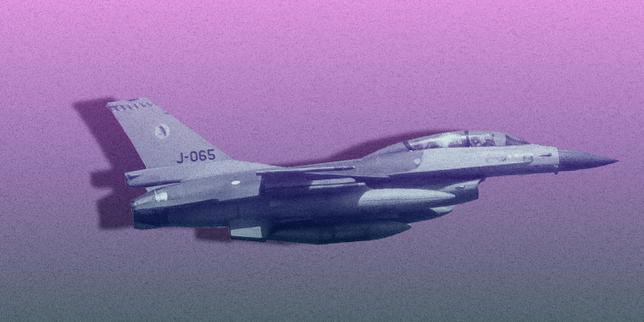
Walk into any military hangar in Europe today and you will see the scars of old compromises. You will see the Eurofighter Typhoon, a jet born from a similarly fractured collaboration in the 1980s. Back then, France walked away from the joint project because it wanted a lighter aircraft capable of operating from its aircraft carrier, the Charles de Gaulle. France went on to build the Rafale. Germany, Britain, Italy, and Spain built the Typhoon.
Both planes are engineering marvels. Both cost billions to develop separately. Both split a European market that desperately needed scale to compete with the industrial juggernaut of the United States.
History is now repeating itself, but with much higher stakes.
Today, Europe is split into two major competing camps for the sixth-generation fighter jet, the aircraft meant to dominate the skies until the 2080s. On one side is the Future Combat Air System (FCAS), a joint venture between France, Germany, and Spain. On the other is the Global Combat Air Programme (GCAP), a partnership between the United Kingdom, Italy, and Japan.
Now, whispers from industrial hubs in Turin and Munich suggest a third splintering could occur. Italy, caught between the shifting political winds of Rome and the industrial demands of its own defense champion, Leonardo, faces a agonizing choice. If the current partnerships fracture under the weight of national ego, Italy could find itself forced to develop its own distinct capabilities.
Three separate programs. Three separate bills for research and development. One fragmented sky.
The Cost of a Clean Sheet of Paper
Let us demystify what it actually means to design a modern fighter jet. We are no longer talking about bolting wings to an engine and adding a radar. A sixth-generation fighter is a flying supercomputer, a command-and-control hub that directs swarms of autonomous drones, processes petabytes of combat data in real-time, and utilizes cloaking geometry that pushes the absolute limits of material science.
Developing just one of these systems from a clean sheet of paper requires an estimated $100 billion before the first production model even rolls off the assembly line.
When a country pays for a fighter jet, it is not just buying defense. It is buying high-tech jobs in Bavaria, engineering prestige in Île-de-France, and metallurgical expertise in Lombardy. No politician wants to stand before their parliament and explain that billions of Euros of taxpayer money are being sent across the border to fund a competitor's factory.
Consider the French perspective. France possesses a complete, sovereign defense industrial base. Dassault Aviation knows how to build an entire plane from nose to tail. For Paris, sharing leadership means diluting a crown jewel. They fear that collaborating with Germany means handing over proprietary stealth secrets and radar technologies that French engineers spent forty years perfecting.
Germany, meanwhile, approaches the table with a different anxiety. Berlin provides the financial muscle. If German taxpayers are footing a massive portion of the bill, German politicians demand that Airbus facilities in Manching get to build the most complex parts of the aircraft.
Then comes Italy. Rome is an industrial powerhouse, yet it often finds itself treated as the junior partner in the Franco-German engine. Italian defense planners look at FCAS and see a project dominated by Paris and Berlin. They look at GCAP and see an opportunity, but one complicated by Britain’s post-Brexit isolation and Japan’s distinct Pacific theater requirements.
So, the negotiations stall. The lawyers rewrite the work-share percentages. The engineers wait.
The Tyranny of the Assembly Line
While Europe argues over who gets to manufacture the left wing and who gets to program the radar software, the rest of the world moves with brutal speed.
The United States is already flying technology demonstrators for its Next Generation Air Dominance (NGAD) program. Because America has a single, centralized procurement system, it avoids the committee-based design philosophy that plagues Europe. When the Pentagon demands a capability, Lockheed Martin or Northrop Grumman builds it. There is no debate about whether the jet needs to satisfy the specific national pride of Ohio versus California.
The economic consequences of Europe's fragmentation are devastatingly simple. It is the law of scale.
If you build 1,000 units of a single aircraft, the cost of development is spread thin across every airframe. If you split that market into three, building only 200 or 300 of each variant, the price per plane skyrockets. European air forces end up paying double the price for an aircraft that is potentially less capable because the R&D budget was split three ways.
The ultimate irony is already visible on the tarmacs of Europe.
Frustrated by the delays, the political infighting, and the soaring costs of domestic programs, European nations are voting with their checkbooks. Germany, Italy, Belgium, Poland, and Finland have all purchased the American-made F-35 lightning II.
The American aviation industry is consolidating its monopoly on European defense, not through military conquest, but because European nations cannot agree on how to share a piece of industrial pie. The very dependency that European leaders rail against in their speeches is the dependency they are actively funding with their inaction.
The Invisible Stakes
It is easy to view this through the cold lens of industrial policy, as a boardroom dispute between aerospace executives. But the real problem lies elsewhere. The true cost of this duplication will be paid by twenty-three-year-old pilots flying patrols over the Baltic Sea three decades from now.
Imagine a future crisis. The airspace is thick with electronic interference, GPS signals are jammed, and automated anti-aircraft systems track everything that moves. In this environment, survival depends on instant, flawless communication between aircraft.
If a French-built FCAS cannot talk to a British-Italian GCAP because their proprietary software architectures were developed by competing teams in Paris and London, the alliance crumbles in the air. A split industrial strategy creates a split military capability.
We have seen this vulnerability before. During the early days of air campaigns in the Balkans and Libya, allied pilots struggled to share target data in real-time because of incompatible radio and data-link systems. They had to resort to voice communication over open channels. In a modern conflict against a peer adversary, that lack of harmony is a death sentence.
The Breaking Point
The current trajectory is unsustainable. The defense budgets of Europe, though rising in response to a changing geopolitical climate, are not infinite. The continent is trying to fund generous social safety nets, transition to green energy economies, and rebuild neglected conventional armies all at once.
Something will have to give.
If France, Germany, and Italy persist in their refusal to truly integrate their defense industries, they will not end up with three magnificent, competing symbols of national pride. They will end up with underfunded, delayed, and compromised platforms that arrive too late to matter.
True collaboration requires a form of political courage that is currently in short supply. It requires a leader to stand up and admit that national industrial monopoly must be sacrificed for continental security. It means accepting that a German pilot might fly a plane designed predominantly in France, or that French taxpayers will fund a radar built entirely in Italy.
The alternative is a quiet decline into irrelevance.
The glass conference room in Geneva eventually empties. The lights go out. The digital blueprint remains stored on secure servers, a testament to what could be built if trust were as easy to manufacture as aluminum and carbon fiber.
Outside, the autumn wind whips across the lake, indifferent to borders, sovereign airspace, or the pride of nations. High above the clouds, the sky remains wide, empty, and terrifyingly expensive.