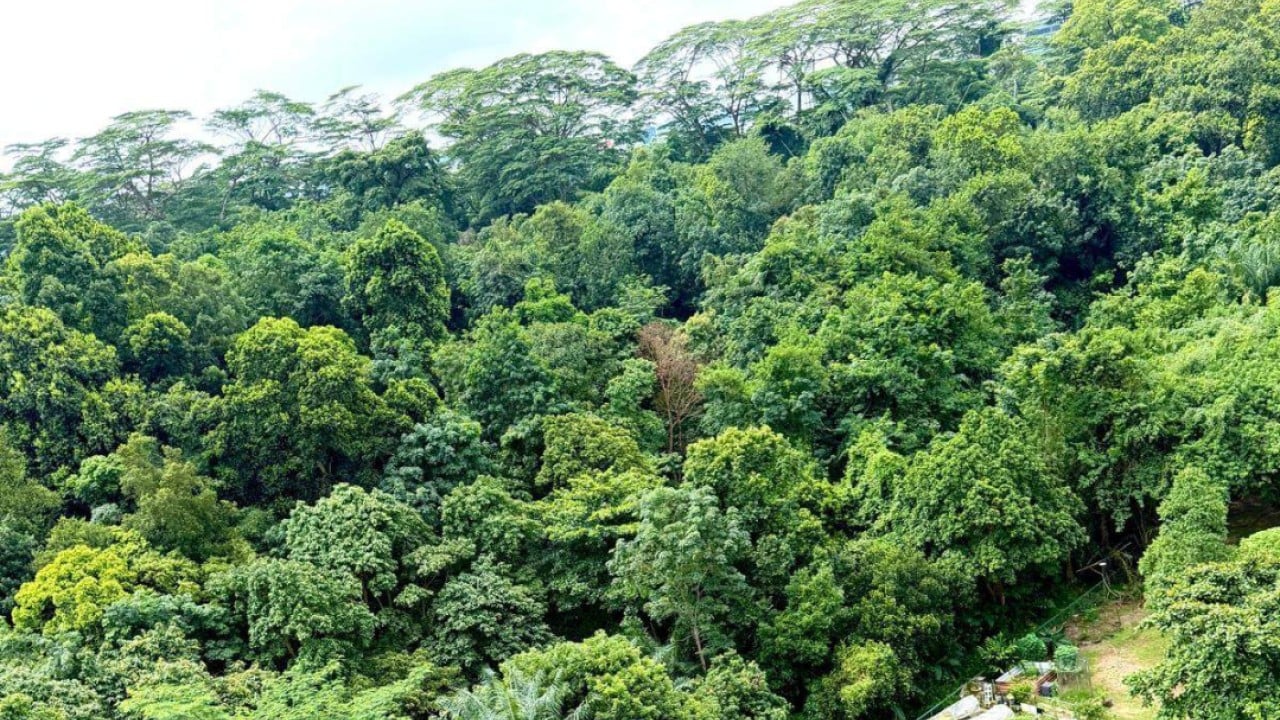
You can walk past Maju Forest on any given morning and hear the city fade into a thick wall of cicadas, birdsong, and rustling leaves. That quiet escape is vanishing. The Housing and Development Board announced plans to clear roughly 15 out of the 23 hectares of this mature secondary forest in Clementi's Sunset Way area to build new public housing.
About eight hectares will stay intact as a wildlife refuge, featuring a natural freshwater stream and parts of the old railway line. But for residents, nature groups, and urban ecologists who have watched green spaces disappear across the island, keeping a third of a forest isn't a compromise. It's a slow-motion loss. Recently making waves recently: Why the Chaos at Spain's North African Border Shocked Washington.
If you're wondering why this specific patch of trees has triggered intense public pushback, public petitions, and fierce debate, you have to look at Singapore's broader struggle between constant concrete expansion and shrinking natural habitats.
The Reality of the Maju Forest Plan
Let's look at the actual blueprint. The government's environmental study recorded 113 fauna species within the site. That includes vulnerable residents like the straw-headed bulbul, the buffy fish-owl, and critically endangered creatures like the Sunda pangolin. More details on this are explored by NPR.
The official plan promises mitigation. Agencies talk about phasing site clearance so animals can escape, salvaging native plants before bulldozers roll in, and planting greenery inside the future housing estate. Conservation groups acknowledge these steps make a bad situation slightly softer, but they point out a hard biological truth. Shy animals like pangolins don't adapt well to cramped, fragmented corridors flanked by high-rise residential blocks. When you chop a continuous forest into isolated green pockets, you break the ecological network that connects Clementi Forest to wider inland reserves.
Why This Fight Feels Different
Singaporeans are pragmatic. Everyone knows the island faces a massive housing crunch, and areas like Clementi see intense demand for new Build-To-Order flats. People aren't naive about the pressures of urban growth.
Yet, fatigue is setting in. Over the last decade, residents have watched greenfield sites disappear one by one. Tengah turned from a secondary forest into a massive new town. Portions of Kranji woodland vanished. Bukit Timah Turf City faces impending redevelopment. Each time a mature habitat gets carved up, the wildlife gets squeezed into smaller and smaller islands.
The pushback against the Maju clearance mirrors the historic mobilization we saw with Dover Forest. Citizens aren't just shouting from the sidelines anymore. They are submitting detailed feedback, organizing petitions, and asking a very direct question: Can we build the homes we need without erasing the wild spaces we can never get back?
The Case for Recycling Urban Land First
The core argument from preservation groups isn't about halting progress. It's about smart land recycling.
Parliament has heard repeated calls to take back old golf courses and redevelop previously spent land before chewing into untouched greenfield sites. Look closely at Sunset Way. Right next to the forest and the upcoming Maju MRT station sit older public housing blocks constructed in the 1980s. These low-density precincts occupy prime acreage that has already been urbanized.
Critics of the current plan argue that renewing these aging estates at modern, higher densities could absorb a massive share of the required housing units. By opting for urban renewal instead of forest clearance, the state could slash the planned destruction in Maju Forest significantly. You get the exact same number of new apartments, but you leave the ecosystem standing.
What Happens Next
The dialogue between public agencies and citizens is ongoing. While the overarching framework is set, public feedback windows remain a crucial pressure valve. Past campaigns like the one for Dover Forest proved that heavy public participation can force authorities to reconsider half-measures and preserve vital ecological halves.
If you care about Singapore's urban future, the Maju debate is worth tracking closely. It forces a reckoning on what kind of city Singapore wants to be when every square kilometer is accounted for. Check local conservation group updates, read the environmental impact assessments yourself, and make your voice heard through official channels before final boundaries are cast in concrete.