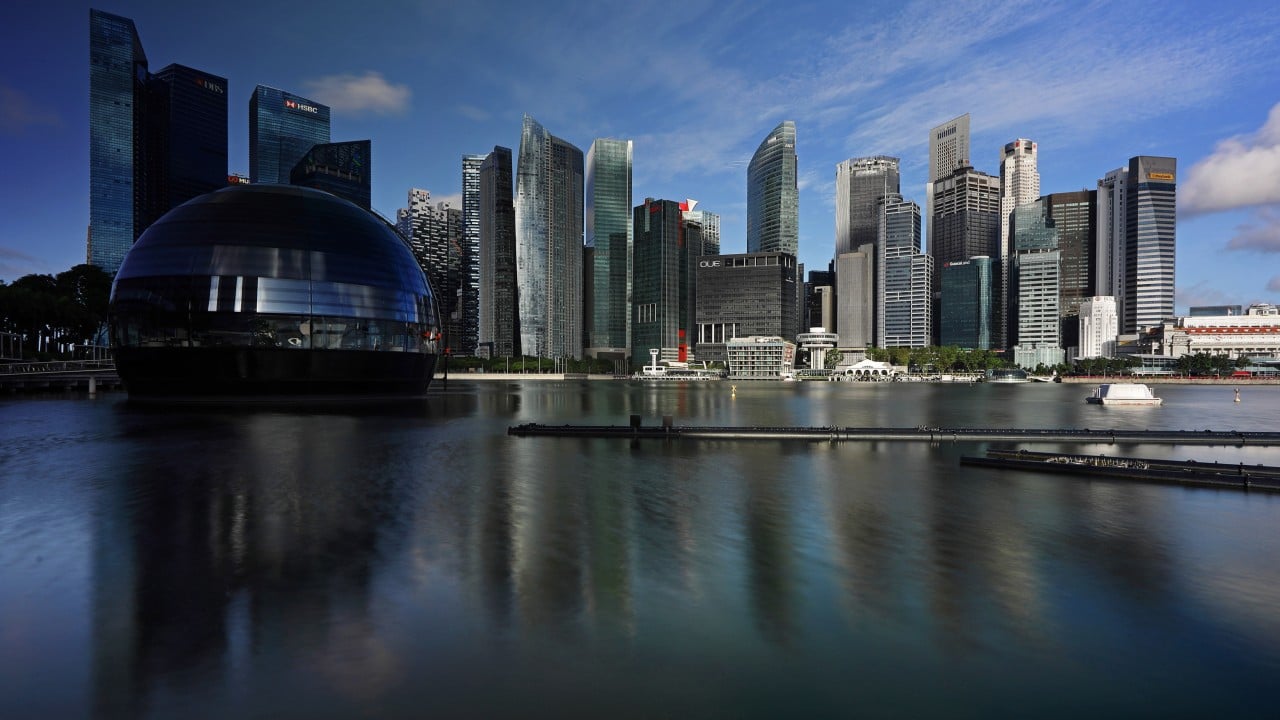
The headlines breathlessly shrieked about a US$3.9 million lightning heist. An armed gang from across the Causeway allegedly breaches a high-end Singaporean bungalow, absconds with a fortune in cash and luxury valuables, and leaves the local commentariat clutching their pearls. Mainstream outlets treated the incident like an apocalyptic breach of the fortress walls.
It is utter nonsense.
The lazy consensus across the media landscape frames this crime as a shocking anomaly, a glaring crack in Singapore’s legendary public safety facade, and proof that cross-border syndicates are finding new ways to exploit the island's perimeter. That narrative is comforting for headline-writers because it relies on easy tropes: the daring foreign raiders versus the pristine, orderly city-state.
It is also fundamentally detached from reality.
Focusing on a physical smash-and-grab of a luxury bungalow is a masterclass in missing the forest for the trees. While police sirens wailed and reporters hyperventilated over a few million dollars in physical loot, institutional wealth in Southeast Asia was leaking billions through entirely legal, invisible, stroke-of-a-pen mechanisms. If you think a crew of guys with weapons jumping a fence is the primary threat to modern wealth in Asia, you understand neither wealth nor crime.
The Illusion of Perimeter Protection
Let us look at the mechanics of the crime itself. A gang targets a specific high-net-worth residence, bypasses physical deterrents, and makes off with a haul. To the civilian public, this signals a failure of security architecture.
In professional risk assessment, it signals something else entirely: poor asset hygiene by the victim.
Why was US$3.9 million in liquid assets sitting in a residential bungalow in physical form? In an era where cross-border wire transfers, encrypted multi-signature digital wallets, and institutional custodial accounts exist, keeping millions in cash and unsecured luxury goods within reach of a crowbar is financial illiteracy.
The media treats the burglars as criminal masterminds executing a high-stakes tactical operation. They were nothing of the sort. They were opportunistic predators exploiting an amateurish vulnerability: the wealthy individual who believes high walls and a security gate exempt them from basic operational security.
Singapore is globally famous for its low crime rate. That safety breeds a dangerous psychological byproduct among the ultra-rich living there: complacency. When you live in a society where you can walk down an alley at three in the morning without looking over your shoulder, you forget that physical property requires active defense, not passive trust. The homeowners essentially left a neon sign blinking in the dark, advertising that their risk management strategy began and ended with a locked front door.
The Scale Mismatch
Let us talk numbers because perspective matters. A US$3.9 million haul makes for a gripping weekend read. It sounds astronomical to anyone working a standard corporate job.
Compared to the actual financial crimes coursing through the veins of Southeast Asian commerce every single day, three point nine million dollars is a rounding error.
Imagine a scenario where a mid-level corporate entity systematically misstates transfer pricing across three shell companies in different tax jurisdictions, bleeding ten times that amount in a single quarter while the board nods approvingly at quarterly earnings calls. No guns are drawn. No glass is shattered. No police dogs track muddy footprints through a pristine garden. Yet the economic damage dwarfs the bungalow heist by orders of magnitude.
We hyper-fixate on violent street crime and physical property theft because our brains are hardwired for primitive threats. A man with a weapon jumping a fence triggers an immediate adrenaline response. A spreadsheet manipulating offshore debt covenants does not. Media organizations know this, which is why they feed you the bungalow story while ignoring the multi-billion-dollar white-collar plumbing leaks happening in the financial district right next door.
The Myth of the Impenetrable City-State
Another pillar of the mainstream narrative is the shock that such a crime could happen in Singapore at all. Commentators act as though a successful burglary invalidates the competence of the Singapore Police Force.
This is juvenile logic. No territory on earth possesses a zero-crime shield. Law enforcement agencies are reactive institutions; they investigate after a breach occurs. The speed and efficiency with which the Singapore authorities track down and arrest transnational criminal suspects is indeed world-class—as evidenced by how quickly these suspects were caught or cornered—but expecting a police force to prevent every desperate, premeditated physical attack on a private property is absurd.
Safety is not a force field. It is a probability curve. Singapore shifts that curve heavily in favor of the law-abiding citizen, but statistics dictate that outliers will always happen. When an outlier occurs, treating it as a systemic collapse exposes a profound misunderstanding of how urban environments operate.
The authorities did their job. They identified, pursued, and dismantled the threat. The real failure occurred long before the first suspect hopped the fence. It occurred when the residents decided that physical luxury substitutes for competent risk mitigation.
What Real Wealth Protection Looks Like
I have spent years advising high-net-worth individuals and corporate entities across Asia on physical and digital asset defense. I have seen founders blow fortunes on useless perimeter theater while leaving their digital front door wide open.
Real protection does not look like a medieval fortress with high walls, guard dogs, and piles of cash tucked under a mattress. Real protection is boring, invisible, and systemic.
- Asset Dispersion: Never keep high-value liquid assets in a residential property. If your wealth can be scooped into a duffel bag by a trespasser, your wealth management strategy is broken.
- Threat Modeling: Stop worrying about the armed gang scaling your fence and start worrying about the employee with administrative access to your accounts, the phishing link your teenager clicked, or the corporate partner skimming off the top of your supply chain.
- Operational Discretion: The number one driver of high-end burglaries is visibility. When you broadcast your wealth through flashy social media posts, conspicuous consumption, and open-door socializing in high-exposure locations, you paint a target on your own back. The thieves did not randomly pick that bungalow; they did reconnaissance based on observable lifestyle patterns.
The Real Takeaway
The Malaysian gang got their brief moment of infamy, followed swiftly by the grim reality of Singapore's penal system. They will spend years behind bars, serving as a cautionary tale for any other small-time operators who think international borders offer sanctuary from regional law enforcement cooperation.
Yet the public will miss the lesson entirely. They will continue to believe that physical security is about locks and gates, that crime is something committed only by guys in dark hoodies carrying weapons, and that living in an expensive zip code makes you immune to bad decisions.
The next time a flashy heist hits the news, do not look at the stolen cash. Look at the vulnerabilities that invited it. Look at the complacency that funded it. And realize that the most dangerous criminals in the world never touch a crowbar. They simply wait for you to mistake a safe city for a bulletproof life.