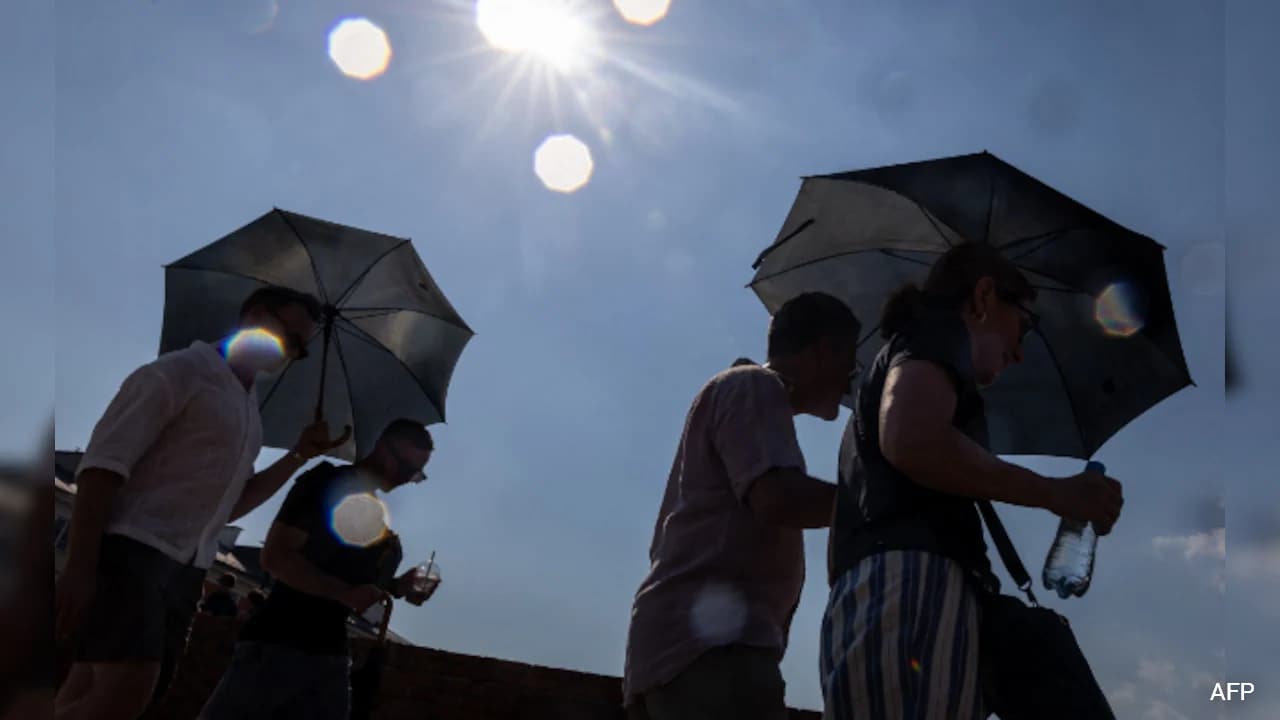
A relentless combination of high temperatures and dense humidity is currently blanketing massive swaths of the United States, pushing regional power grids and human biology to their absolute limits. While standard weather reporting treats these events as temporary seasonal discomfort, the reality is far more dangerous. The current extreme weather pattern is exposing structural vulnerabilities in our national infrastructure and outdated metrics for public health safety. We are no longer just dealing with hot days; we are witnessing a systemic collision between a changing climate and a fixed, aging industrial infrastructure that was never engineered to withstand this prolonged level of atmospheric stress.
The immediate crisis centers on the sheer geographic scale of the current weather system, which stretches from the Gulf Coast through the Midwest and into the Atlantic corridor. When high ambient temperatures merge with high humidity, the air holds a heavy moisture load that fundamentally alters how both machinery and human bodies cool down. This is the phenomenon driving the current surge in emergency room visits and baseline electricity demand.
The Flaw in How We Measure Heat
For decades, public safety announcements have relied heavily on the traditional thermometer reading. This is a mistake. To understand why the current system wide stress is so severe, we have to look at the wet-bulb temperature, a metric that combines dry heat with relative humidity.
When you sweat, the evaporation of moisture off your skin cools you down. But when the air is already saturated with water vapor, that evaporation slows to a horizontal crawl or stops entirely. If the wet-bulb temperature reaches 35 degrees Celsius—equivalent to 95 degrees Fahrenheit at 100 percent humidity—the human body can no longer shed internal heat, even when stripped bare and supplied with unlimited water.
How Humidity Deadlocks Human Cooling:
High Ambient Heat + High Saturated Moisture = Zero Evaporative Cooling
Result: Internal core temperature rises unchecked, leading to rapid heat stroke.
We are not quite at a universal 35-degree wet-bulb threshold across the entire country right now, but localized zones are flirting with the lower boundaries of human tolerance. The current multi-state event is uniquely dangerous because nighttime temperatures are refusing to drop. Historically, cool nights allowed human circulatory systems and brick-and-mortar buildings a window to shed the thermal energy accumulated during the day. Without that nocturnal reset button, the physiological and structural strain compounds hour after hour.
Why the Power Grid Cannot Simply Cool Itself Down
The public conversation around heatwaves usually focuses on a single narrative: everyone turns on their air conditioning at the exact same time, and the surge in demand threatens to trip the wires. That is only half of the equation. The more alarming, overlooked factor is that the infrastructure responsible for generating and moving electricity becomes significantly less efficient as the ambient air gets hotter and more humid.
Consider how a traditional power plant operates. Whether it burns natural gas, splits atoms, or uses coal, a thermal power plant relies on a temperature differential to generate electricity. It creates steam to spin a turbine, and then it must cool that steam back down into water to repeat the process.
When the cooling water sourced from local rivers or ambient air is already warm, the efficiency of the entire plant drops. Generators have to burn more fuel just to produce the same amount of electricity they would on a crisp spring morning.
- Transformer Degradation: Substation transformers rely on ambient air or internal oil pools to dissipate heat. Under intense thermal loads, their internal insulation degrades at an accelerated rate.
- Transmission Line Sag: As high currents push through high-voltage transmission lines during peak demand, the metal wires naturally heat up and expand. When external air temperatures are blistering, these lines cannot cool off, causing them to sag closer to the ground or nearby vegetation, triggering automatic safety shutdowns.
- Peaker Plant Vulnerability: The older, inefficient generation units fired up only during emergencies are notoriously prone to mechanical failure when pushed to run for 48 hours straight in 100-degree weather.
This means that precisely when the American public requires the maximum output from the electrical architecture, the physical system loses a measurable percentage of its maximum capacity. It is a compounding penalty.
The Urban Heat Island and the Concrete Trap
The crisis is not distributed evenly. Major metropolitan areas across the affected regions are experiencing significantly higher sustained temperatures than the surrounding rural countryside due to the urban heat island effect. Asphalt, concrete, and dark roofing materials absorb vast quantities of solar radiation during the day and act as massive thermal batteries, slowly radiating that trapped heat back into the local environment long after the sun has set.
Rural Landscape: High vegetation -> Evapotranspiration -> Lower baseline temperatures
Urban Center: High concrete density -> Thermal retention -> Sustained nocturnal radiation
This creates a predatory economic dynamic. Low-income urban neighborhoods, historically characterized by less tree canopy and a higher density of multi-family concrete housing units, bear the brunt of this thermal retention. In these zip codes, the lack of central air conditioning is not just an inconvenience; it is a profound medical hazard.
Furthermore, the mechanical infrastructure of cities exacerbates the problem. Every single air conditioning unit keeping an office building or a luxury apartment tower cool is actively pumping heat out of its interior and dumping it directly onto the street level. The city becomes an engine that cools its indoor spaces by making its outdoor spaces progressively unlivable.
The Myth of the Quick Infrastructure Fix
It is tempting to look at these systemic failures and demand an immediate, sweeping overhaul of the national grid. But building transmission lines in the United States is a bureaucratic and logistical nightmare that spans decades, not years. A single interstate transmission project can spend eight years trapped in regulatory review, navigating a patchwork of county-level zoning boards, state utility commissions, and private property disputes.
Even the transition to renewable energy introduces distinct mechanical realities during a prolonged atmospheric stagnation event. High-pressure systems that bring intense, suffocating heat are frequently accompanied by very low wind speeds, rendering vast wind farms across the plains temporarily inert. While solar generation thrives during the early afternoon peak, its output drops to zero precisely during the late evening hours when residential air conditioning demand remains dangerously elevated due to the concrete trap.
Battery storage technology is scaling up, but the current deployment rate is not yet sufficient to bridge the multi-day gaps required when a massive weather system parks itself over half the continent. The transition period between old fossil-fuel baseload generation and a fully modernized, decentralized green network is proving to be the most volatile era in modern industrial history.
Survival is a Local Matter
Waiting for a federal modernization plan to protect communities from the immediate threat of humidity-driven infrastructure strain is a losing strategy. The municipalities managing this current crisis successfully are those treating heat as an acute civil defense emergency rather than a routine weather anomaly.
This requires moving away from passive cooling centers—like public libraries that are closed on weekends or holidays—and shifting toward active, neighborhood-level intervention strategies. Some cities are experimenting with cool pavement coatings that reflect solar radiation rather than absorbing it, lowering surface temperatures by several degrees. Others are mandating that landlords provide functional cooling mechanisms, establishing a legal baseline for thermal safety akin to winter heating requirements.
The ultimate takeaway from the current system wide strain is that our relationship with the local environment has fundamentally shifted. The margins for error within our infrastructure have completely evaporated. When the atmosphere turns thick with humidity and the thermometer refuses to drop at midnight, the vulnerabilities we chose to ignore during the cooler months are laid bare for everyone to see.
The true test of a community's resilience is no longer how it handles a winter blizzard, but how it manages the invisible, exhausting weight of a summer that refuses to cool down.