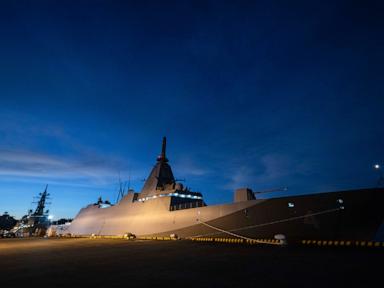
The wind off Sagami Bay carries a salt chill that cuts straight through standard-issue wool. Standing on the observation deck, looking out toward the Pacific horizon, the silence feels heavy. It is not the quiet of peace. It is the quiet of anticipation.
Japan is shifting its weight. For decades, the doctrine was simple: a shield of human defenders, standing shoulder to shoulder, bound by a constitution that renounced war as a sovereign right. But geography does not care about legal philosophy. Demographics do not negotiate with declining birth rates. When the pool of young recruits shrinks year after year while neighboring skies grow crowded with shadows, reality forces a hard pivot.
Consider a hypothetical sergeant named Kenji, guarding a remote radar station on the northern tip of Hokkaido. Kenji has twenty-four years of service in his boots, knees that ache when the barometer drops, and a dozen junior soldiers under his command—or rather, he would, if the barracks were full. Instead, half the bunks are empty. The recruits simply aren't there. When Kenji looks at the northern horizon, he isn't thinking about abstract geopolitical strategy. He is thinking about how a single operator is supposed to watch twelve screens at once without missing a single blip.
That is where the steel arrives.
Japan's Ministry of Defense has crossed a Rubicon. Unmanned combat aerial vehicles are no longer science fiction or experimental prototypes tucked away in corporate hangars. They are the new baseline. The policy documents call it adapting to a new era of warfare. The people standing on the bluffs call it survival.
To understand why this change is happening now, look at the math. Japan’s population is aging faster than almost any other on Earth. The Japan Self-Defense Forces face persistent recruitment shortfalls. At the same time, regional competitors are churning out advanced uncrewed systems by the thousands. A human pilot, trained for over a decade at a cost of millions, is a precious, irreplaceable asset. A combat drone, produced on an assembly line, is replaceable.
Mathematics has no conscience.
Yet, introducing remote and autonomous systems into a military steeped in strict civilian oversight and a defensive-only posture is not just a logistical upgrade. It is an existential shock. When a machine makes a tactical decision thousands of miles away from a human cockpit, who bears the moral weight?
Imagine the control room at a command base outside Tokyo. Soft blue light hums against concrete walls. A technician sits before a bank of high-resolution monitors displaying a live thermal feed of coastal waters. There is no roar of a jet engine here. There is only the low whir of cooling fans and the rhythmic clicking of a keyboard. The drone six hundred miles away does not feel the G-forces of a sharp turn. It simply vectors, its algorithms scanning for anomalies, classifying radar signatures, waiting for human authorization.
The machine sees the target. The human provides the soul. For now.
That distinction matters immensely to the architects of Japan's new defense posture. Tokyo insists that fully autonomous lethal strikes remain a red line. The policy framework demands human-in-the-loop control for any use of force. But lines drawn on paper tend to blur when missiles travel at hypersonic speeds. When seconds decide whether a nation survives a surprise barrage, the pressure to delegate decisions to microprocessors grows staggering.
We have been down this road before in human history. Every time military technology outpaces human reaction time, doctrine bends until it snaps. Crossbows made armored knights obsolete. Machine guns dismantled the cavalry charge. Now, algorithms are rendering traditional squadron dogfights a relic of a romanticized past.
The transition is messy. Budget committees argue over yen allocations for stealth airframes versus anti-drone microwave weapons. Pacifist groups protest outside government gates, warning that shifting to remote combat lowers the threshold for entering a conflict. They argue that when war is sanitized into pixels on a screen, leaders lose their fear of its carnage.
They have a point. It is easy to sanction a strike when your only exposure is a temporary glitch in a satellite link.
And yet, step back into the shoes of the young recruits who would have to fly those legacy jets into contested airspace against overwhelming numerical odds. For them, combat drones are not instruments of aggression. They are shields. They are sacrificial proxies sent ahead into the jaws of air defense networks so that flesh and blood might live to see another sunset.
The strategy document dryly terms this "force multiplier effects through uncrewed-manned teaming." But translation from bureaucratic prose to human terms reveals the raw truth: it is an attempt to rewrite the rules of attrition when your population is shrinking.
As dusk falls over the coastline, the radar arrays keep spinning. They sweep the dark water, hunting for things that do not belong. Somewhere out over the waves, a prototype combat drone executes a silent, programmed loiter pattern, its composite skin absorbing the radar beams, waiting for a prompt that may never come. It has no fear, no family waiting back in Kyoto, and no doubts about its duty. It simply waits. And in that cold, mechanical patience lies the stark reality of tomorrow.