Dusk usually brings a familiar, settling quiet to Mill Road. The steep valley sides of Pontnewynydd catch the last bruised purples and grays of a fading Welsh evening, shadows stretching long across slate roofs and damp tarmac. Porch lights flicker on. Dinner is poured. Doors are bolted against the damp chill. It is the ordinary, uncelebrated rhythm of everyday life in a place where people have known their neighbors for decades, where safety is measured by the locked front door and the casual wave across a garden wall.
Then, the air tears open.
At roughly 7:15 in the evening, that predictable quiet dissolved. Not with the distant rumble of approaching weather, but with the sharp, breathless panic of sudden human violence. A group of men, suddenly entangled in a violent disorder that defied the peaceful backdrop of the valley, turned a quiet stretch near Pontypool into a theater of chaos.
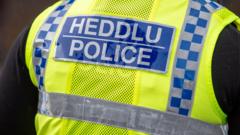
Consider what happens next: the abrupt transition from safety to terror. The screech of tires. Raised voices echoing off stone cottages. The sudden, terrifying realization that the world outside the living room window has violently fractured. Within minutes, the modern machinery of emergency response roared to life. By the time local residents peered cautiously through their blinds, the sky above Pontnewynydd belonged to the National Police Air Service helicopter, its heavy blades chopping the night air into rhythmic waves of sound while specialized firearms officers flooded the ground.
Four men are now arrested. Four lives abruptly diverted into the cold, clinical machinery of the justice system. But numbers on a police blotter rarely capture the human cost etched into the asphalt of Mill Road and Hospital Road.
Behind the flashing blue lights and the police cordon lie harsher realities. Three men were bundled into the back of Welsh Ambulance Service vehicles, their bodies broken and battered by the intensity of the clash. Two of them now lie in hospital beds in a critical condition, suspended between life and death while medical teams work frantically to pull them back. Two others sit behind locked doors in police custody, facing the immediate aftermath of a choice that took mere seconds to make but will echo for years.
Violence does not happen in a vacuum. It ripples outward, shattering the fragile sense of security that binds a community together.
Detective Chief Superintendent Anne-Marie Salwey addressed the public with a stark reminder of what is at stake, noting that such behavior tears at the fabric of local neighborhoods and will never be tolerated. Yet, speeches and official statements ring hollow to the mother who pulled her children away from the front window, or the elderly resident whose heart raced against his ribs as the chaotic shouting bounced off his bedroom walls. Fear is an intimate intruder. It leaves behind a lingering hypervigilance, transforming every late-night knock at the door into a potential threat.
Streets like Mill Road are meant for living, not for crime scene tape. Right now, the section connecting Mill Road to Hospital Road remains locked down in both directions. Red and white tape flutters in the valley breeze. Diversion signs direct bewildered motorists through unfamiliar back lanes. Officers move slowly through the damp morning air, knocking on doors, shining flashlights into dark corners, and hunting for the fragments of truth left behind on dashcams and home CCTV systems.
Police have asked anyone with footage or details from those crucial twenty minutes between 7:00 pm and 7:30 pm to step forward. They ask for log references and anonymous tips through Crimestoppers. But behind those procedural appeals lies a deeper human plea: help us understand how it came to this. Help us piece together the jagged shards of an evening that went terribly wrong.
Communities are fragile ecosystems. They are built on trust, proximity, and an unwritten social contract that promises safety in numbers. When that contract is breached by sudden, brutal clashes, the wound runs deeper than physical property or bruised flesh. It strikes at the collective peace of a valley that asks for nothing more than to live quietly under the hills.
The helicopter is gone now. The rotors have stopped chopping the night. The police tape remains, a stark, colorful barrier cutting through the gray Welsh morning, waiting for the quiet to return.