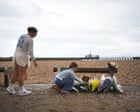
The recent loss of the El-Khawas family off the coast of Shoreham is a devastating reminder that the ocean is unforgiving. A quiet day trip to the beach can change in an instant. Last Tuesday, four members of this family—Hassan, Zeina, 14-year-old Sara, and six-year-old Saja—entered the water near Shoreham Fort. What began as a family outing turned into a desperate emergency. Saja, the youngest, fought for her life in the hospital for three days but passed away this Friday.
This is not a story about recklessness. It is a story about the deceptive nature of coastal waters. Many people look at the sea on a calm, sunny day and see a playground. They don't see the currents. They don't see the hidden drops. They don't see the cold.
Understanding Coastal Risks
When you arrive at a beach like the one at Shoreham, the water might look manageable. The tide might be coming in or out. The surface might appear flat. But beneath that, the reality is often different.
The area near Shoreham Fort, where the River Adur meets the sea, is particularly complex. Currents here aren't just waves. They are concentrated flows of water that can pull even strong swimmers away from the shore. If you aren't familiar with local tides, you’re basically walking into an environment you don't fully understand.
Most people underestimate two things:
- Tidal strength: A receding tide can create a "rip" that acts like a conveyor belt, pulling you into deeper water faster than you can swim back.
- Water temperature: Even in August, the water temperature around the UK is often cold enough to trigger a "cold water shock." This causes an involuntary gasp reflex. If your head is underwater when that happens, you inhale water immediately. That's how quickly a drowning incident starts.
Why Safety Protocols Matter
Sussex Police have stated their investigation into the El-Khawas family tragedy is open, but they are treating it as a "tragic accident." There is no evidence of third-party involvement. This is the hardest kind of news to process because it implies that no one was "at fault" in the legal sense—just a horrific collision between a family and a powerful natural force.
When you're at the beach, you have to be your own lifeguard. Even if there are flags or warning signs, you should treat the water with caution.
- Check for lifeguards: If there isn't a lifeguard on duty, think twice before going in. If you do go in, stay within your depth.
- Watch the tide: Before you set down your towel, check when the tide turns. Shorelines change dramatically in a matter of hours.
- Never swim alone: It’s a cliché for a reason. Having someone on the shore who can raise the alarm is the difference between a rescue and a tragedy.
- Learn the "Float to Live" technique: If you ever get into trouble in the water, fight the urge to swim hard. You'll tire yourself out. Instead, float on your back, keep your airway clear, and call for help.
A Community In Mourning
The impact of this tragedy has rippled far beyond the immediate coast. Sara El-Khawas, a student at the Ellen Wilkinson School for Girls in Ealing, is being remembered as a "sweet girl" by her teachers and peers. Her father, Hassan, was a Palestinian refugee who built a life for his family here in Britain. The loss of an entire family in one afternoon is the kind of grief that leaves a community hollowed out.
We often talk about "staying safe" as if it’s a set of rules for children. It’s not. It’s a requirement for survival when you enter an environment as volatile as the English Channel. The ocean doesn't care about your plans. It doesn't care about your vacation. It is a massive, shifting entity that requires respect every single time you step into it.
If you are planning a trip to the coast, take five minutes to look at local beach safety guidance before you leave the house. Know the specific hazards of the location you’re visiting. Don't assume that because the sun is out, the water is safe.
Be the person who is over-prepared. The ocean will always be there, but you might not get a second chance if you underestimate it. Watch your surroundings, keep an eye on your family, and never, ever assume the water is benign.