The air in the courtyard of the Grand Mosque smells of sun-baked stone, damp marble washed down before dawn, and the distinct, lingering trace of attar of rose. Millions know that scent. It is the smell of arrival after a journey of a thousand leagues, the olfactory signature of exhaustion turning instantly into profound relief. When you stand there, shoulder-to-shoulder with strangers whose languages you cannot speak, the geopolitical borders of the map dissolve. You are simply breathing. You are simply safe.
Or at least, you are supposed to be.
We tend to forget that sanctuaries do not maintain themselves. History is a butcher’s bill of sacred places desecrated, of holy ground trampled by men with iron boots and desperate ambitions. Every pilgrim who kisses the black stone carries an unspoken weight—the quiet, gnawing fear that the fragile peace holding the modern world together might crack right here, at the spiritual center of gravity for nearly two billion people.
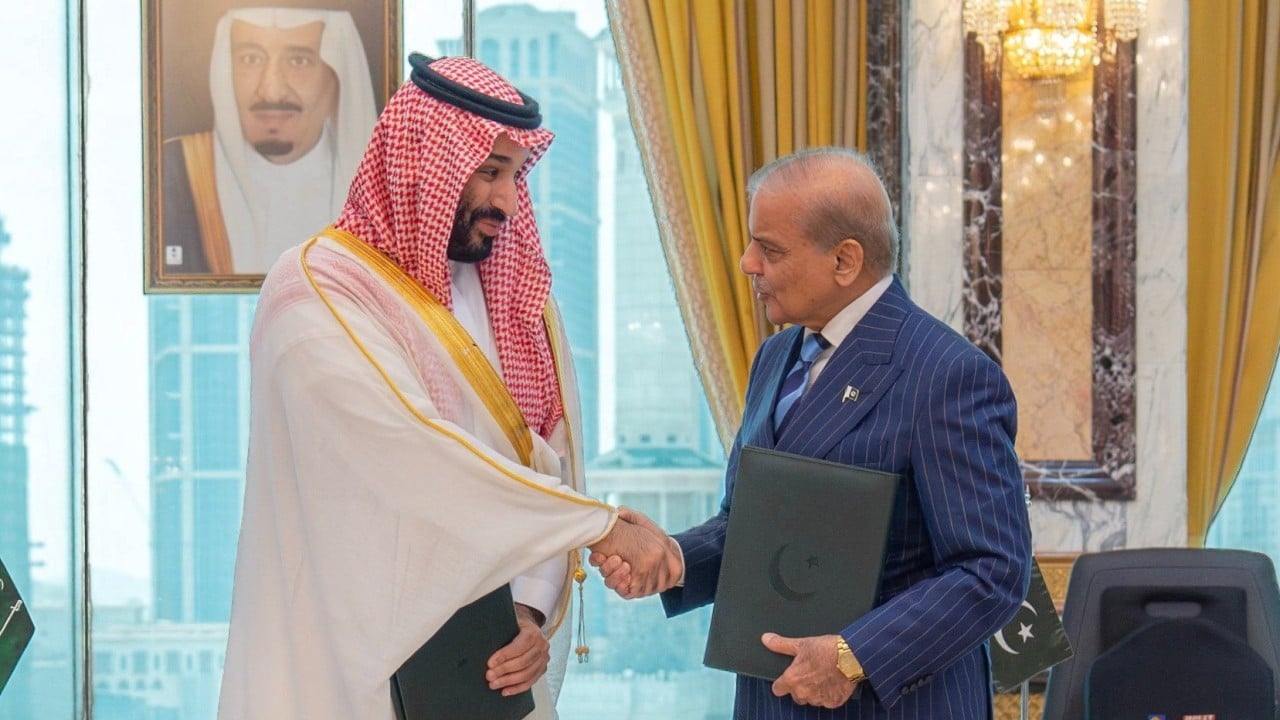
Then came the announcement from Islamabad.
A pact. A shield. A mutual defense understanding framed in the deliberate, cautious language of diplomacy. Pakistan stepped forward to declare that any threat to the holy sites in Mecca and Medina would be met as an existential blow. Purely defensive, they insisted. Open to others, they whispered to the empty chairs at the regional table.
Silence followed. Then murmurs. Then the familiar machinery of suspicion kicked into gear across foreign capitals.
I remember sitting in a smoky teahouse in Lahore years ago, listening to an old soldier trace lines on a paper napkin with a stained thumb. He had spent decades in uniform, watching alliances shift like desert sand dunes. He told me something that stayed with me through every subsequent crisis in the region.
"Men fight over oil because they can measure it," he said, taking a slow sip of dark tea. "They fight over land because they can draw lines around it. But they kill each other over Mecca because it belongs to everyone and no one all at once. That makes people crazy with anxiety."
Anxiety. That is the true engine driving the skepticism around this new accord.
When a nation with a formidable nuclear deterrent and an army forged in decades of regional friction steps up to declare itself a guardian of the sanctuary, the reaction is never simple gratitude. It is a complex calculus of power, pride, and paranoia. Critics in rival capitals immediately started asking the sharp, biting questions. Who is this aimed at? Is it a sectarian tripwire? Is Islamabad trying to stitch together a new bloc that leaves traditional rivals out in the cold?
Consider what happens next when nations start drawing lines around the holiest coordinates on Earth. Every defensive posture looks like a threat to someone standing on the outside looking in.
Yet, to dismiss the Mecca accord as mere posturing is to fundamentally misunderstand the psychology of security in the Muslim world. This is not about projecting offensive might across oceans. It is about a psychological anchor. For millions of ordinary citizens living in volatile states, the stability of the Hijaz region is the ultimate red line. If Mecca burns, the psychological fallout shatters the last remaining illusion of global order.
Pakistan knows this better than most. Its military history is deeply entwined with the security architecture of the Gulf states. For generations, Pakistani troops have quietly served as trainers, advisors, and security backstops across the region. This new accord does not invent a relationship out of thin air; it formalizes an ancient intuition. It translates a visceral, cultural commitment into a legal and strategic framework.
And yet, the doors remain open. That was the most striking part of the initial proclamation. Open to others. An invitation wrapped inside a defense pact.
Why leave the door open? Because exclusivity is a liability in the desert. If the accord is framed as an exclusive club of hardliners, it becomes a target. If it is framed as an open architecture of regional stability, it becomes harder to attack without incurring catastrophic diplomatic costs. It is a brilliant, if risky, chess move. Invite your rivals to the table. Dare them to say no to the protection of the sanctuary.
To understand why this matters right now, you have to look past the press releases and look at the map of contemporary anxieties. The Middle East is a theater of proxy wars, shifting alliances, and technological leaps that make traditional deterrence obsolete. Drones hum in the night skies over oil refineries. Missiles cross borders with impunity. In an era where a cheap piece of hardware can destabilize a global market, the vulnerability of ancient monuments is terrifyingly real.
We are living through a strange historical moment where the old rules have dissolved, but the new ones haven't been written yet. In this vacuum, nations are grabbing whatever stability they can manufacture.
When Islamabad says the accord is purely defensive, the cynics scoff. They point to past entanglements, to domestic political pressures, to the eternal dance of geopolitical leverage. They are not entirely wrong to look sideways at the deal. Trust in international politics is a rare, endangered currency.
But cynicism often blinds us to human necessity.
Imagine a pilgrim saving for forty years in a cramped apartment in Jakarta, or a farmer in rural Senegal selling his livestock to buy a single plane ticket. They are not thinking about regional hegemony or nuclear deterrence. They are thinking about redemption. They are thinking about standing in that courtyard, smelling the rosewater, and weeping without fear.
That is the stakeholder whose voice never makes it into the diplomatic communiqués. That is the human element that gets lost when pundits dissect paragraphs for hidden meanings.
The accord is an imperfect instrument forged by imperfect men in a deeply troubled neighborhood. It will face stress tests. It will be scrutinized by intelligence agencies from Washington to Tehran. It will cause sleepless nights in chancellors' offices where every shift in the balance of power is treated as a mortal threat.
Even so, it changes the geometry of the conversation.
For decades, the security of the holy sites was treated as an unwritten assumption, an invisible background hum that everyone took for granted until the alarms started ringing. By dragging that assumption out into the harsh light of a formal defense agreement, Pakistan has forced the region to confront a hard reality. Protection is no longer just a matter of faith. It is a matter of steel, logistics, and explicit commitments.
The old soldier in Lahore was right about the anxiety. But he was also right about the stakes. When the world outside the courtyard is tearing itself apart, the walls of the sanctuary have to hold.
Everything else is just noise.
The sun dips below the horizon, painting the desert sky in bruised shades of violet and gold. Inside the courtyard, the marble cools against bare feet. The calls to prayer rise up, overlapping in a chaotic, beautiful chorus that washes over the stone. Out there in the wider world, ambassadors are drafting cables, analysts are parsing statements, and generals are running simulations.
None of it disturbs the dust settling on the ancient stones. For tonight, at least, the shield is in place, watching the dark horizon, waiting to see who takes the next step.