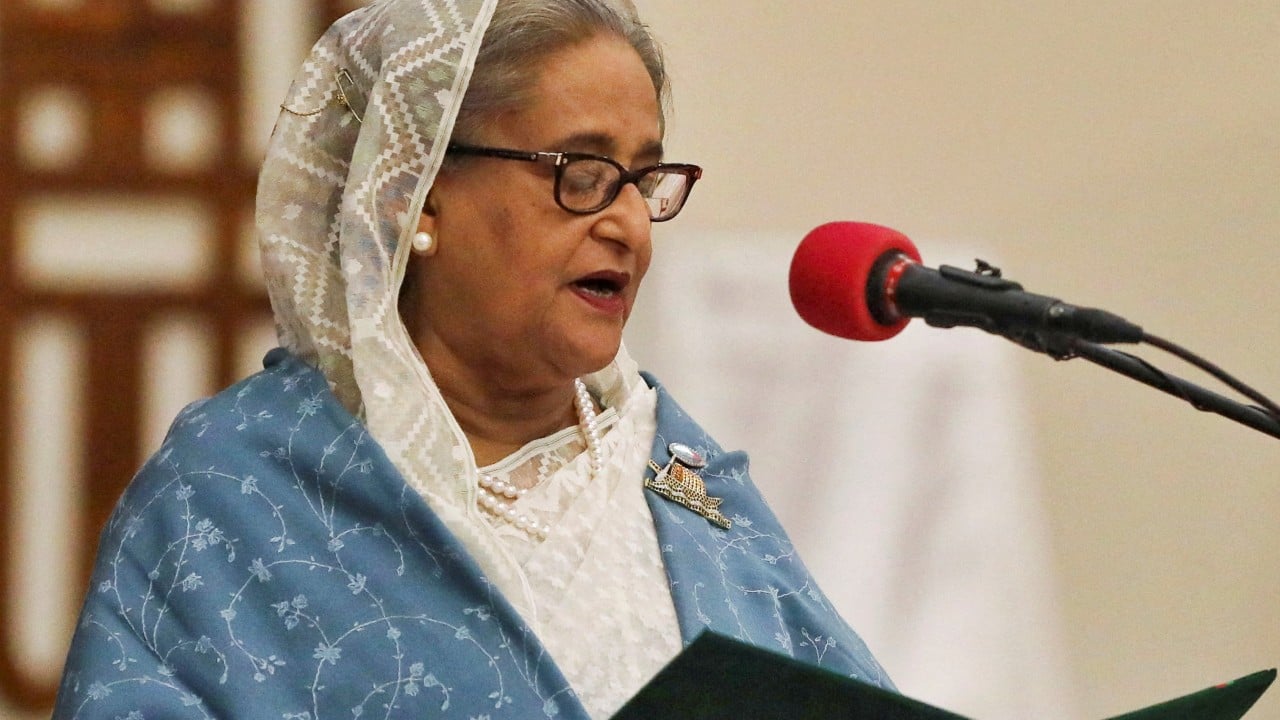
Mainstream foreign desks love a tidy narrative. When news broke that ousted Bangladeshi Prime Minister Sheikh Hasina applied for a passport, the headline writers immediately reached for their favorite political cliché: the impending comeback. They framed a routine bureaucratic filing as a dramatic signal that the exiled leader is packing her bags for Dhaka.
That reading is pure wishful thinking disguised as geopolitical analysis.
A passport application is not a boarding pass. In the brutal reality of South Asian statecraft, applying for travel documents while sitting under security protection in India is a defensive legal maneuver, an expiry-date scramble, and a diplomatic pressure test rolled into one. Anyone treating this paperwork as the opening act of a triumphant return misunderstands both the legal trap waiting in Dhaka and the cold calculus governing New Delhi.
The Lazy Consensus Around Exiled Leaders
Political commentators routinely confuse administrative survival with political resurrection. Whenever a deposed autocrat or former prime minister updates their identification, pundits project grand strategic intent onto basic paperwork.
Here is the reality on the ground. Following her dramatic ouster in August 2024 amid mass student-led protests and the collapse of her Awami League government, Hasina fled to India. Shortly afterward, the interim administration in Dhaka—led by Nobel laureate Muhammad Yunus—revoked her diplomatic passport.
When a state revokes a diplomatic passport, the holder becomes legally stateless in terms of international mobility unless they secure alternative documentation or asylum status. Relying indefinitely on ad-hoc host-nation courtesies leaves an exiled figure completely exposed to domestic political shifts inside their host country. Applying for an ordinary passport—or regularizing travel status—is what you do when your old documents are dead and you need a valid piece of paper to exist legally across borders.
It is the bureaucratic equivalent of renewing an expired driver's license while your car is impounded. You aren't gearing up for a cross-country road trip. You are trying to keep your legal identity intact so you can open a bank account, secure medical care, or relocate to a third country if your current host decides you have become too expensive to keep.
Why Dhaka Wants Her Back (And It Isn't For a Rally)
To believe Hasina is preparing for a voluntary homecoming requires ignoring the sheer weight of the legal machinery currently spinning in Bangladesh.
Since the fall of her government, prosecutors in Dhaka have filed dozens of cases against her, including charges of crimes against humanity, mass murder, and enforced disappearances tied to the violent crackdown on the July 2024 uprising. Bangladesh's International Crimes Tribunal—ironically, the very court her own administration revitalized to prosecute 1971 war criminals—has issued arrest warrants demanding her return.
Let's strip away the romanticism of political exile. If Sheikh Hasina steps onto the tarmac at Hazrat Shahjalal International Airport today, she does not walk into a cheering crowd of Awami League loyalists. She walks directly into handcuffs, solitary confinement, and a fast-tracked trial where the verdict is already written in the public consciousness.
The Extradition Trap
Analysts who treat her passport application as a "homecoming signal" completely miss the extradition chessboard between India and Bangladesh.
- The 2013 Extradition Treaty: India and Bangladesh signed a bilateral extradition treaty in 2013, which was amended in 2016 to make the transfer of fugitives easier by removing the requirement for the requesting country to provide prima facie evidence of guilt.
- The Political Offense Exception: Under Article 6 of that treaty, extradition can be refused if the offense is of a "political character." However, murder and crimes against humanity are explicitly carved out from the political exception in modern extradition frameworks.
- The Diplomatic Standoff: Dhaka has formally requested her extradition. New Delhi has stalled, buying time while balancing its historical ties to Hasina against the need to maintain working relations with the interim government in Dhaka.
Applying for a passport forces the issue into the bureaucratic daylight. If Dhaka rejects the application, it confirms her status as a wanted fugitive stripped of consular protection, strengthening her claim for formal political asylum in India or a third nation like the United Kingdom, Finland, or the United Arab Emirates. If Dhaka somehow processes it—an almost zero-probability event—it creates a legal paper trail that her lawyers can exploit in international courts.
Either way, the target audience for this paperwork isn't the voters of Gopalganj. It is immigration lawyers and foreign ministry officials.
I Have Watched Exiles Burn Millions Chasing Mirages
Over fifteen years tracking political risk and regime transitions across emerging markets, I have seen this exact movie play out from Caracas to Colombo. Deposed leaders surround themselves with an echo chamber of defeated ministers, sycophantic advisors, and diaspora financiers who convince them that the public misses them, that the new government is collapsing, and that one bold gesture will trigger a counter-revolution.
I watched opposition factions in Latin America burn through tens of millions of dollars funding "return campaigns" based on fabricated polling and misread bureaucratic signals. They mistook noise for momentum. Every time a deposed leader filed a court motion or applied for a travel document, their media surrogates screamed that the comeback was imminent. Meanwhile, the security apparatus back home used those exact announcements to purge remaining sympathizers, freeze assets, and tighten border controls.
Exiles suffer from terminal nostalgia. They remember the country as it was when they controlled the police, the courts, and the central bank. They fail to grasp that once the fear barrier breaks in a population—as it shattered in Bangladesh in July and August 2024—the old strongman tactics stop working. You cannot put the toothpaste back in the tube with a passport renewal.
Redefining the Question Analysts Should Be Asking
If you are still asking "When is Sheikh Hasina returning to Bangladesh?", you are asking the wrong question. The power dynamics in Dhaka have permanently shifted, and the Awami League is fractured, leaderless on the ground, and fighting for basic organizational survival.
Here are the questions that actually matter—and the blunt answers most commentators are too polite to print.
Is India Preparing to Drop Her?
New Delhi is trapped in a classic geopolitical bind. For fifteen years, India bet the entire house on Sheikh Hasina, trading unconditional diplomatic backing for transit rights, energy deals, and a crackdown on anti-India insurgents operating from Bangladeshi soil. That bet blew up in August 2024, leaving India deeply unpopular among a generation of young Bangladeshis.
India cannot hand Hasina over to Dhaka without destroying its credibility among every regional ally in South Asia. If New Delhi surrenders a loyal partner to a domestic tribunal, no leader in Kathmandu, Malé, or Colombo will ever trust Indian security guarantees again.
At the same time, keeping her indefinitely in a safe house in Delhi poisons India's relationship with whoever wins Bangladesh's next election. A valid travel document—whether a Bangladeshi passport or an Indian-issued Certificate of Identity—is the prerequisite for moving her quietly to a third country in the Middle East or Europe. New Delhi doesn't want her flying to Dhaka. New Delhi wants an exit ramp that gets her out of India without looking like a betrayal.
Can the Awami League Survive Without Her?
The Awami League spent fifteen years systematically eliminating internal dissent and concentrating every ounce of decision-making power in Hasina's hands. There is no groomed successor. There is no secondary leadership tier capable of commanding loyalty across the party's grassroots network without invoking the Mujib family name.
By floating rumors of a homecoming around a routine passport application, party loyalists in exile are trying to stop the bleeding at home. Local Awami League operatives are facing arrests, asset seizures, and violent reprisals. Telling them "the leader is getting her passport ready" is a desperate morale-boosting tactic designed to keep the remaining cadres from defecting to the Bangladesh Nationalist Party (BNP) or emerging student-led political formations. It is psychological life support, not an operational battle plan.
What Happens If She Actually Attempts to Land in Dhaka?
Imagine a scenario where Hasina boards a commercial flight to Dhaka tomorrow, daring the interim government to arrest the daughter of Bangladesh's founding father, Sheikh Mujibur Rahman.
The result would not be a popular uprising in her favor. It would be an immediate, overwhelming security lockdown at the airport, followed by her swift transfer to custody under heavy military guard. Even if pockets of Awami League supporters attempted to march on the airport, they would face not just the police, but the army and the same student networks that toppled her government months earlier. Far from sparking a comeback, her physical presence in a Dhaka courtroom would give the interim administration a unifying villain to distract the public from inflation, economic stagnation, and governance missteps.
Muhammad Yunus and his advisors would love nothing more than for Hasina to hand herself over. She is far more dangerous to them as a symbol in exile than as a defendant behind bars.
How to Read Political Signals Without Getting Played
If you work in geopolitical risk, journalism, or regional investment, falling for headline spin around exiled politicians will cost you money and credibility. When tracking regime aftershocks, apply three hard rules to filter out the noise:
- Follow the Custody of Force, Not the Paperwork. A deposed leader only returns when elements of the military, intelligence services, or judiciary actively defect to clear the path. Until the men with guns change sides, travel documents are meaningless theater.
- Watch the Host Nation's Visa Bureaucracy. When a host country quietly facilitates third-country travel documents for an exiled ally, they are preparing a graceful relocation, not a triumphant restoration.
- Separate Diaspora Chatter from Street Reality. Exiled party members always overestimate their domestic support because they only talk to each other. Measure real political viability by whether party leaders inside the country can hold an unguarded public meeting without getting arrested or chased off the street. Right now, the Awami League cannot hold a press conference in Dhaka, let alone welcome a returning prime minister.
The Downside of Writing Off a Political Survivor
To be fair, dismissing Sheikh Hasina entirely carries its own analytical risk. She survived decades of political turbulence, multiple assassination attempts—including the horrific 2004 grenade attack that killed 24 people—and prolonged periods in opposition before returning to win power in 2008. South Asian politics has a long history of dynastic leaders rising from political graves when their successors botch the economy.
If Bangladesh's interim government stumbles badly on inflation, law and order, or election timelines over the next two years, public nostalgia for the relative economic stability of the early Hasina years could grow. Disillusionment with revolutionaries is the oldest fuel for counter-revolutions.
Even so, any genuine path back to relevance for the Awami League requires years of painful rebuilding, generational leadership change, and a fractured opposition—not a fast-tracked passport application filed from a safe house in Delhi.
Stop reading bureaucratic survival tactics as victory laps. Sheikh Hasina isn't booking a flight home; she is trying to make sure she has valid ID when her current host finally asks her to leave.