The border does not care about lines drawn on parchment. To the wind sweeping down from the Horn of Africa, the frontier between Sudan and Ethiopia is nothing more than dry brush, ancient acacia trees, and the silent dust kicked up by desperate footsteps. But lately, the dust tells a heavier story. It speaks of quiet arrivals, unmarked vehicles slipping through mountain passes under the cover of night, and a creeping entanglement that threatens to pull an entire region deeper into the abyss.
Look closely at the map. Or better yet, look at the ground.
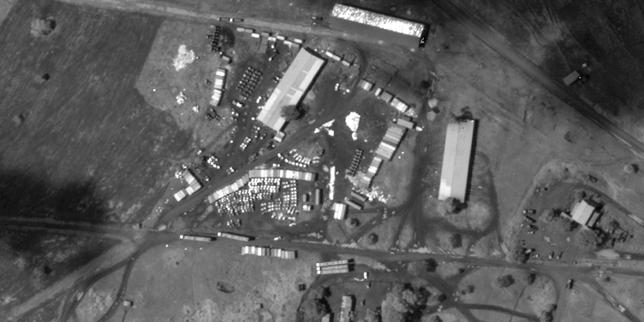
For months, the war in Sudan has bled across its edges, a slow-motion catastrophe displacing millions and tearing communities apart from Khartoum to Darfur. Yet, while the world watches the artillery smoke choking the Nile, another machinery has been quietly assembling in the quiet highlands of neighboring Ethiopia. Intelligence reports and localized accounts point to a grim reality: a second paramilitary base belonging to Sudan’s Rapid Support Forces has taken root on Ethiopian soil.
This is not a humanitarian outpost. It is a staging ground. And behind it looms a shadow that stretches all the way to the office of Prime Minister Abiy Ahmed.
Let us be clear about what this means. When a sovereign state allows a foreign paramilitary force notorious for brutal abuses to set up camp within its borders, neutrality evaporates. It burns away like morning mist under a desert sun.
Imagine standing on a ridge in the Amhara or Benishangul-Gumuz regions, watching logistics trucks roll past under the guise of commercial transport. Inside those trucks are not sacks of grain or medical supplies. They are crates of communications equipment, fuel bladders, and perhaps weapons destined to fuel a furnace that is already consuming civilian lives next door. To understand this dynamic, think of a neighbor who watches a fire break out next door, shakes their head in faux concern, and then secretly hands a can of gasoline to the arsonist.
Why would Addis Ababa play such a dangerous game?
Geopolitics is rarely driven by altruism. It thrives on leverage, paranoia, and the cold calculus of survival. Prime Minister Abiy Ahmed faces his own fragile domestic landscape, grappling with internal rebellions, economic strain, and a fractured regional alliance system. In the murky waters of East African power struggles, leaders often look for proxies, attempting to hedge their bets against potential outcomes in Khartoum. If the Rapid Support Forces consolidate power or carve out a permanent fiefdom in western Sudan, a pragmatic dictator wants a seat at their table.
Except pragmatism in wartime is usually just a polite word for catastrophic miscalculation.
Consider what happens next. When you invite the tiger into your courtyard, hoping it will only bite your enemies, you are simply delaying your own turn at being devoured. The presence of these paramilitary bases in Ethiopia does not just implicate the government in regional destabilization; it invites blowback. It turns peaceful border towns into legitimate targets. It alienates traditional allies in the broader region, deepens mistrust with the central authorities in Port Sudan, and guarantees that when the war finally shifts, the flames will leap backward across the frontier.
The human cost of this high-stakes poker game is invisible to the diplomats in air-conditioned boardrooms. But it is violently real to the people living in the shadow of these camps.
Take a hypothetical farmer tilling a stubborn plot of earth just a few miles from the new military footprint. Let us call him Dawit. Dawit does not know the acronyms of foreign ministries. He does not care about regional hegemony or diplomatic backchannels. He only knows that the roads he used to walk to market are now patrolled by armed men who do not speak the local language, men whose eyes scan the horizon with suspicion, men who treat local civilians not as neighbors, but as obstacles or potential informants.
When Dawit hears the deep, vibrating hum of heavy transport trucks rumbling past his fence at three in the morning, his stomach drops. He knows the war has not stayed in Sudan. It has moved into his backyard, disguised in civilian clothes and protected by political fiat.
This is the hidden cost of quiet complicity. Every clandestine airstrip, every hidden barracks, and every handshake in a dimly lit office pushes the entire region closer to an uncontainable conflagration. Leaders like Abiy Ahmed often believe they are playing a masterclass in strategic ambiguity, balancing competing factions to maximize their own security. History suggests otherwise. History shows that when nations dance with armed militias, they eventually trip over the blades.
The dust on the Ethiopian border is still settling. The trucks are still moving. But the illusion of plausible deniability is wearing thin, stripped away by the sheer weight of accumulating evidence and the undeniable reality on the ground.
Night falls quickly over the highlands. The stars emerge, cold and indifferent, looking down upon a continent caught once again between the ambitions of the powerful and the endurance of the powerless. Somewhere out there in the dark, an engine turns over. Another truck rolls toward the frontier, carrying the seeds of tomorrow's sorrow.