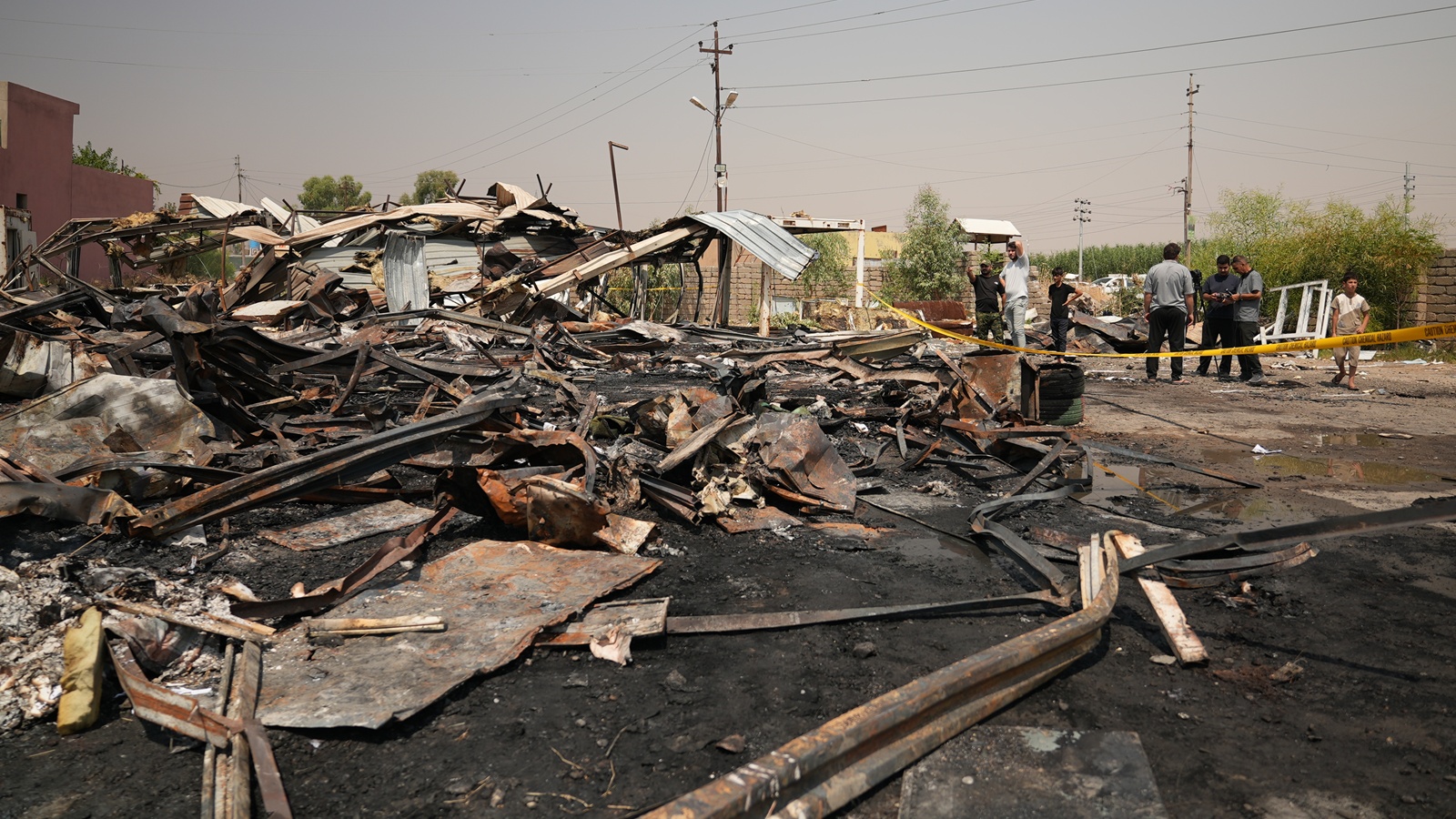
Reports regarding alleged military actions involving foreign advisers in Iraq highlight a persistent reality of modern geopolitical friction. Beneath the surface headlines lie complex networks of proxy warfare, shifting alliances, and regional positioning that continue to shape the Middle East. Understanding these flashpoints requires looking past surface-level casualty counts to examine the strategic calculus driving actors in Washington, Riyadh, Tehran, and Baghdad.
The Anatomy of Shadow Warfare
Geopolitical conflict rarely follows traditional declarations of war anymore. Instead, nations operate through proxies, intelligence networks, and targeted engagements designed to send signals without triggering full-scale conventional war.
When incidents occur involving foreign military advisers on sovereign soil, several core mechanics are usually at play.
- Intelligence Sharing: Real-time satellite and signals intelligence dictate operational timing.
- Plausible Deniability: Governments often minimize formal acknowledgment to prevent diplomatic escalation.
- Deterrence Messaging: Strikes are frequently executed to reestablish red lines rather than secure territorial gains.
Advisers from external states operating within Iraq usually function as structural linchpins. They coordinate logistics, train local militias, and maintain communication channels back to command centers in Tehran or other regional hubs. Removing them disrupts the operational continuity of allied paramilitary networks, forcing commanders to reorganize their supply lines and command structures under heavy surveillance.
Historical Precedents and the Iraq Theater
Iraq has long served as the primary sandbox for international rivalry. Following the 2003 invasion, the institutional vacuum invited immediate foreign penetration. Iran capitalized on geographic proximity and shared religious affiliations to cultivate a deep web of political and military influence.
Simultaneously, traditional regional rivals viewed this expansion with acute alarm. Saudi Arabia and other Gulf states watched Tehran cement a land bridge stretching from the Iranian border through Iraq and Syria straight to the Mediterranean. Every military action or kinetic strike in this theater must be viewed through this lens of containment and counter-containment.
The strategy deployed by external actors relies on calibrated pressure. By targeting logistical hubs or advisory elements, coalition forces attempt to degrade adversary capabilities incrementally. Yet, history demonstrates that such actions rarely achieve total strategic suppression. Adversaries adapt by decentralizing command nodes, moving underground, and relying increasingly on indigenous personnel who are harder to identify and target.
The Diplomatic Fallout in Baghdad
The Iraqi government finds itself in an impossible diplomatic bind. Nominally a sovereign state allied with Western security frameworks, Baghdad simultaneously hosts powerful political factions and armed groups deeply loyal to Iran.
Every kinetic event occurring within Iraqi borders places immense pressure on local leadership.
- Sovereignty Violations: Publicly, Baghdad must condemn unauthorized military actions on its soil to satisfy domestic nationalist sentiment.
- Backchannel De-escalation: Privately, security officials often manage the fallout to prevent militia retaliation against foreign diplomatic and military installations.
- Economic Vulnerability: Iraq depends heavily on global financial systems and regional trade, limiting how hard its leaders can push back against powerful external patrons.
This precarious balancing act creates a permanent state of political paralysis. Reforms stall because every major institution is infiltrated by competing factions answering to foreign capitals.
Strategic Horizons
As regional actors continue to recalibrate their doctrines, the nature of these engagements will shift further toward cyber warfare, drone technology, and deniable kinetic operations. The traditional model of large-scale military intervention has given way to persistent, low-intensity friction.
The structural conditions that permit these shadow wars to persist remain unchanged. Until regional powers establish durable diplomatic frameworks or a genuine balance of power emerges, the Iraqi theater will continue to absorb the shockwaves of broader geopolitical ambitions. Every strike, denial, and retaliation marks another chapter in a conflict with no clear resolution in sight.