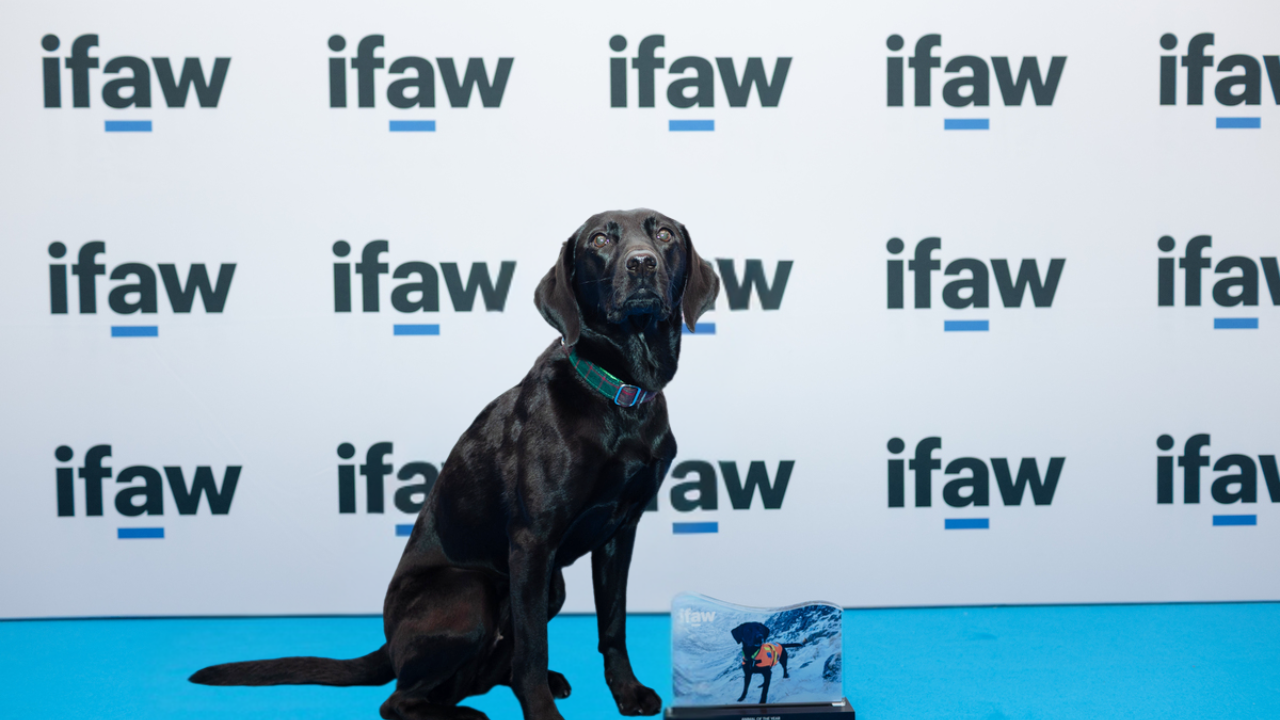
Most people picture a Labrador retriever chasing a tennis ball or napping by a radiator. Sgiath does neither when she's on the clock.
This black Labrador from the Scottish Highlands won the International Fund for Animal Welfare's (IFAW) 2026 Animal of the Year Award on October 15, 2026, at BAFTA in London. She didn't win it for pulling a hiker out of a snowdrift, even though she trains and works on mountain rescue with the Glencoe team. She won it because her nose can pick out an invasive marine organism nicknamed "sea vomit" along wet shorelines and harbor structures—a first in the world, according to IFAW.
That's the core story, and it sounds absurd at first glance. A Highland search dog trading snowy ridges for slimy coastal colonies? Honestly, it makes complete sense once you look at how broken marine surveillance can be when invasive species arrive quietly.
How Sgiath Went From Mountain Rescue to Marine Conservation
Sgiath's handler, marine ecologist Dr. Texa Sim, didn't wake up one morning planning to turn a search dog into an underwater-adjacent botanist-meets-marine-biologist. She started in mountain search and rescue, learned how scent detection works in chaotic outdoor environments, and began focusing on ecological detection around 2022.
Land-based conservation dogs already sniff out everything from invasive weeds to endangered scat. Coastal and marine ecosystems are much trickier. Salt spray, shifting tides, rotting seaweed, diesel fumes around marinas, and shellfish gear create a wall of competing smells.
Working with the Community Association of Lochs and Sounds—with support from Fauna & Flora—Dr. Sim turned her own garage into a training lab. She built a practice wall and hid samples of the target organism so Sgiath could learn what to hunt without getting distracted by dozens of similar coastal scents.
The breakthrough didn't come from magic. It came from proof. As Dr. Sim told IFAW, the first time she asked Sgiath to pick out the target scent among plenty of lookalike smells, the dog went right to it.
The Hardest Trick Isn't Finding the Scent
A dog that's wired to hunt and search gets pumped up when they find what you asked for. During mountain rescue work, a dog uses an active indication to alert handlers.
On a slippery shoreline or around delicate aquaculture gear, barking or charging in is a terrible idea. Instead, Sgiath freezes and stares at the spot.
Think about how counterintuitive that is for a high-drive working Labrador. Dr. Sim had to teach Sgiath that dead stillness at the exact moment of discovery earns the reward. If you've ever tried to get an excited dog to hold a "stay" with a high-value treat or toy right in front of them, you know how much self-control that takes.
What "Sea Vomit" Actually Is and Why It Matters
Despite the gross nickname, "sea vomit" isn't vomit at all. It's Didemnum vexillum, commonly called carpet sea squirt—an invasive colonial tunicate native to Japan that has spread around the globe, often hitching rides on boat hulls.
In the UK, Didemnum vexillum was first recorded in Wales in 2008 and has since turned up in parts of England and Scotland, including areas monitored in Scottish Government reporting such as the Firth of Clyde, Loch Creran, and Loch Fyne.
Here's why marine scientists take it seriously:
- It smothers habitats: Carpet sea squirt clones itself and forms thick, slimy sheets over rocks, seaweed, pontoons, and seabed surfaces, crowding out native marine life.
- It hits working coasts: Thick colonies can foul harbors, boats, and shellfish farms, creating headaches for fisheries and aquaculture.
- It looks like ordinary gunk: Visually, it can blend in with native growths, meaning teams often need lab work or DNA analysis—including environmental DNA (eDNA) monitoring—to confirm what they're looking at.
Warming seas can also help invasive species gain a stronger foothold where they weren't previously established. Once an infestation is huge and entrenched, clearing it gets expensive and messy fast.
A Dog Isn't a Lab Replacement
Let's be real about limits, because hype ruins good conservation science. Sgiath can't wipe out Didemnum vexillum on her own, and a dog's nose isn't a standalone courtroom verdict.
As coverage of her work notes, dogs help flag suspicious spots early along beaches, low-tide margins, and marine structures so people can investigate faster—and any suspected find still needs proper expert confirmation. Even then, finding hundreds of colonies shows how much ground a single trained dog can cover when human eyes might walk right past.
What Other People Miss About Working Labradors
A lot of folks treat Labradors like furry couch potatoes who only wake up for dinner. That stereotype misses what makes the breed tick when given a real job.
Dr. Sim has pointed out that Labradors aren't "lazy" at all—they're adaptable, level-headed, and strongly motivated, which is why they're her breed of choice for this kind of experimental work. That same steady temperament helps a dog stay focused in cold Highland weather or tricky coastal terrain without panicking or losing the plot.
She is also training a younger Labrador, Uisge, to work alongside Sgiath. Bringing a second dog into the rotation is smart practical planning: dogs get tired, weather changes, and building a backup team turns a one-dog novelty into a repeatable conservation method.
Practical Ways to Support This Kind of Conservation
If Sgiath's story makes you want to do more than just share a cute dog photo, you don't need a marine biology degree or a search-and-rescue vest to help.
- Follow official marine biosecurity guidance: If you boat, kayak, dive, or work around coastal structures in regions where Didemnum vexillum is a concern, check local reporting rules and clean, drain, and dry gear and hulls so you don't accidentally move invasive species between sites.
- Learn how eDNA and scent work together: Read up on how environmental DNA surveys and trained detection teams complement each other rather than competing—early spotting is the whole game before colonies spread.
- Back organizations doing the groundwork: Look into groups like IFAW and regional coastal initiatives that fund practical species monitoring, community coexistence, and wildlife rescue.
- Respect working dogs in the field: If you ever spot a search or conservation dog working on a trail or shoreline, give them space, keep your own dog on a lead, and don't try to pet or distract them while they're working.
Dog that hunts invasive 'sea vomit' honoured as animal of the year shows Sgiath's story in motion alongside Dr. Texa Sim, making it easy to see how a mountain rescue dog adapts to coastal conservation work.