The fluorescent lights of a windowless briefing room don't flicker like they do in the movies. They hum. It is a low, persistent vibration that gets under the skin, a mechanical reminder that in the basement of the Central Intelligence Agency, the air is filtered, the secrets are heavy, and the clock is always ticking.
Seven analysts sat in a room like this. They weren't action movie archetypes with holsters and cynical quips. They were data people. They were the kind of experts who spend their lives looking at viral sequences and geographical heat maps, the kind of people who can tell you exactly how a microscopic protein fold might change the course of a century. Six of them reached a conclusion that should have shaken the world to its foundations.
They believed, with the quiet weight of evidence, that the most devastating pandemic of the modern era didn't start in a crowded market. They believed it started in a tube.
The Weight of the Seventh Man
To understand what happened next, you have to understand the culture of the "IC"—the Intelligence Community. It is a world built on "confidence levels." When an analyst says they are "highly confident," it is the professional equivalent of shouting from a rooftop. When they say "moderate confidence," they are betting their career on a calculated probability.
These seven analysts—members of a specialized COVID-19 discovery team—were staring at a mountain of data. Six of them saw a clear path leading back to the Wuhan Institute of Virology. They saw a laboratory-associated origin. They saw the fingerprints of human intervention and biosafety failures. Only one dissenter remained, leaning toward the "zoonotic" theory—the idea that the virus jumped naturally from animal to human.
In a fair fight of ideas, a six-to-one majority is a landslide. It is a mandate for a headline. But in the shadows of Langley, the math of truth is often altered by the calculus of optics.
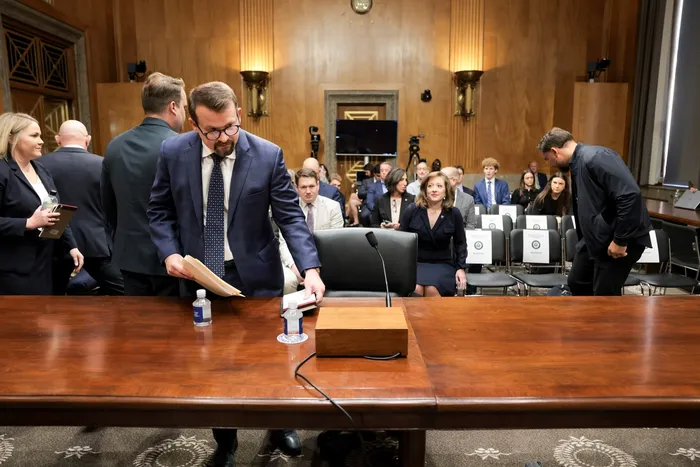
According to a whistleblower whose testimony recently reached the halls of Congress, these analysts weren't just ignored. They were incentivized to change their minds. Imagine the pressure of that room. You have spent months tracing the genetic scaffolding of a killer. You have mapped the proximity of the outbreak to the high-security labs. You have found the anomalies that shouldn't exist in nature. And then, a senior official walks in.
They don't tell you that you’re wrong. That would be too clumsy. Instead, they talk about the "global implications." They talk about "inter-agency harmony." They offer a "significant monetary incentive"—a hush-money bonus wrapped in the sheep's clothing of a performance reward—to flip your vote.
The Ghost in the Genetic Machine
Why does the origin of a virus matter three years after the world moved on? It matters because of the "invisible stakes."
If a bridge collapses because of a freak earthquake, we mourn the victims and rebuild. If a bridge collapses because the engineers ignored a crack in the foundation and the city inspectors took a bribe to look the other way, we don't just rebuild. We demand a reckoning. We change how bridges are built.
The lab leak theory was never just a political football, though it was kicked around like one. At its core, it is a question of human hubris. Modern virology involves something called "gain-of-function" research. It is a high-stakes game of "what if." Scientists take a virus and make it more contagious or more lethal in a controlled environment to see how it might evolve, hoping to create vaccines before nature can strike.
It is fire-fighting by starting controlled burns. But when the wind shifts, the world catches fire.
The whistleblower’s claim suggests that the leaders of the CIA didn't just disagree with the analysts; they buried the assessment to protect a narrative. By the time the final report reached the public, the six-to-one majority had been sanitized. The "moderate confidence" of a lab leak was downgraded to an "undecided" shrug. The truth wasn't lost; it was managed.
The Price of Public Trust
Consider the fallout of a lie told for the "greater good."
When the gatekeepers of information decide that the public cannot handle a complicated truth, they create a vacuum. And in that vacuum, conspiracy theories don't just grow; they thrive. By suppressing the genuine concerns of their own top-tier analysts, the leadership of the intelligence community did more than hide a fact. They eroded the very concept of expertise.
If the people whose job it is to find the truth are being paid to hide it, then who is left to believe?
This isn't just about the CIA. It is about the friction between the people who do the work and the people who manage the fallout. The analysts are the sensors. They are the nerves at the fingertips of the government, feeling the heat and the cold. The leadership is the brain, but in this case, the brain decided to ignore the pain signal because acknowledging the burn would be too politically expensive.
The whistleblower’s account details a system where the "seventh man"—the lone dissenter—was used as a shield to justify the suppression of the majority's findings. It was a masterpiece of bureaucratic maneuvering. By highlighting the lack of "unanimity," the bosses could claim the science was "inconclusive," effectively silencing the six experts who were sure of what they saw.
The Laboratory of Secrets
We live in an era where the line between natural disaster and man-made catastrophe has blurred. Technology has given us the power of gods, but we are still governed by the impulses of middle managers.
The Wuhan Institute of Virology wasn't just a building; it was a symbol of a global race for biological supremacy. When the CIA analysts looked at the data, they weren't looking for a villain. They were looking for the source. They found a trail that led to a door that had been left ajar.
But acknowledging that door meant acknowledging a failure of global proportions. It meant admitting that the very systems designed to protect us—the international protocols, the peer-reviewed grants, the intelligence oversight—had failed.
The whistleblower, a "highly decorated" senior officer, didn't come forward for fame. To be a whistleblower in the intelligence world is to commit professional suicide. You become a pariah. You lose your clearances, your social circle, and often, your peace of mind. You do it because the hum of the fluorescent lights becomes unbearable when it's the only thing covering the sound of a lie.
The Echo in the Halls
The story of the seven analysts is a tragedy of the modern age. It is a story of how easily "the facts" can be polished until they reflect whatever the viewer wants to see.
Think about those six experts today. They go to work, they badge in, they sit in their cubicles, and they know. They know that they saw the evidence. They know that they were offered money to look away. They know that the official report sitting on the President's desk is a hollowed-out version of the reality they uncovered.
We are often told that the truth will out. We are told that sunlight is the best disinfectant. But sunlight has a hard time reaching the basement of Langley.
The stakes aren't just about a virus that changed the world in 2020. The stakes are about the next one. If we cannot be honest about how the last fire started, we have no hope of preventing the next one. We are essentially walking through a forest of dry timber, carrying a box of matches, and promising ourselves that the smoke we smell is just a trick of the light.
In the end, the most dangerous thing in that Wuhan lab wasn't a virus. It was the human tendency to prioritize the safety of the institution over the safety of the species. The analysts saw the monster. The leaders saw the paperwork. And in the gap between those two visions, the truth was quietly ushered out the back door, leaving us all to wonder what else is being buried beneath the hum of the lights.
Somewhere in a secure facility, a file is marked "classified" not because it contains secrets of the enemy, but because it contains the integrity of the men and women who were told their expertise had a price tag. The silence that follows isn't the absence of sound. It is the presence of a secret that is too big to keep, and too dangerous to tell.