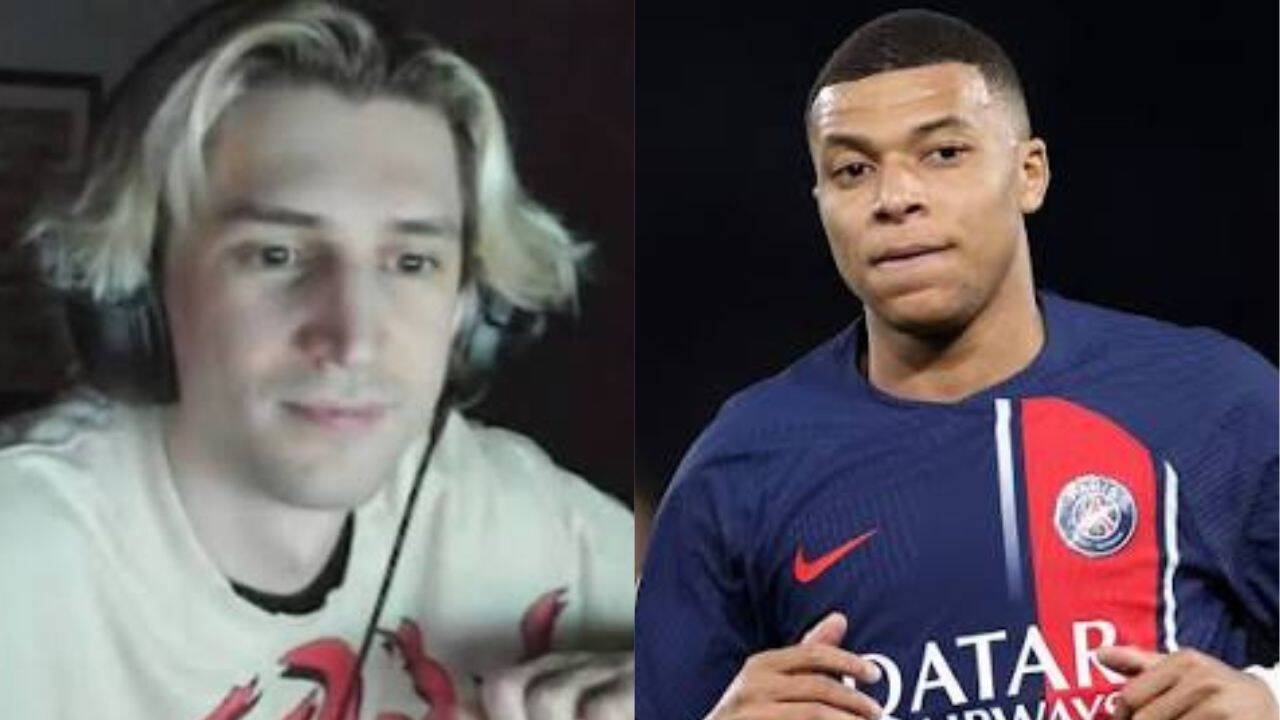
The room is dark, save for the neon glow of a monitors' graveyard. Felix Lengyel, known to millions across the globe as xQc, sits slumped in his gaming chair. Outside, the world moves at its usual sluggish pace. Inside this room, reality is measured in frames per second and the frantic rhythm of chat messages cascading down a screen like digital rainfall. Thousands of miles away, in a sleek corporate boardroom in Zurich, Switzerland, an automated algorithm wakes up. It doesn't care about community, internet culture, or the hyper-animated French-Canadian streamer who has become the unofficial king of live broadcasting. It cares about boundaries. It cares about property.
When these two forces collided on a Tuesday evening, the explosion didn't make a sound. It just turned a screen black.
Live streaming is built on an illusion of absolute freedom. We tune in because anything can happen. A creator might spend eight hours failing to beat a video game boss, or they might spend forty minutes arguing with a digital text-to-speech voice about the shape of the earth. It feels like the last wild frontier of media. But the sudden, jarring suspension of xQc’s channel revealed the invisible electric fence that surrounds the entire ecosystem. A single copyright strike from FIFA, the global governing body of soccer, cut the feed. The crime? A brief, shared moment of a World Cup highlight featuring France’s talismanic forward, Kylian Mbappé, facing off against Iraq.
This is the story of what happens when the unstoppable force of internet celebrity meets the immovable object of legacy media ownership. It is a clash over who owns our shared cultural moments, and whether the digital spaces we live in actually belong to us at all.
The Glow of the Shared Screen
To understand why a copyright strike feels like a betrayal to millions of viewers, you have to understand the specific intimacy of the "reaction" stream.
Imagine a modern colosseum, but instead of sitting in the bleachers, you are crowded into a small living room with fifty thousand of your closest friends. The main attraction isn’t necessarily the video being watched; it is the face of the person watching it. When Kylian Mbappé glides past a defender with the terrifying, effortless grace that has made him a global icon, the crowd doesn't just want to see the goal. They want to see Felix gasp. They want to see him leap out of his chair, slam his hands on his desk, and stumble over his words in an attempt to process the athletic genius on display.
This is the currency of the modern internet: shared attention.
Streamers like xQc act as cultural filters. They curate the massive, overwhelming firehose of the internet and turn it into a communal experience. When a highlight from the France versus Iraq match flashes on his screen, it isn't an act of piracy in the traditional sense. Nobody is skipping a cable television subscription to watch a grainy, compressed video clip on a Twitch feed while a guy eats fast food in the corner of the frame.
Yet, to the automated eyes of FIFA’s digital enforcement team, there is no distinction between a teenager illegally rebroadcasting an entire tournament for profit and a mega-streamer reacting to a seven-second clip. The algorithm sees copyrighted pixels. The algorithm strikes.
The screen goes dark. A generic error message replaces a human being. The digital colosseum vanishes in a fraction of a millisecond.
The Invisible Corporate Hand
Legacy sports organizations are built on exclusivity. They view the world through the lens of broadcast rights—massive, multi-billion-dollar contracts carved up by territory, negotiated over years by armies of lawyers in expensive suits. To them, a World Cup broadcast is not a cultural event to be shared freely; it is an asset to be protected with religious ferocity.
Consider the contrast between these two worlds.
On one side, you have an organization rooted in twentieth-century logic. They believe that value is created by building walls. If you want to see Mbappé play, you must pay the gatekeeper. You must watch the approved commercials. You must stay within the sandbox they have built for you.
On the other side, you have the open internet. Value here is created by tearing down walls. It thrives on memes, remixes, highlights, and instant reactions. If a goal happens in a stadium in Doha or Paris, the internet expects to see it, dissect it, and turn it into a cultural artifact within ninety seconds.
When xQc showed that highlight, he was operating under the unwritten laws of the internet. He assumed that his commentary, his presence, and the transformative nature of the stream fell under the protective umbrella of "fair use." It is a legal doctrine that allows for the use of copyrighted material for criticism, comment, or news reporting. It is the legal shield that keeps the entire commentary genre alive.
But digital platforms have surrendered the judge's gavel to corporate algorithms. On websites like Twitch and YouTube, you are guilty until proven innocent. There is no courtroom. There is no nuance. A legacy media giant issues a Digital Millennium Copyright Act (DMCA) notice, and the platform pulls the plug automatically to shield themselves from liability.
The streamer is left in the dark, forced to navigate a labyrinthine appeals process while their community fractures and scatters across the web.
The Fragility of a Digital Kingdom
There is a unique vulnerability in being an internet celebrity.
To the casual observer, someone like xQc looks untouchable. He signs contracts worth tens of millions of dollars. He commands an army of loyal fans who will defend him in any comment section on earth. He is, by any metric, one of the most influential media figures of his generation.
But his entire kingdom is built on rented land.
If a traditional television network commits a copyright violation, they receive letters from lawyers. They negotiate. They pay a fine. They keep broadcasting. The show goes on while the executives argue behind closed doors.
On the internet, the punishment is immediate execution. Your channel is deactivated. Your archive is locked. Your connection to your audience is severed instantly. For a creator whose entire life and business rely on daily consistency, a sudden suspension is a terrifying reminder of how little control they actually possess. The digital walls can close in at any moment, triggered by nothing more than a stray piece of audio or a few seconds of a soccer match.
This incident exposes the deep anxiety that sits at the heart of the creator economy. Creators are told to be authentic, to be spontaneous, and to react to the world around them in real-time. But the systems they use to reach that world are governed by rigid, automated laws that punish spontaneity.
We are living in an era where our digital public squares are entirely owned by private corporations. The spaces where we gather to talk, laugh, and watch things together are subject to rules that prioritize corporate liability over human expression.
The suspension of xQc wasn't just a minor inconvenience for a wealthy streamer and his fans. It was a warning shot across the bow of the entire internet culture. It proved that no matter how big your audience grows, no matter how much money you generate, you are still just a guest on someone else's platform.
The feed eventually returns. The suspension gets lifted after the technicalities are sorted out and the lawyers have had their say. Felix will sit back down in his chair, the chat will resume its frantic, unreadable pace, and the neon lights will stay on for another night.
But the memory of the black screen remains. It is a quiet reminder of the stakes. Every time a creator hits the "Go Live" button, they are gambling against an army of algorithms that never sleep, waiting for the next time a human being forgets who owns the world they are showing.


