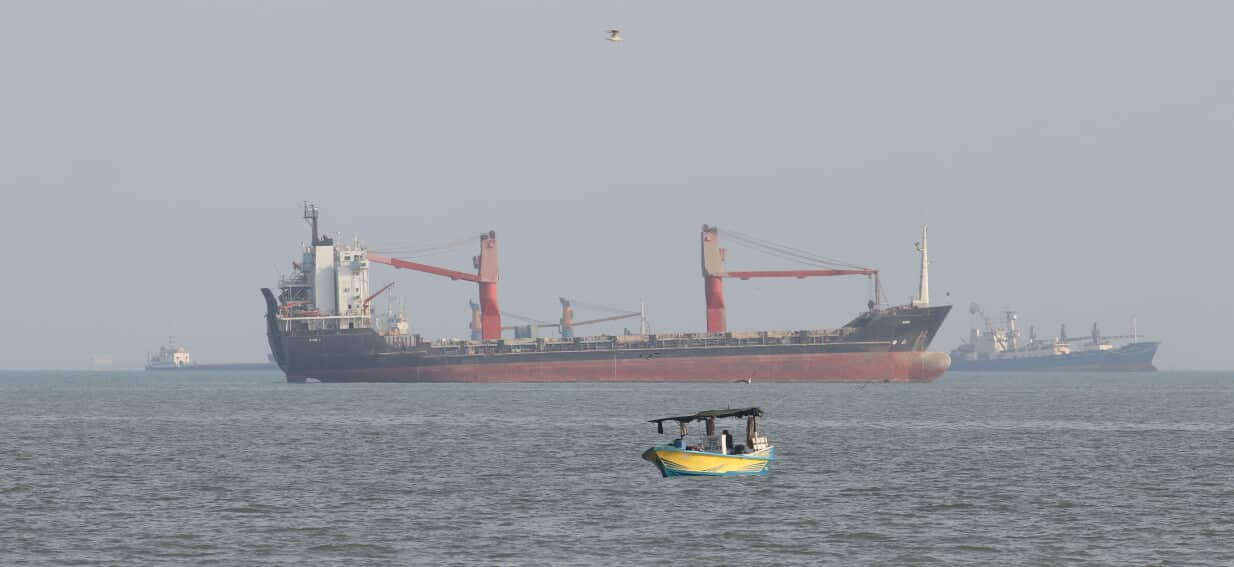
Seven damaged oil tankers in a single day. Headline writers love a big round number, especially when it comes paired with the Strait of Hormuz and a record label.
Panic follows on cue. Oil traders mash buy buttons. Pundits dust off their favorite maps of Persian Gulf chokepoints and start drawing red arrows over every shipping lane from Ras Tanura to Fujairah.
Relax. Put the doomsday scripts back in the drawer.
When an outlet runs a story claiming seven oil tankers were damaged in the Strait of Hormuz in the largest single-day record, the lazy consensus writes itself. Chokepoint equals instant supply shock. Supply shock equals triple-digit crude. Triple-digit crude equals global economic misery.
That narrative is lazy, sloppy, and analytically bankrupt.
I have spent years watching commodity desks, freight brokers, and corporate supply-chain teams blow millions of dollars reacting to headline velocity instead of physical market mechanics. Every time a flare-up hits the Persian Gulf, half the room acts as if every vessel in the region just turned into a coral reef. The other half treats any non-zero incident count as proof that the global energy system is hanging by a thread.
Both instincts miss the point. A "record" day of vessel damage tells you almost nothing on its own unless you define what "damaged" actually means, how much crude actually stops moving, how long the disruption lasts, and how the rest of the global oil system absorbs the punch.
The Lazy Consensus Around Chokepoints Is Costing You Money
Standard coverage of Persian Gulf incidents relies on a simple, comforting formula: scary geography plus big number equals market catastrophe.
It sells clicks. It rarely survives contact with real logistics.
First, define your terms. In maritime reporting and energy commentary, "damaged" is one of the most elastic words in the dictionary. A hull holed below the waterline with an active oil spill and a dead engine is a completely different event from shrapnel peppering a superstructure, a scorched deck plate, a disabled radar mast, or a vessel grazed during evasive maneuvers. Seven ships taking minor-to-moderate hits is a serious operational and safety crisis for crews and owners. Seven sunk or permanently disabled Very Large Crude Carriers (VLCCs) blocking a channel is a structural shock. Conflating the two turns precision risk analysis into theater.
Second, look at flow versus stock. Even when vessels get hit, crude oil does not evaporate into thin air. A tanker sitting off the coast or limping into port still holds cargo, or else it has not loaded yet. Markets care about barrels per day failing to reach refineries, not just how many hulls got dinged in a 24-hour window.
Third, the Strait of Hormuz is not a single straw that snaps the moment someone taps it. It is roughly 21 miles wide at its narrowest point, with designated inbound and outbound shipping lanes, each typically two miles wide, separated by a buffer zone. Physical transit through the strait is governed by maritime law, naval presence, commercial risk appetite, insurance coverage, and crew willingness—not a light switch labeled "Open" or "Closed."
I have watched trading houses overpay wildly for prompt barrels and rush into knee-jerk freight hedges during past Gulf spikes, only to watch spreads collapse once physical cargoes kept trickling out under escort, rerouted schedules, or adjusted war-risk premiums. Buying fear at peak decibels is a reliable way to donate basis points to people who actually read charter parties and insurance clauses.
How Physical Oil Markets Actually Absorb a Shock
To understand why seven damaged tankers does not automatically equal a historic oil crunch, you have to look at the plumbing underneath the headlines.
Global oil markets are shock absorbers made of storage, pipeline bypasses, refining flexibility, and time.
Spare Capacity and Pipeline Workarounds
When Persian Gulf exports face friction, producers and traders do not just shrug and watch tankers burn. Saudi Arabia operates the East-West Crude Oil Pipeline (Petroline), moving crude across the kingdom to Yanbu on the Red Sea. The UAE operates the Habshan-Fujairah pipeline, allowing Abu Dhabi exports to bypass the Strait of Hormuz entirely and load on the Gulf of Oman.
Neither pipeline replaces every single barrel that normally transits Hormuz on a bad day, and rerouting takes time and creates regional crude quality mismatches. Still, bypass infrastructure changes the math. A choke point with partial bypasses behaves very differently from a dead-end pipe.
Inventories and Floating Storage
Refineries do not run on zero inventory. Commercial onshore tanks, strategic reserves, and tankers already at sea—including floating storage—act as buffers. A single day of vessel damage creates friction and delay; it takes sustained disruption measured in weeks, not hours, to drain downstream tanks and force widespread refinery runs cuts.
Insurance, Freight Rates, and Risk Pricing
Often, the sharpest immediate impact of tanker attacks is financial and operational rather than purely physical. War-risk underwriters reassess premiums. Shipowners demand higher charter rates or hesitate to send crews into hot zones. Some operators pause transits to gather intelligence and coordinate naval protection.
That slows things down. Slower turns tighten vessel availability and push freight rates up. Yet higher freight and insurance costs are a friction tax, not an automatic total embargo. Markets price that friction into differentials, crack spreads, and forward curves. Sometimes the market looks at a headline like seven damaged tankers, calculates the actual barrel loss and transit delay, and decides the spike is already overdone.
The Wrong Questions Everyone Is Asking
When a story like this breaks, people rush to ask the wrong questions because the wrong questions feel urgent. Let's tear them down.
"Does this mean oil is heading straight to $120 or $150?"
Wrong question. Price does not move on a single-day damage count alone; it moves on sustained supply loss relative to global balances, spare capacity, OPEC+ policy responses, demand elasticity, and macroeconomic momentum. If seven tankers take hits and transit continues—even nervously—the market prices risk premium, not apocalypse. If sustained attacks shut down loading terminals, sink vessels in the fairway, or force a prolonged halt to millions of barrels a day, then you have a real supply crisis. Until you know whether flow is actually stopping for weeks, predicting a vertical price moonshot is just guessing out loud.
"Should oil companies and traders immediately lock in emergency supply at any price?"
Panicking into spot purchases at the exact moment a record headline hits is rarely smart risk management. Overpaying for distressed or high-premium barrels while competitors wait 48 hours for clarity can saddle you with ugly inventory costs if the situation stabilizes or if alternative grades price more competitively. Smart operators separate physical security of supply from emotional overbidding. You review routes, check crew safety protocols, verify insurance coverage, and model worst-case transit times—without lighting cash on fire on hour one.
"Is the Strait of Hormuz completely shut down now?"
Almost certainly not unless explicit reports confirm full closure or physical blockage—and even then, maritime realities are messy. Vessels get damaged without the entire waterway becoming impassable. Traffic can thin out, speed up, slow down, bunch up in convoys, or shift timing to specific windows. Treating "seven tankers damaged" as synonymous with "Hormuz closed" is bad reading comprehension disguised as analysis.
A Thought Experiment: Two Very Different Versions of "Seven Damaged Tankers"
Imagine a scenario where seven oil tankers suffer damage in a single day in the Strait of Hormuz.
In Scenario A, all seven are struck by minor drones or near-miss blast effects causing superficial hull or deck damage and minor electrical or navigation faults. None sink. None spill major cargo. Within 72 hours, six are moving under their own power or getting towed to nearby repair yards, war-risk insurers jack up rates for a week, and most other tankers keep transiting—some waiting a day or two for naval escorts. Supply loses a trickle of timing, not a flood of barrels.
In Scenario B, seven loaded or partially loaded tankers take heavy hits with major fires, hull breaches, and disabling engine damage in or near key transit lanes, forcing immediate emergency rescues, halting commercial transits out of fear of follow-on strikes, and triggering retaliatory escalations against export terminals. Millions of barrels of daily flow sit stranded.
Both scenarios can be summarized in a headline as "seven oil tankers damaged in Strait of Hormuz in largest single-day record."
One is a tense, expensive maritime scare that fades faster than cable news expects. The other is a genuine geopolitical energy shock. Treating them as the same thing is analytical malpractice.
What Serious Analysts Actually Watch Instead of Headline Records
Classic energy economists and market veterans—people who have lived through Gulf crises from the 1980s "Tanker War" through modern Persian Gulf flare-ups—know that records in incident counts rarely tell the full story without flow data. During the Tanker War, hundreds of commercial vessels were attacked over years, yet oil kept moving through complex combinations of grit, higher insurance, naval presence, and market adaptation.
Here is what actually matters when you see a headline like this:
| Metric or Signal | Why Headline Chasers Miss It | What It Actually Tells You |
|---|---|---|
| Damage severity & vessel status | A "record" treats a dent and a sinking like twins | Tells you whether ships are disabled, leaking, or merely shaken |
| Actual crude export volumes (bpd) | Damage sounds bigger than lost barrels | Shows whether real supply is leaving the region or backing up |
| Transit flow & AIS / convoy behavior | Assumes one bad day freezes every ship | Reveals if commercial traffic is halting, rerouting, or pushing through |
| Pipeline bypass utilization | Ignores overland alternatives in the heat of the moment | Shows how much Gulf crude can slip around the chokepoint |
| War-risk insurance & freight spreads | Focuses only on crude spot price | Captures the real financial friction hitting shippers right now |
Notice what is missing from that table: outrage. Markets do not care about your indignation. They care about barrels, bottoms (ships), insurance, and time.
The Honest Catch With Being Contrarian Here
Being the person who says "don't panic yet" comes with real risks. I will not pretend otherwise.
First, escalation can outrun calm analysis. A single-day record of seven damaged tankers can be a one-off spike—or it can be the opening salvo of a wider campaign against shipping, ports, or regional infrastructure. If you dismiss the story completely just because markets sometimes overreact, you can get caught flat-footed if things spiral over the next 72 hours.
Second, even non-catastrophic disruptions have real costs. Higher freight rates, spiked war-risk premiums, delayed deliveries, strained crews, and tighter regional balances hurt real businesses and real budgets even if Brent crude does not double overnight. Calling a headline overhyped does not mean the operational pain is fake.
Third, contrarianism for its own sake is just another kind of vanity. Being right early looks stupid if the situation worsens tomorrow. The goal is not to sound clever at a dinner party; the goal is to stay disciplined, verify physical facts, and size risk rationally.
Actionable Steps for Operators, Investors, and Readers
Stop reacting to the word "record." Start acting like someone who understands logistics.
- Audit your exposure by route and grade, not by headline. Figure out if your business or portfolio actually depends on Persian Gulf crude, refined products, or Middle Eastern petrochemical/shipping lanes—and over what time horizon.
- Watch physical flow and freight before chasing crude spikes. Pay attention to tanker movement reports, port delays, war-risk insurance chatter, and regional differentials rather than relying solely on dramatic summary headlines.
- Avoid panic hedges at peak noise. If you hedge fuel, freight, or commodities, have a rules-based plan rather than making emotional trades after a viral alert.
- Build buffer time into physical supply chains. Where possible, allow extra transit slack, check alternative sourcing options, and keep communication tight with logistics partners.
A big number in the Strait of Hormuz is a warning to pay attention, not a license to lose your mind. Check the barrels, check the ships, check the time—and let the panickers pay the tuition.


