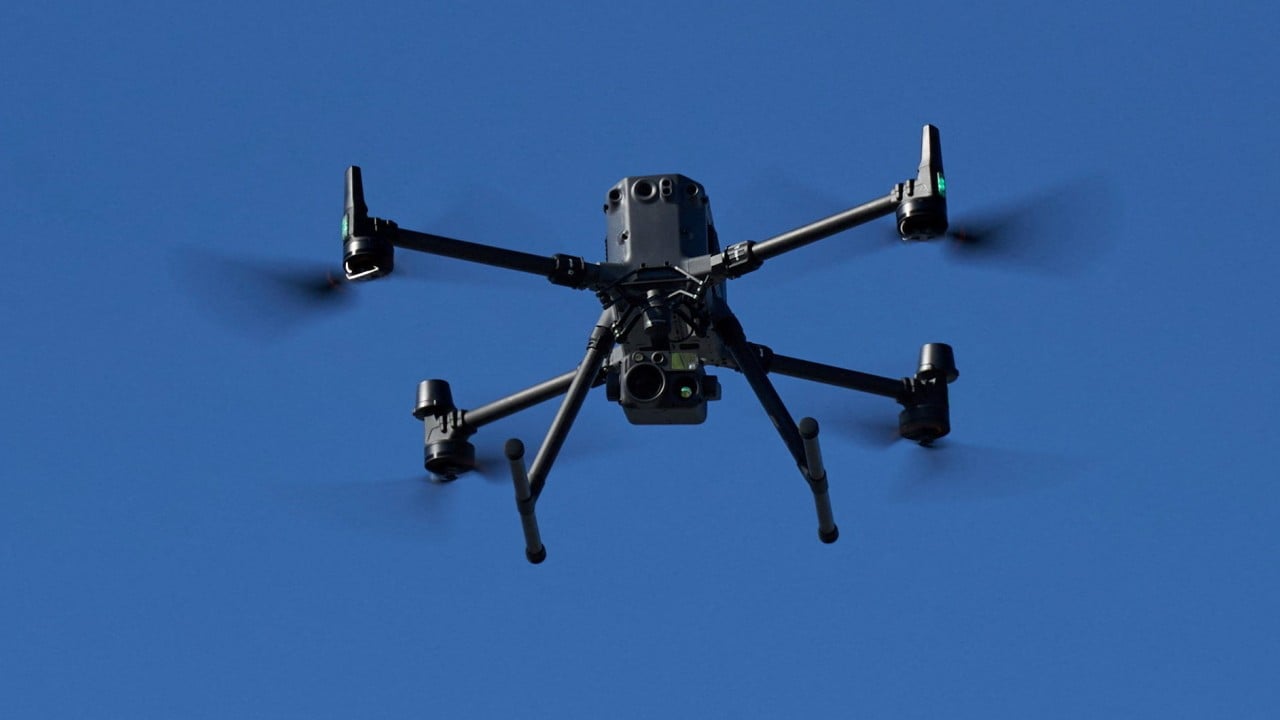
Trade wars rarely start with a gunshot. They begin with customs forms, export classification codes, and quiet amendments to trade lists that alter supply chains overnight. The recent escalation between Washington and Beijing involving restrictive trade countermeasures and severe limitations on drone exports represents a fundamental shift in how global superpowers compete. This is no longer a routine tariff dispute over steel or consumer electronics. It is a calculated struggle for dominance over the physical components powering modern infrastructure, surveillance, and military capabilities.
To understand why these specific restrictions matter, you have to look past the political rhetoric and examine the supply lines. Critical minerals, unmanned aerial vehicles, and semiconductors form the triad of modern strategic leverage. When one capital restricts the export of gallium and germanium, and the other responds with expanded entity lists and specialized hardware embargoes, they are weaponizing interdependence.
The Anatomy of Retaliation
Economic statecraft relies on pain points. For Beijing, the primary vulnerability has long been advanced lithography and high-performance computing chips designed by American or allied firms. For Washington, the vulnerability lies upstream in the refinery of minor metals and the manufacturing assembly lines of commercial aerial robotics.
When regulators implement restrictions on drone components and dual-use hardware, the objective is twofold. First, they aim to starve rival commercial or defense sectors of vital inputs. Second, they seek to accelerate domestic substitution.
[Raw Material Extraction] ---> [Refining & Processing] ---> [Component Fabrication] ---> [Finished Technology]
        (China Dominant)              (China Dominant)            (US/Allied Dominant)          (Contested)
Consider the drone sector. Unmanned aerial vehicles have transitioned from specialized military gear to ubiquitous commercial tools utilized in agriculture, mapping, logistics, and combat reconnaissance. Commercial drone manufacturing is heavily concentrated in specific global hubs. By choking off the flow of specialized flight controllers, thermal imaging sensors, and battery chemistry components, regulatory bodies can paralyze production schedules across continents.
The Mineral Bottleneck
The hidden anchor of this entire conflict sits inside the refinery plants where raw ore becomes high-purity material. Gallium and germanium are rarely household terms, yet fiber optics, mobile phones, and radar arrays cannot function without them.
- Gallium is essential for high-frequency radio frequency chips used in defense systems and 5G base stations.
- Germanium powers infrared night vision, solar cells, and polymerization catalysts.
China maintains a near-monopoly on the extraction and processing of these elements. When export controls are applied to these materials, the disruption ripples outward. Western manufacturers scramble for alternative suppliers, realizing too late that opening a new refinery requires years of environmental permitting, billions in capital, and specialized engineering talent that cannot be improvised overnight.
The Cost of Decoupling
Policymakers in both superpowers speak frequently about supply chain resilience. The reality on the ground is far messier. Complete decoupling is an economic fiction.
Factories built over decades cannot be relocated by executive decree. A specialized factory producing ultra-pure silicon wafers relies on chemical inputs sourced from dozens of international partners. Introduce export curbs, and production lines stutter. Component costs rise. Margins compress.
Corporate Adaptation
Industries caught in the crossfire are adopting defensive postures. Multinational corporations are splitting their supply chains into regional silos—one for markets aligned with Washington, another for markets aligned with Beijing, and others for neutral jurisdictions.
This duplication of infrastructure is wildly inefficient. It destroys economies of scale. Consumers ultimately absorb these costs through higher prices for electronics, vehicles, and industrial machinery. Yet corporate boards view this waste as an insurance policy against sudden regulatory bans.
The Technological Arms Race
Beneath the commercial friction lies a deeper technological race. Both governments are pouring state capital into domestic research to eliminate external dependencies.
In the long run, this bifurcation may permanently alter the global technology ecosystem. We are moving away from interoperable global standards toward parallel technical universes. Hardware built under one regulatory regime may soon be incompatible with software or networks governed by another.
The immediate tit-for-tat measures are symptoms of a deeper structural rivalry. As long as technological supremacy remains the primary metric of global power, export controls and trade restrictions will remain the weapons of choice. There is no compromise on the horizon, only a permanent state of managed economic friction where every component is scrutinized, and every supply chain is a potential battlefield.