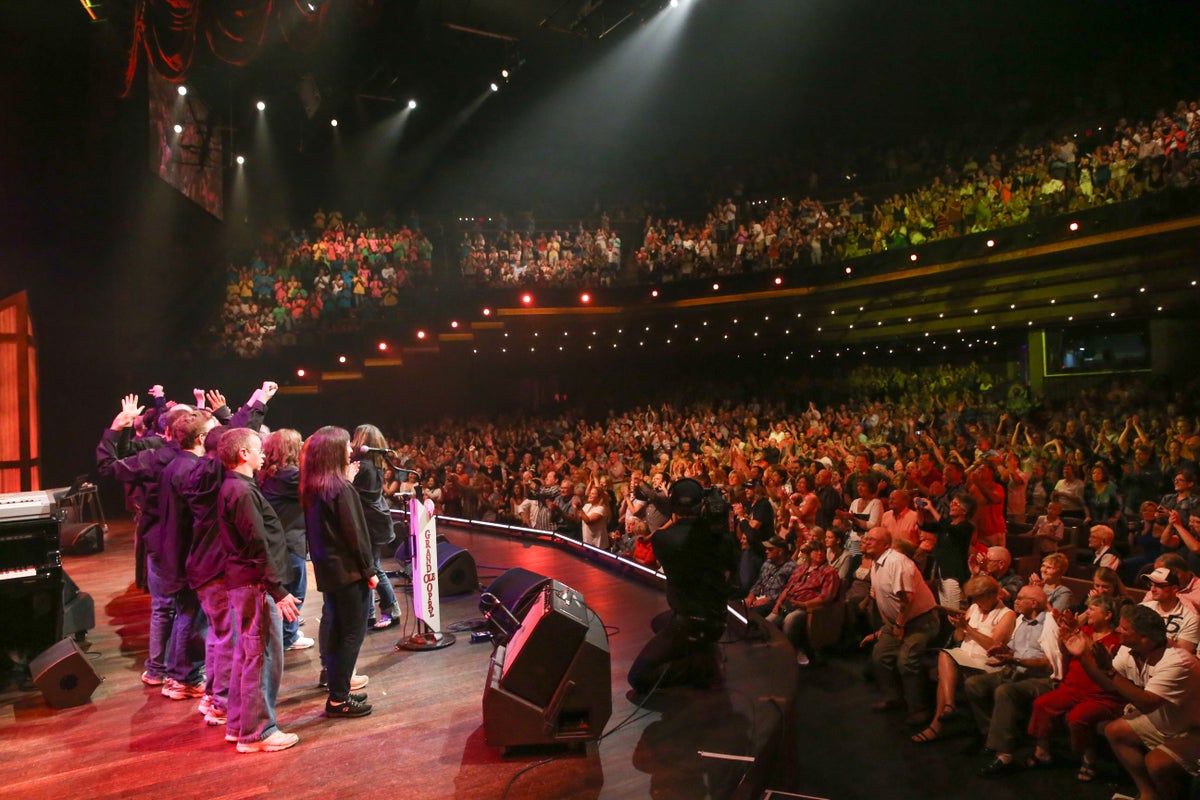
The financial press is panicking over rumors that Ryman Hospitality Properties might put the Grand Ole Opry—or a massive stake in its parent company, Opry Entertainment Group—on the auction block. The emotional consensus is already forming among traditionalists. They call it the death of country music. They call it corporate greed stripping away the soul of Nashville.
They are entirely wrong.
Holding onto brick-and-mortar music monuments out of pure sentimentality is a terrible business strategy. In fact, spinning off or selling a massive stake in the Grand Ole Opry isn't a sign of weakness. It is the definitive power move for the survival of country music's legacy. The institutional panic surrounding this potential sale misses the structural reality of modern entertainment asset management.
The Nostalgia Trap of Live Entertainment Assets
The lazy narrative states that iconic venues are priceless treasures that must be hoarded forever by their original stewards. Look at the balance sheets. Historic preservation is a cash-sucking black hole.
When private equity firms or global entertainment conglomerates eye a property like the Opry, preservationists scream about cultural erasure. But capital injection is exactly what keeps an aging brand relevant. I have watched legacy entertainment brands suffocate under the weight of their own history because leadership feared outside investment would "dilute the brand." What actually happens? The roof leaks, the technology becomes prehistoric, and the audience ages out.
The Grand Ole Opry is not just a stage; it is a complex media ecosystem spanning live radio, streaming, physical tourism, and intellectual property. Managing that requires a massive, continuous influx of capital. If a specialized asset manager or a larger media giant steps in, they aren't destroying history. They are funding its life support.
The Liquidity Myth in Country Music
Let's break down the mechanics of why Ryman would even consider this. It isn't because the Opry is failing. It is because the valuation of live entertainment IP is at an all-time high.
The Cost of Stagnation
Consider the standard operational costs of running a historic venue versus scaling a global digital brand:
| Operational Focus | Resource Allocation | Growth Potential |
|---|---|---|
| Physical Venue Maintenance | High capital expenditure (HVAC, structural, zoning) | Capped by physical seat capacity |
| Global IP Monetization | High initial investment, low marginal cost | Infinite via streaming and global licensing |
Monetizing history requires deep pockets that traditional hospitality companies cannot always sustain alone. By unlocking the equity tied up in the physical dirt of Nashville, Ryman can clear debt, fund massive digital expansions, or reinvest in higher-yielding hospitality projects.
Dismantling the Fan Outcry
People ask: "How can you sell the home of country music?"
The premise of the question is flawed. You are confusing the building with the business. The music does not live in the drywall of the house; it lives in the licensing agreements, the broadcast rights, and the talent pipeline.
When private equity acquired massive catalogs from artists like Bob Dylan or Bruce Springsteen, critics claimed the art would be commercialized into oblivion. Instead, those songs were placed in high-value sync opportunities, introducing classic music to entirely new generations. A sophisticated buyer does not buy the Grand Ole Opry to tear it down and build condos. They buy it because the brand equity is a goldmine that the current corporate structure is too conservative to fully exploit.
The Operational Risk of New Ownership
To be fair, this strategy contains a glaring vulnerability. The downside of bringing in aggressive institutional capital is the immediate pressure for short-term margin growth.
A venture capital firm or an aggressive media conglomerate might try to squeeze the venue by raising ticket prices beyond the reach of everyday fans, cutting pay for staff, or over-commercializing the broadcast with intrusive sponsorships. If you alienate the core demographic before building the digital bridge to the next generation, the brand identity collapses. That is the tightrope walk. But staying stagnant out of fear of that risk is a guaranteed, slow-motion death sentence.
Stop Treating Monents Like Museums
Country music fans want the Opry to remain frozen in amber. But museums are non-profit entities funded by grants and donations. The Opry is a commercial enterprise.
The smartest thing an entertainment company can do is sell at the top of the market to a buyer who possesses the global infrastructure to scale the asset. Forcing a hospitality company to act as a permanent museum curator ensures that both the hospitality business and the museum eventually fail.
Let the corporate entities trade the assets. If the ink dries on a sale contract, do not mourn the loss of an era. Prepare for the modernization of a brand that was otherwise destined to become a relic.


