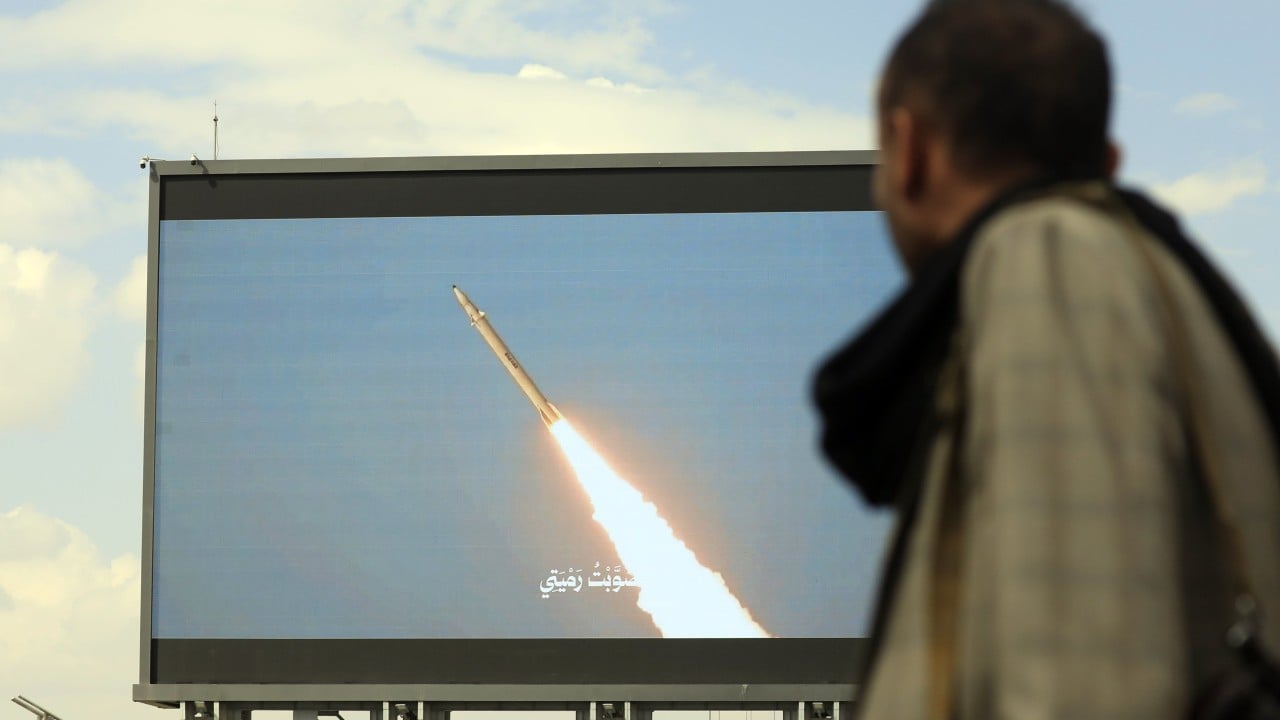
Geopolitical stability in the Bab el Mandeb strait depends entirely on the operational continuity of critical hydrocarbon export nodes. When non-regional state actors or asymmetric forces target primary energy infrastructure, the economic shockwave travels immediately to global shipping insurance markets and refining margins. The decision by France to deploy naval assets to protect key Saudi oil terminals amid persistent Houthi missile and drone campaigns represents a fundamental shift in maritime security architecture. This intervention is not merely a diplomatic gesture or a temporary escort mission; it is a calculated effort to preserve the integrity of a vital energy transit vector under severe asymmetric threat conditions.
The Operational Vulnerability of Energy Transit Nodes
To understand the strategic rationale behind naval protection of Red Sea oil facilities, one must analyze the physical and economic geography of the region. The Bab el Mandeb strait is a critical maritime chokepoint connecting the Indian Ocean to the Mediterranean Sea via the Red Sea and the Suez Canal. Millions of barrels of crude oil and refined products transit this corridor daily. When missile and unmanned aerial vehicle attacks target storage tanks, loading platforms, or pumping stations along the Saudi coastline, the immediate consequence is a disruption in supply chain velocity.
Asymmetric threats possess a high cost-asymmetry ratio. Inexpensive projectile systems launched by non-state actors force targeted nations and protecting coalitions to expend multi-million-dollar interceptor missiles. This dynamic imposes a severe financial attrition model on defenders. Naval deployment alters this equation by introducing layered air defense capabilities directly adjacent to the coastline, intercepting threats before they impact shore-based infrastructure.
The physical protection of a terminal requires a multi-domain defense strategy encompassing surface combatants equipped with advanced radar, electronic warfare suites, and point-defense missile systems. Frigates and destroyers operating in the Red Sea function as floating shields, absorbing and neutralizing inbound vectors that would otherwise compromise terminal throughput.
The Economic Mechanics of Maritime Risk Premiums
Energy infrastructure security directly dictates marine insurance rates and tanker charter costs. When the probability of kinetic interception increases, underwriters immediately reprice risk. War risk premiums for vessels transiting the southern Red Sea experience sharp upward spikes, which are subsequently passed down to consumers through elevated spot freight rates and higher landed crude costs.
Deploying military assets to safeguard these facilities creates a stabilizing signal for maritime commerce. By mitigating the physical risk of asset destruction or severe operational downtime, naval patrols help compress risk premiums back toward historical baselines. However, this creates a moral hazard and a strategic dependency. Regional energy producers and international shipping conglomerates may rely excessively on external naval power rather than investing in indigenous, shore-based hardening and active defense networks.
The cost function of protecting a terminal involves balancing the operational expenditure of naval deployments against the macro-level economic damage of a supply shock. France maintains strategic autonomy doctrines that prioritize the freedom of navigation and the security of global trade routes upon which European energy imports depend. Consequently, the deployment serves both collective global stability interests and specific national economic imperatives.
Strategic Interdependence and Coalition Mechanics
Naval operations in confined waters like the Red Sea cannot occur in isolation. They require real-time intelligence sharing, radar integration, and logistical coordination among allied navies. The French naval presence operates within a complex ecosystem of international task forces, balancing autonomous national command structures with cooperative defensive frameworks.
The challenge lies in avoiding escalation while maintaining a credible deterrence posture. Asymmetric actors operating from the Arabian Peninsula exhibit high resilience to economic sanctions and diplomatic pressure, meaning that purely defensive naval postures can absorb attacks indefinitely without altering the adversary's strategic calculus. The long-term efficacy of protecting an oil terminal depends on the ability to degrade the adversary's targeting and launch infrastructure, moving from a purely reactive shield to a proactive containment strategy.
Operational Limitations and Future Risk Vectors
Military interventions in maritime choke points carry inherent operational risks. Confined geographic corridors limit maneuverability, making surface combatants vulnerable to saturation attacks utilizing swarming surface vessels, anti-ship cruise missiles, and ballistic systems. Furthermore, extended deployments strain fleet maintenance schedules and personnel readiness.
Energy terminal operators must recognize that naval escorts are a temporary palliative, not a permanent structural solution. True resilience requires hardening storage facilities, decentralizing loading operations, and developing redundant pipeline networks that bypass vulnerable maritime bottlenecks entirely. Until such infrastructure modifications are realized, the global economy remains tethered to the operational readiness of naval task forces patrolling volatile coastal waters.