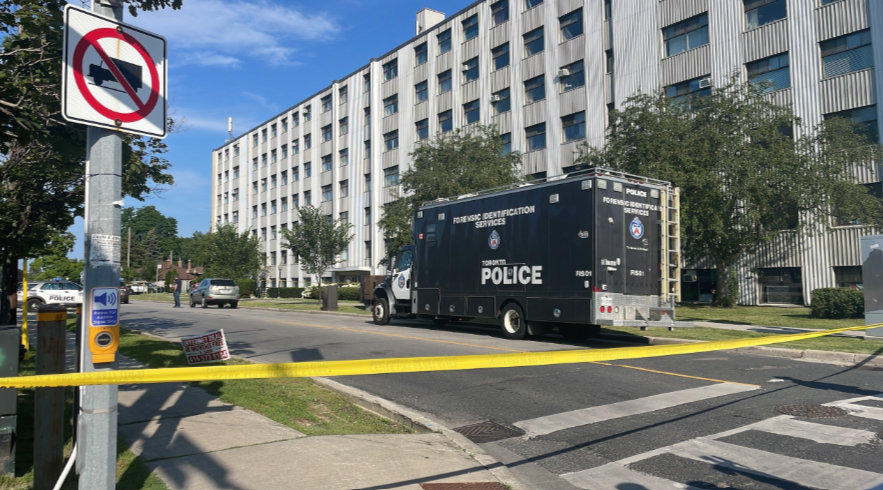
Another flashing blue light. Another yellow tape. Another routine notification from the Toronto Police Service: one dead, one critically injured in Scarborough.
The media machine immediately boots up its standard operating procedure. The scanners chirp, the local news desks rush out a three-paragraph alert, and the comment sections fill with the predictable, lazy chorus declaring Scarborough an unlivable war zone.
It is a script written in the 1990s, rehearsed in the 2000s, and blindly repeated today. And it is completely wrong.
When a violent event occurs, the knee-jerk reaction from traditional outlets is to treat the incident as a localized symptom of geographic decay. They frame it as a "Scarborough problem." This hyper-local scapegoating is not just lazy journalism; it actively obscuring the mechanics of modern urban violence and misallocating public resources.
If you want to actually understand public safety in a major metropolis, you have to stop looking at neighborhood borders and start looking at networks.
The Geofencing Illusion
The traditional press relies on a flawed premise: that crime belongs to the dirt it happens on.
When an incident occurs near an intersection in Scarborough, the immediate implication is that the surrounding community is inherently dangerous. This spatial bias ignores how modern crime operates.
I have spent years analyzing crime data patterns and working alongside urban policy researchers. The hard truth that criminologists know—and local news anchors ignore—is that violent crime in modern cities is rarely organic to the specific residential block where the trigger is pulled.
Violence is networked. It is mobile. The individuals involved in high-level urban conflicts routinely traverse municipal boundaries, driven by shifting dynamics, online disputes, and illicit economies that span the entire Greater Toronto Area. Framing a shooting as a localized neighborhood failure is like blaming a highway for a car crash.
When you map out serious violent incidents across any major city, you find that the vast majority of neighborhoods are statistically safe. A microscopic percentage of addresses, networks, and chronic situations generate the bulk of the data points. By broad-brushing an entire region based on a single intersection's tragedy, the public is conditioned to fear the wrong things.
The Cost of the Wrong Questions
Go to any community forum or read the "People Also Ask" sections on search engines regarding urban safety. The questions are almost always fundamentally flawed:
- Is Scarborough safe to live in?
- What are the dangerous areas of Toronto?
- Why is crime rising in the suburbs?
These questions assume that safety is a static, geographic attribute you can purchase like real estate. It is an outdated way of thinking.
The brutal reality is that your risk of experiencing random violent crime in the vast majority of suburban or urban Toronto is functionally negligible. The true risk factors are not postal codes; they are systemic vulnerabilities, acute social isolation, and involvement in high-risk networks.
When the public demands that politicians "fix Scarborough," the political class responds with the easiest, most visible, and least effective tool at their disposal: saturated, reactionary policing in specific socioeconomic zones.
This approach fails because it treats a fluid network problem with a rigid geographic solution. Squeezing a balloon at one end simply pushes the air to the other. Increased police presence in one specific sector doesn't dissolve the underlying conflict; it merely displaces the eventual flashpoint to a different parking lot or a different suburb.
The Distraction of the Body Count
The standard breaking news alert treats every shooting as an isolated tragedy to be consumed, mourned, and forgotten by the next commercial break. This format actively prevents any structural accountability.
We focus entirely on the immediate aftermath—the body count, the yellow tape, the brief police scrum. We rarely look at the operational failures that preceded the event.
Consider the systemic gaps in the justice system, the failure of mental health diversion programs, or the total collapse of sustainable integration programs for at-risk youth. These are the actual mechanisms that manufacture violent outcomes. But explaining the bureaucratic gridlock of municipal funding or the complexities of bail reform doesn't generate rapid pageviews. A sensational headline about a blood-soaked suburban street does.
The downside to calling out this media reality is uncomfortable: it requires admitting that simple solutions do not exist. It means acknowledging that throwing more money at traditional patrol units or passing superficial zoning laws won't magically cure urban friction. It forces us to accept that safety is an ongoing, complex negotiation of social infrastructure, not an issue you can solve with a beefed-up precinct.
Stop Demanding Visible Policing
If we want to shift the needle on urban safety, the public needs to change what it demands from civic leaders.
Stop asking for more cruisers parked on the corner of major intersections. Visible, static policing is psychological theater designed to make affluent commuters feel secure while doing absolutely nothing to disrupt the root causes of systemic violence.
Instead, look at the cold data provided by targeted intervention strategies like focused deterrence. When cities target the specific, microscopic networks driving the violence—providing real, viable exits for individuals caught in those networks while applying precise, non-negotiable legal pressure—the violent crime rate plummets.
This requires moving past the lazy consensus of neighborhood stigmas. It means ignoring the sensationalized alerts that treat every localized tragedy as proof of widespread societal collapse.
Scarborough doesn't have a unique crisis of violence. It has a crisis of lazy reporting that uses its name as a convenient shorthand for systemic urban issues that the rest of the city would rather ignore. Turn off the scanner feeds, reject the geographic scare tactics, and start holding the entire system accountable for the networks it allows to fracture.