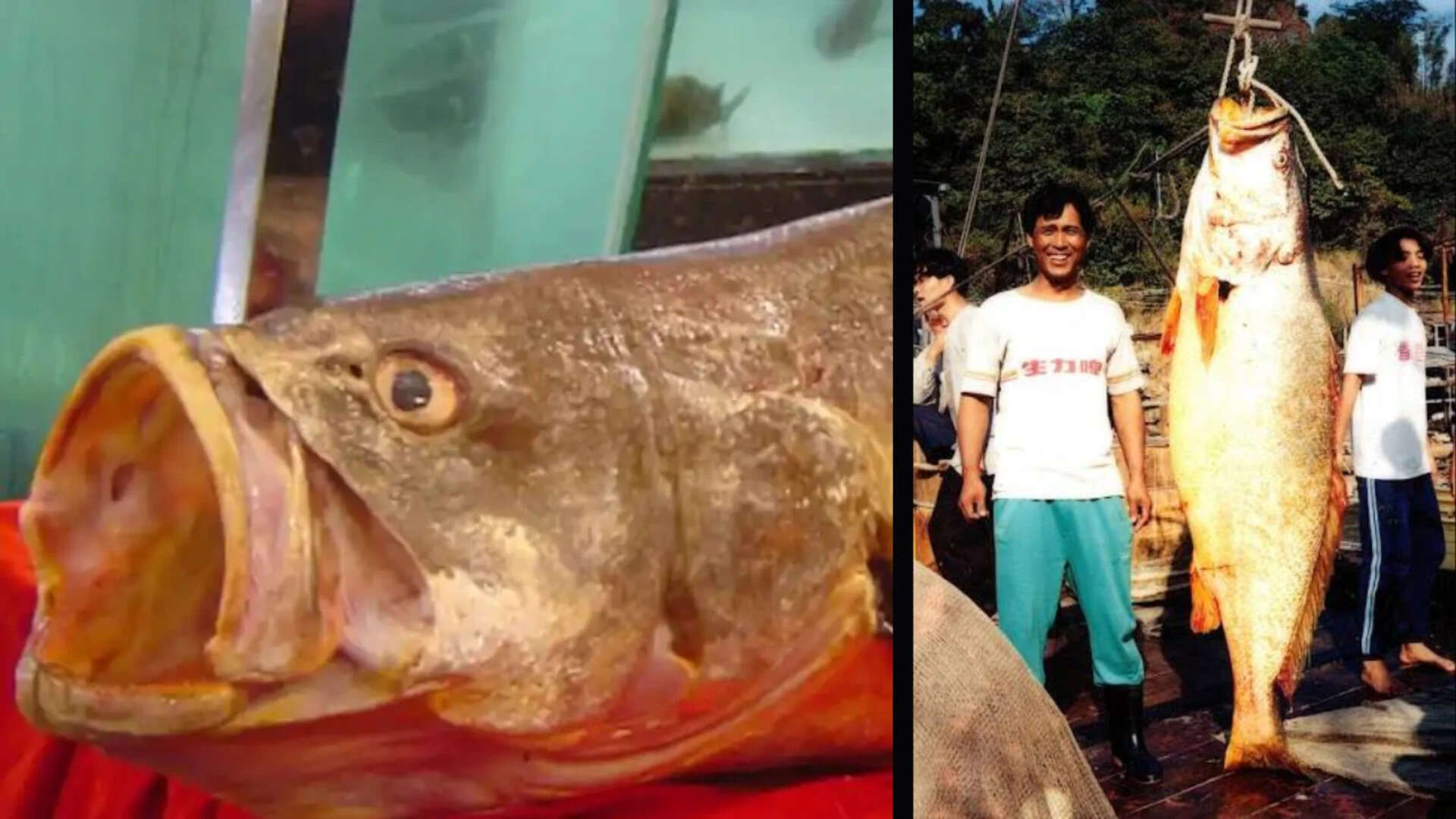
Every conservation outlet on the internet just lost its mind over a single fish.
The headlines screamed about the Chinese bahaba popping back up in Hong Kong waters after vanishing for more than ten years. Cue the celebratory fanfare. Cue the green-washed op-eds about triumphant returns and ecological redemption. People are treating a solitary sighting like the second coming of marine biodiversity.
It is a masterclass in missing the forest for the trees.
I have spent decades watching environmental reporting fall for emotional bait while actual systemic collapse happens right out in the open. A decade-long absence followed by a single data point is not a comeback. It is a ghost sighting. And obsessing over a symbolic aquatic trophy while ignoring the actual physics of marine destruction is a joke.
The Myth of the Single Sighting
Let us clear up the basic definition right now. Finding one specimen does not mean a population has recovered. Biology does not work on fairy-tale logic.
When a species is functionally extinct across ninety-nine percent of its historical range, a lone swimmer in a heavily trafficked harbor is a statistical anomaly, not a renaissance. We are looking at a population so bottlenecked that genetic diversity is practically zero. If you pull that fish out, or if pollution spikes tomorrow, that local lineage vanishes permanently.
Conservationists love the narrative of the Lazarus species because it sells clicks and secures grant money. It lets people feel good about nature healing itself without requiring actual structural change. We clap for a fish we drove to the edge of extinction through decades of unregulated overfishing for its mythical swim bladder, and we pretend everything is fine because someone snapped a blurry photo of a survivor.
The Luxury Trap of Iconic Species Focus
The obsession with high-value marquee species is a disease in modern environmentalism.
We pour millions of dollars and endless headlines into protecting apex glamour species while entire benthic ecosystems die of asphyxiation right beneath them. The Chinese bahaba became famous not because it was ecologically foundational, but because its swim bladder fetched millions on the black market as a status symbol for wealthy collectors.
By framing the narrative around saving the expensive fish, we validate the market that destroyed it in the first place. We turn conservation into an upscale auction house where only the creatures with high price tags get airtime.
Imagine a scenario where every dollar spent tracking a single ghost fish was redirected toward stripping ghost nets and industrial runoff out of the Pearl River Delta. The ecosystem would actually stabilize. Instead, we chase the shiny object.
Why the Standard Conservation Playbook is Broken
The conventional wisdom dictates that we establish protected marine areas, slap up a few warning signs, and tell local fishermen to look away.
It fails every single time.
Laws without enforcement are just polite suggestions. Hong Kong and the broader South China Sea region deal with massive commercial overexploitation, relentless coastal reclamation, and noise pollution from cargo shipping that essentially turns the ocean into a rock concert for marine life. A paper park does nothing against a trawler scraping the ocean floor clean at three in the morning.
If you want to protect fish, stop protecting the fish and start protecting the food web.
The Chinese bahaba is a top predator. It eats smaller fish, crustaceans, and cephalopods. You cannot bring back a apex predator when the entire trophic ladder beneath it has been hollowed out by industrial overharvesting. It is like trying to rebuild a skyscraper by placing the penthouse in an empty lot with no foundation.
The Hard Truth About Extinction Accounting
Here is the downside of my perspective: it is deeply unpopular.
Admitting that some species have crossed the Rubicon of no return hurts. It forces us to accept that human intervention cannot always play the hero at the eleventh hour. Sometimes, the habitat is too degraded, the genetic pool too shallow, and the economic incentives for poaching too high to reverse the slide.
When we pretend every single sighting is a miraculous comeback, we let society off the hook. We create moral license for continued destruction because hey, look, nature bounced back!
No, it did not. It is gasping for air.
What Actually Moves the Needle
If you want to change the trajectory of marine life in East Asia, stop writing eulogies for individual fish and start dismantling the illegal wildlife trade networks that operate in plain sight across regional ports.
Target the supply chain. Go after the buyers who treat endangered organs as investment portfolios. Shut down the unregulated coastal degradation that destroys spawning grounds before juveniles even have a chance to reach maturity.
The return of the Chinese bahaba for a fleeting moment is not a victory. It is a warning.
Ignore it at your own peril.