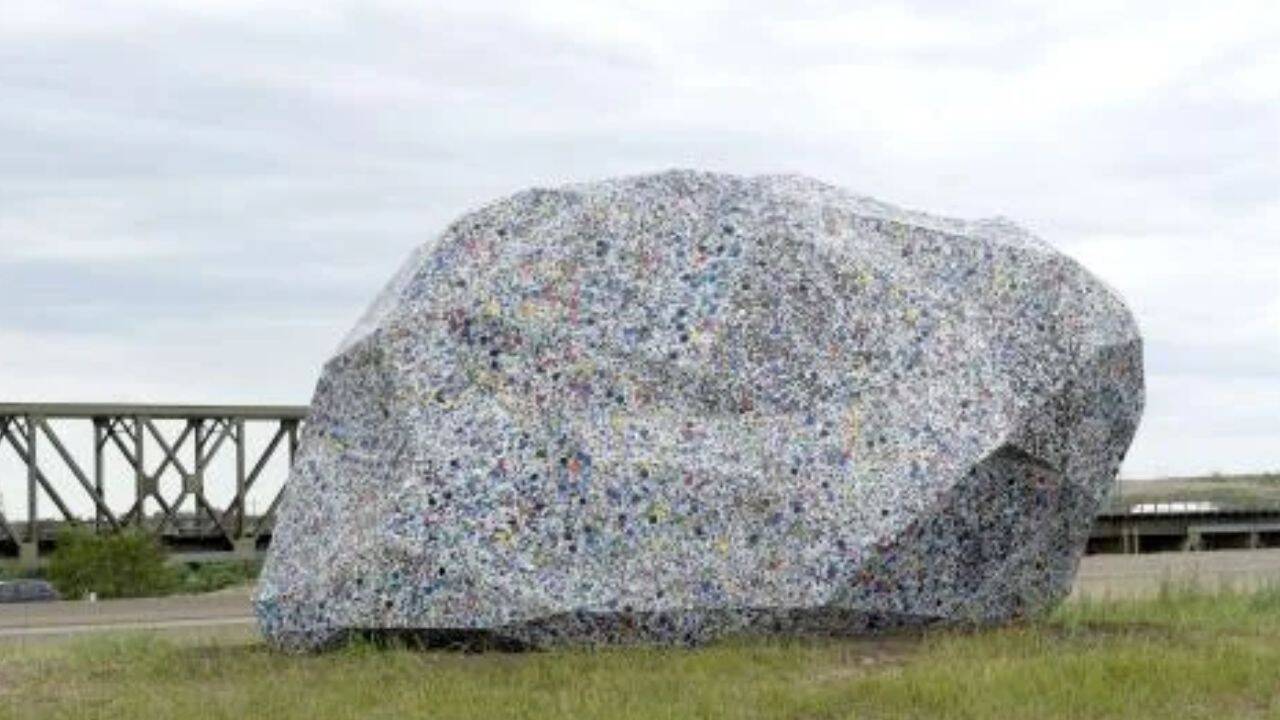
Ten thousand pounds of plastic. Three giant sculptures. A wave of glowing local headlines praising Saskatoon for turning municipal waste into public art.
If you want to understand why global plastic pollution keeps getting worse despite decades of feel-good civic initiatives, look directly at those statues. Learn more on a connected subject: this related article.
The mainstream press eats these stories alive. They love the tidy narrative arc: community collects trash, local artists build something inspiring, citizens feel virtuous, problem solved. Except nothing was solved. Ten thousand pounds of plastic represents roughly five tons of material. A single mid-sized North American city generates that much plastic waste before lunchtime on a Tuesday. Celebrating five tons of upcycled art while ignoring the industrial firehose of virgin polymer production is like bailing out a sinking cruise ship with a commemorative shot glass.
Worse, projects like this actively sabotage real environmental progress. They trade systemic accountability for cheap dopamine. More reporting by USA Today explores comparable views on the subject.
The Math Behind Civic Greenwashing
Let us look at the actual physics and economics of municipal waste. Standard reporting on public trash art relies on the lazy consensus that "every little bit helps" and that "raising awareness" naturally leads to behavioral change.
Both premises fail under basic scrutiny.
First, awareness is no longer the bottleneck. Nobody walking past a giant plastic fish or prairie animal in Saskatchewan is suddenly shocked to learn that single-use packaging exists. Consumers know plastic is an issue. Municipalities know landfills are filling up. The bottleneck is unit economics and polymer chemistry.
When a city or corporate sponsor pours tens of thousands of dollars into commissioning, sorting, cleaning, reinforcing, and installing a multi-ton plastic sculpture, the cost per pound of diverted waste skyrockets. Compare that to mechanical recycling infrastructure or chemical depolymerization plants, which require massive capital expenditure to process thousands of tons per day at razor-thin margins.
In waste management, scale is the entire game. If a solution cannot handle municipal tonnage at a cost lower than virgin resin production, it is not a waste management strategy. It is theater.
What Happens When Trash Art Ages
Here is the dirty secret nobody in the public art circuit likes to discuss: plastic degrades.
When you take post-consumer polyethylene or polypropylene—materials originally engineered for a six-month shelf life inside a climate-controlled grocery store—and bolt them together outdoors in a Canadian climate, you are building a microplastic generator.
Saskatoon experiences brutal temperature swings, freezing winters, and intense summer ultraviolet radiation. UV rays break down the polymer chains in exposed plastics through photo-oxidation. The material becomes brittle. Wind, rain, and freeze-thaw cycles shear microscopic fragments off the surface of the sculpture. Those microplastics wash directly into storm drains and straight into the South Saskatchewan River.
I have watched municipalities and corporate campuses spend hundreds of thousands of dollars on outdoor "eco-installations" only to quietly haul them to a landfill three years later because they became faded, cracked biohazards. Because the plastics in these sculptures are almost always mixed polymers held together by steel armatures, industrial adhesives, and weather-resistant sealants, they can never be recycled again.
You did not save 10,000 pounds of plastic from the dump. You just delayed its arrival by thirty-six months and contaminated it so badly that no Material Recovery Facility on earth will ever touch it.
Dismantling the Common Defenses
Whenever you point out the futility of trash sculptures, defenders trot out the exact same talking points. Let us dismantle them one by one.
Doesn't public art inspire people to recycle more?
No. Behavioral economics shows the exact opposite effect, known as moral licensing. When citizens see their city celebrated for an eco-friendly project, or when they donate a few bags of bottles to a community art drive, their brains register a completed moral action. Research consistently demonstrates that people who engage in visible, low-effort green signaling subsequently consume more resources and exhibit less support for costly, structural policy changes. The sculpture acts as an indulgence that absolves the public of demanding real regulatory action.
Isn't upcycling better than sending plastic to a landfill?
Not automatically. A modern, engineered sanitary landfill with a composite liner and leachate collection system safely sequesters carbon-based polymers underground. As counter-intuitive as it sounds, burying clean plastic in a properly managed landfill keeps it out of waterways and prevents microplastic shedding. Turning that same plastic into an outdoor monument exposes it to mechanical weathering and guarantees environmental leakage. Upcycling only beats landfilling when the resulting product displaces the production of new virgin materials in a closed loop. Nobody is cancelling an order for structural steel or bronze because Saskatoon built sculptures out of milk jugs.
Why criticize a community effort that brings people together?
Because opportunity cost is real. Municipal budgets, corporate sustainability grants, and civic attention are finite resources. Every dollar and every news cycle spent applauding a five-ton art project is a dollar and a news cycle stolen from unglamorous, high-impact infrastructure: optical sorters at local sorting facilities, extended producer responsibility enforcement, or municipal procurement bans on non-recyclable packaging.
The Structural Reality of Plastic Waste
To fix a broken system, you have to understand where the failure actually occurs. In the packaging industry, the problem is rarely a lack of consumer enthusiasm. It is polymer heterogeneity and additive contamination.
A single grocery aisle contains dozens of incompatible plastic types: PET (#1), HDPE (#2), PVC (#3), LDPE (#4), PP (#5), PS (#6), and multi-layer films (#7) that fuse plastic with aluminum and adhesives. When you melt different polymers together, they do not blend like metals into a stronger alloy. They separate like oil and water, creating weak, brittle low-grade material with almost no commercial value.
Meanwhile, virgin plastic remains artificially cheap because global petrochemical giants have spent the last decade building massive steam crackers to turn cheap natural gas liquids into ethylene and propylene. As long as virgin resin costs less than sorted, washed, post-consumer regrind, recycling remains a charity case rather than a self-sustaining market.
No sculpture in a city park changes the price of ethylene.
What Cities and Companies Should Do Instead
If municipal leaders and corporate sponsors actually want to move the needle on plastic waste rather than farm positive PR, they need to abandon symbolic gestures and deploy capital where the leverage actually sits.
Mandate Post-Consumer Recycled (PCR) Content in Municipal Procurement
Stop paying artists to glue trash together and start using the city's purchasing power to create guaranteed demand. Require that all municipal garbage bags, park benches, drainage pipes, and traffic cones contain a minimum of 50% to 80% verified post-consumer recycled plastic. When buyers guarantee demand, recyclers invest in sorting technology.Enforce Strict Extended Producer Responsibility (EPR)
Shift the financial burden of waste management off municipal taxpayers and onto the brands putting packaging on the shelves. Under robust EPR frameworks—like those pioneered in parts of Europe and slowly rolling out across Canadian provinces—companies pay fees scaled directly to the recyclability of their packaging. If a brand uses unrecyclable multi-layer pouches, they pay punitive rates. If they use clean, clear PET, they pay minimal fees. Watch how fast packaging engineers redesign their products when it hits their quarterly margins.✨ Don't miss: The Invisible Line Around a Teenage LifeInvest in Optical Sorting and Wash Lines
The biggest bottleneck in modern Material Recovery Facilities is contamination. Food residue, adhesives, and mis-sorted polymers ruin entire bales of recyclable material. Funding high-speed near-infrared (NIR) optical sorters and hot-wash decontamination lines allows cities to produce food-grade recycled resin that commands premium prices on the open market.Eliminate Multi-Polymer Packaging at the Source
You cannot recycle your way out of bad industrial design. Cities and regional governments should aggressively restrict hard-to-recycle plastics—such as expanded polystyrene foam, PVC packaging, and carbon-black plastics that invisible to optical sorters—from commercial distribution.
The Hard Truth About Real Progress
There is an obvious downside to taking this approach: it is completely unsexy.
Nobody cuts a ribbon in front of a near-infrared optical sorter. Local television crews do not send cameras to film a procurement officer updating a municipal contract to mandate 60% PCR resin in drainage pipes. You cannot take a selfie in front of an Extended Producer Responsibility fee schedule.
Real environmental engineering happens in noisy, foul-smelling industrial warehouses and dense legislative spreadsheets. It requires picking fights with powerful packaging lobbies, raising tipping fees, and admitting that decades of consumer-facing recycling campaigns were largely designed to deflect blame away from manufacturers.
Saskatoon's 10,000-pound sculptures will draw crowds, generate pleasant weekend stories, and make everyone involved feel like they struck a blow against pollution. Meanwhile, the garbage trucks will keep rolling past the park, carrying tens of thousands of tons of unrecyclable packaging to the landfill every single month.
Stop applauding the art show and start auditing the supply chain.