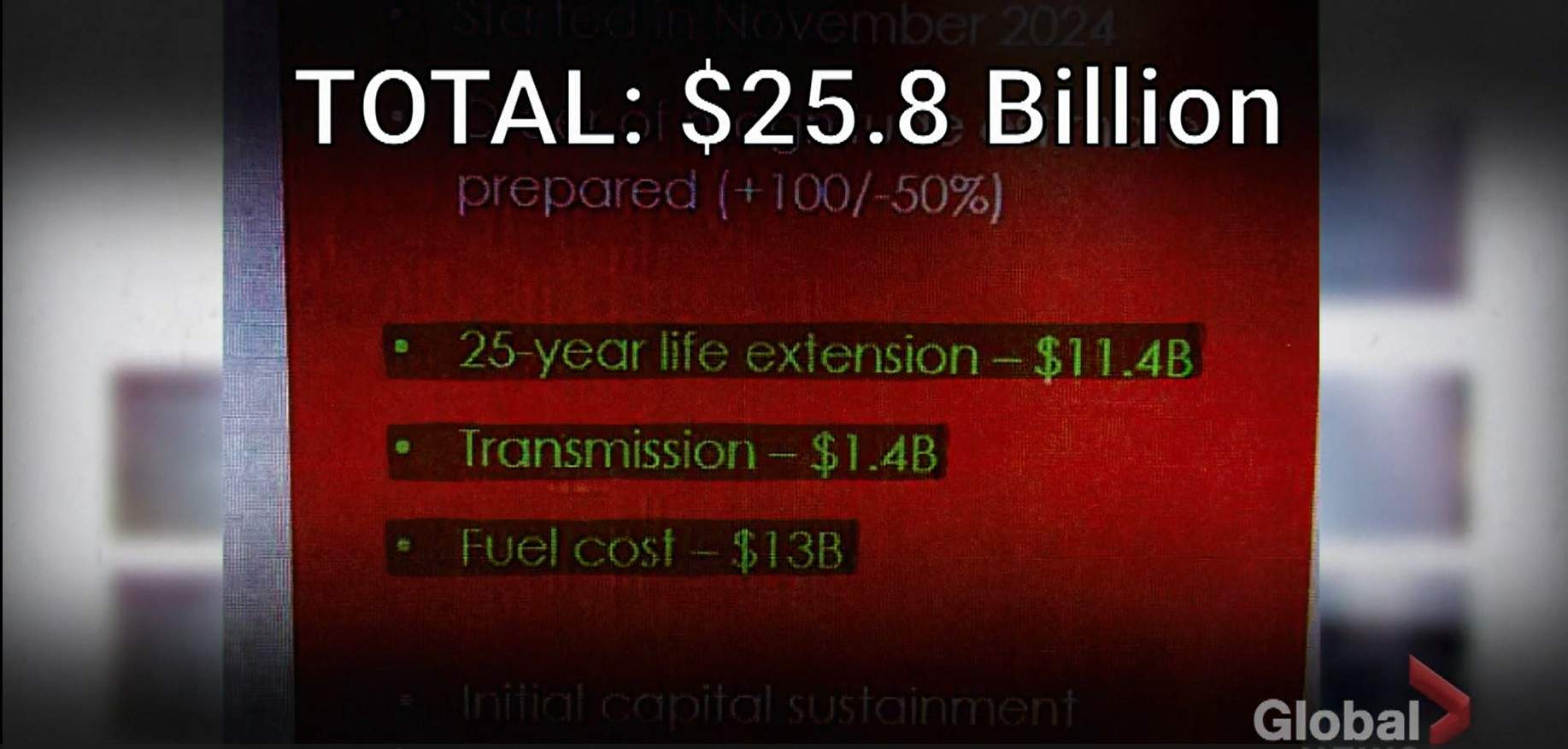
The internal ledger of a Crown corporation rarely makes for gripping reading until the numbers stop adding up. In Saskatchewan, the math behind the province’s energy future has shifted from a quiet policy debate into a high-stakes fiscal crisis. Leaked documents from SaskPower now suggest that keeping the province’s aging coal fleet on life support will drain $26 billion over the next 25 years. This isn't just a rounding error; it is a fundamental miscalculation of what it costs to keep the lights on in a world that has moved on from carbon.
For decades, coal was the bedrock of the prairie grid. It was cheap, it was local, and it was reliable. But as federal regulations tighten and the physical infrastructure of plants like Boundary Dam and Poplar River begins to fail, the "cheap" part of that equation has evaporated. The provincial government continues to frame these refurbishments as a necessary bridge to a nuclear future, but the bridge is becoming more expensive than the destination itself.
The Price of Defiance
The $26 billion figure, revealed in documents obtained by the Opposition NDP, breaks down into a sobering list of liabilities. We are looking at $11.4 billion in capital expenditures, $13 billion in fuel, and $1.4 billion to patch up transmission lines that are reaching the end of their design life. To put that in perspective, the provincial government’s previous public estimate for the refurbishment was just $2.6 billion. The discrepancy suggests a massive gap between political messaging and engineering reality.
Why the sudden explosion in cost? It comes down to the age of the machines. Most of Saskatchewan’s coal units were built in an era when "carbon capture" was science fiction. Retrofitting these giants to meet modern environmental standards—or simply keeping them from falling apart—requires custom parts, specialized labor, and a constant battle against thermal fatigue.
The government argues that these costs are "all-in" figures that include salaries and fuel, which would be paid regardless of the power source. That argument is thin. Fueling a coal plant involves massive open-pit mining operations and heavy rail transport, costs that don't exist for wind, solar, or even existing hydro imports. By doubling down on coal, Saskatchewan is committing to a massive, permanent overhead that its neighbors are actively shedding.
Federal Friction and the 2030 Deadline
Saskatchewan is currently on a collision course with Ottawa. Federal Clean Electricity Regulations mandate a phase-out of unabated coal by December 31, 2029. While the province has utilized the Saskatchewan First Act to claim jurisdiction over its own power grid, legal experts suggest this shield is brittle. The Supreme Court has already signaled that the federal government has the authority to regulate greenhouse gases under the "national concern" doctrine.
If the feds move to enforce the 2030 deadline, the $26 billion investment becomes a collection of stranded assets. The province would be left with refurbished plants it is legally forbidden to run.
This creates a paradox for SaskPower. The utility is currently seeking rate increases of nearly 4% per year in 2026 and 2027 specifically to fund these capital projects. Residents are being asked to pay higher monthly bills to fund a gamble that might be declared illegal before the first renovated turbine even completes a full year of service.
The Nuclear Mirage
The ultimate justification for the coal extension is the transition to Small Modular Reactors (SMRs). The logic is that coal must provide the "baseload" stability until nuclear can take over in the late 2030s or 2040s.
However, the timeline for SMRs is notoriously slippery. No commercial SMR is currently operating in Canada, and the regulatory path is long. By anchoring the province's energy security to coal for another quarter-century, the government is effectively sidelining more immediate, cheaper alternatives.
Consider the scale of $26 billion. For that same investment, Saskatchewan could:
- Build multiple large-scale natural gas plants with carbon capture.
- Finalize massive grid interconnections with Manitoba to tap into their surplus hydro power.
- Fully fund the very nuclear transition they claim to be waiting for.
Instead, the money is being funneled into keeping 1970s technology relevant in the 2020s. It is a strategy of nostalgia rather than one of economics.
The Reliability Trap
Minister Jeremy Harrison has repeatedly stated that coal ensures power remains "reliable and secure." It is an effective talking point in a province where winter temperatures regularly drop to -40°C. But reliability isn't a trait exclusive to coal.
The modern grid requires flexibility. Coal plants are "baseload" by necessity—they take a long time to start up and even longer to shut down. This makes them poor partners for the growing amount of renewable energy being added to the grid. When the wind blows in the southwest, SaskPower often has to "curtail" or throw away that free energy because the coal plants can't ramp down fast enough to accommodate it.
The $26 billion plan isn't just buying power; it's buying a rigid system that prevents the province from adopting more efficient technologies. It’s like paying a premium to maintain a fleet of rotary phones because you’re worried the new cell towers might occasionally drop a call.
The Real Cost of Doing Business
Investors are watching. Industry analysts note that companies looking to hit Net Zero targets are increasingly hesitant to set up shop in jurisdictions with "dirty" grids. While the government points to new data centers as proof of their success, those same companies often demand "green power" agreements that SaskPower will struggle to fulfill if coal remains 25% of the mix.
The leaked documents prove that the internal experts at SaskPower know the score. They see the rising cost of carbon taxes, the increasing price of maintenance, and the looming threat of federal intervention. The decision to stay the course is political, not technical.
Saskatchewan is currently standing in the path of an oncoming economic train. The $26 billion isn't a bridge; it's a debt being handed to the next generation to pay for a refusal to adapt. As the refurbishments begin and the rate hikes hit home, the "true cost" will be measured in more than just dollars—it will be measured in the lost opportunity to build a modern, competitive economy.
The time to pivot was five years ago. The second best time is today. But as the province prepares to sink billions more into the Estevan soil, it seems the plan is to simply keep digging until the money, or the coal, runs out.