The wind off the black basalt desert of northeastern Jordan does not blow; it scrapes. It carries a fine, basaltic dust that finds its way into the seals of shipping containers, the hinges of tactical laptops, and the creases of human eyes.
At a tiny outpost known as Tower 22, there is nothing to see for miles but this empty, grey-brown expanse. Here, a few hundred young Americans live in prefabricated containers. They spend their days checking inventory, monitoring radar screens, and maintaining generators. They are thousands of miles from home, stationed at a geographical trifecta where Jordan, Iraq, and Syria meet.
To the decision-makers in Washington and Tehran, this outpost is a chess piece. To the twenty-year-old soldier sitting in the dark of a command tent, it is simply the place where they try to sleep through the hum of the air conditioner.
In the early hours of a winter morning, that hum is interrupted.
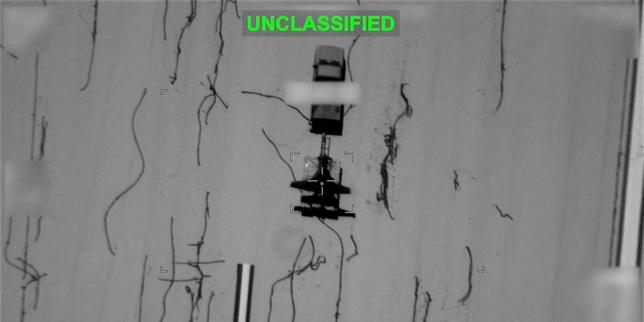
A drone, small and low-flying, slips through the desert valleys. It does not carry the roar of a jet engine; it sounds more like a weed whacker. Because it flies low, hugging the contours of the earth, it evades detection. When it hits, the blast does not just tear through metal and drywall. It tears through the quiet assumption that some places are too remote to be touched by the fires of the Middle East. Three soldiers die. Dozens are wounded.
Suddenly, the silent geography of the desert becomes the center of the world.
The Network of the Unseen
We often talk about geopolitics as if it is an abstract board game. We read headlines about "new attacks between the United States and Iran." We see lists of target sites in Jordan, Kuwait, and Bahrain. But these names represent real places where the daily lives of local populations and foreign service members are deeply intertwined.
Consider Kuwait.
Just north of the glittering towers of Kuwait City lies Camp Arifjan. It is a massive logistics hub, a sprawling city of concrete barriers and gravel roads. For decades, it has served as the quiet engine room for American operations in the region. Thousands of transit troops pass through its gates every week. They buy coffee at the local PX, call their families on spotty Wi-Fi, and wait for orders.
Then consider Bahrain.
In the warm waters of the Persian Gulf, the island kingdom of Bahrain hosts the United States Navy’s Fifth Fleet. Here, the relationship is different. It is not defined by remote desert outposts but by the salt air and the heavy grey hulls of destroyers docked at Mina Salman. In the capital of Manama, American sailors walk the streets alongside Bahraini merchants. They eat shawarma in the alleys of the souq. The presence of the military is woven into the very fabric of the city's economy.
These three locations—Jordan, Kuwait, and Bahrain—form a quiet arc of American presence in the region. They are not active combat zones in the traditional sense. They are the scaffolding.
When Iran-aligned groups claim strikes on these locations, they are not just aiming at coordinates. They are testing the edges of the net. They are sending a message that the places once considered safe, the administrative and logistical sanctuaries of the American military, are now within reach.
The Calculus of the Shadow
For years, the conflict between Washington and Tehran was fought in the shadows. It was a war of cyberattacks, covert assassinations, and proxy skirmishes in the deserts of Syria and the mountains of Yemen. Both sides understood the unwritten rules of this engagement. You push, but you do not push so hard that the ceiling collapses.
But those rules have eroded.
The current escalation did not begin in a vacuum. It is fueled by the ongoing devastation in Gaza, a conflict that has acted as a massive gravitational pull, dragging every regional actor toward its center. For the groups operating under the loose umbrella of the "Axis of Resistance," the presence of American troops in Jordan or Kuwait is seen as an extension of Israeli policy. For Washington, those troops are there to prevent the resurgence of extremist groups and to guarantee the free flow of commerce through some of the world's most vital shipping lanes.
The tragedy of this escalation is its mathematical predictability.
When a drone strikes an American base and kills service members, the domestic pressure on a US president to react is immense. A response is ordered. Bombers fly from bases in the United States, refueling in mid-air, to strike command centers, weapons depots, and intelligence nodes across Iraq and Syria.
The retaliatory strikes are designed to be devastating yet calibrated. The goal is to destroy the capability of the militias without triggering a direct, open war with Iran itself.
But calibration is an illusion of the classroom. On the ground, in the smoke and chaos of a munitions depot explosion, there is no calibration. There are only fragments of steel, secondary explosions, and the sudden, violent end of human lives. One stray fragment, one misidentified target, and the cycle accelerates.
The View from the Harbor
To understand what is at stake, you have to leave the briefing rooms of the Pentagon and the foreign ministry in Tehran. You have to stand on the coastline of Bahrain.
For a local fisherman setting out into the Gulf at dawn, the geopolitical tension is not a matter of press releases. It is the physical presence of warships on the horizon. It is the knowledge that the waters he fishes are the same waters where a single spark could ignite a global economic crisis. Nearly a fifth of the world's oil passes through the nearby Strait of Hormuz. If that strait closes, the price of fuel in Chicago, Berlin, and Tokyo spikes within hours. The global economy is held together by the thin thread of maritime security maintained in these waters.
The fisherman knows this. The sailors on the destroyers know this.
There is a profound vulnerability in this realization. We have built a world that is incredibly interconnected, yet its stability rests on the discipline of young people holding weapons in tense, sweat-stained uniforms.
The dry news reports will tell you about the deployment of missile defense systems, the percentage of successful interceptions, and the political rhetoric coming from state capitals. They will use terms like "deterrence" and "proportionality."
But deterrence is a psychological state, not a physical barrier. It relies on your enemy believing that the cost of action is too high. When the enemy is a decentralized network of militias, driven by ideological fervor and local grievances, the traditional rules of deterrence begin to fracture.
The Weight of the Unwritten
What happens when the scaffolding breaks?
If the strikes on bases in Jordan, Kuwait, and Bahrain become a regular feature of life, the nature of the American presence in the region must change. Bases will become fortresses. The casual interactions between service members and local populations will dry up. The grey ships in Bahrain will push further out to sea, isolated from the land they are meant to protect.
This is the real victory sought by those who launch the drones. They do not expect to defeat the United States military in a conventional battle. They want to make the cost of staying too high, the psychological toll too heavy, and the political price too steep.
We are left watching a high-stakes game of chicken played with live ammunition.
The next time you read a short, sterile update about an exchange of fire in the Middle East, look past the acronyms of the military units and the diplomatic jargon. Picture the dust settling over the containers at Tower 22. Picture the night sky over the Gulf, lit up by the flare of an air defense missile.
The quiet strength of our world is not found in the steel of the ships or the sophistication of the drones. It is found in the fragile, daily effort to keep the peace from catching fire. And right now, that effort is being tested in the dirt and the salt water of places most people will never see.