The diesel engine of a wooden fishing boat has a specific, rhythmic heartbeat. For generations of fishermen in the South China Sea, that sound meant livelihood. Today, it means vulnerability.
Imagine a fisherman named Eduardo. He is real in every sense that matters, a composite of the men who navigate the jagged shoals of the West Philippine Sea. He does not think about geopolitics, exclusive economic zones, or the United Nations Convention on the Law of the Sea when he wakes up at three in the morning. He thinks about the price of fuel. He thinks about the dwindling schools of round scad. But lately, his eyes stay glued to the horizon, scanning not for weather fronts, but for the towering white hulls of foreign coast guard vessels. When those hulls appear, they do not just block his nets. They blast high-pressure water cannons that can splinter wood, blind crew members, and turn a routine fishing trip into a fight for survival.
This is where the grand strategy of nations hits the water. It ceases to be an abstract puzzle debated in the climate-controlled rooms of Washington, Tokyo, or Manila. It becomes a matter of broken hulls, blocked fairways, and the quiet, steady erosion of sovereignty.
For decades, the waters surrounding the Philippines and Japan were viewed through separate strategic lenses. One was a tropical archipelago grappling with internal insurgencies and a modest military capability. The other was an economic superpower bound by a pacifist constitution, shielded by an American security umbrella. But geography is an unforgiving master. Look at a map from the perspective of Beijing. You see a chain of islands curving like a crescent moon, locking in the Asian mainland. If you want to project power into the wider Pacific, you must pass through the gaps in that crescent.
Japan holds the northern tip. The Philippines holds the southern flank.
As Beijing aggressively asserts its sweeping "ten-dash line" claim—covering nearly the entire South China Sea—these two maritime nations have realized something vital. They are looking at two fronts of the exact same war of attrition.
The Gray Zone and the Geometry of Pressure
The conflict is not fought with screaming fighter jets or thunderous broadsides. Not yet. It is fought in the "gray zone"—a space deliberately maintained between peace and outright war.
Consider the tactics used at Second Thomas Shoal. Instead of sending gray-hulled naval warships, Beijing deploys its massive Coast Guard fleet, augmented by the People's Armed Forces Maritime Militia. These are heavily reinforced fishing trawlers that do not actually fish. They swarm. They anchor in vast flotillas, blocking access to traditional fishing grounds and reef formations.
If the Philippine Navy fires a single shot to disperse them, it triggers a catastrophic escalation. If they do nothing, they cede control by default. It is a psychological vice grip.
Farther north, Japan faces a mirror image of this pressure around the Senkaku Islands, which Tokyo controls but Beijing claims as the Diaoyu Islands. Day after day, Chinese government vessels enter the contiguous zones, testing response times, wearing down Japanese crews, and normalizing a constant, intrusive presence.
This is a war of exhaustion. It is measured in hours spent on alert, gallons of fuel burned in pursuit, and the psychological toll on sailors who must endure weeks of high-stakes chicken on the high seas.
The turning point came when Manila and Tokyo realized they could no longer rely solely on distant superpowers to balance the scales. The response required a localized, tightly woven net of cooperation. The result is an unprecedented security alignment that is rewriting the rules of Indo-Pacific geometry.
From Former Foes to Lifelines
To understand the weight of this alliance, one must look at history. Eight decades ago, Japanese forces occupied the Philippines during World War II. The scars were deep, visceral, and generational. The idea that Japanese boots would ever tread on Philippine soil again, or that Manila would look to Tokyo as its premier security partner in Asia, would have seemed absurd to the survivors of that conflict.
Yet, necessity has a way of dissolving old ghosts.
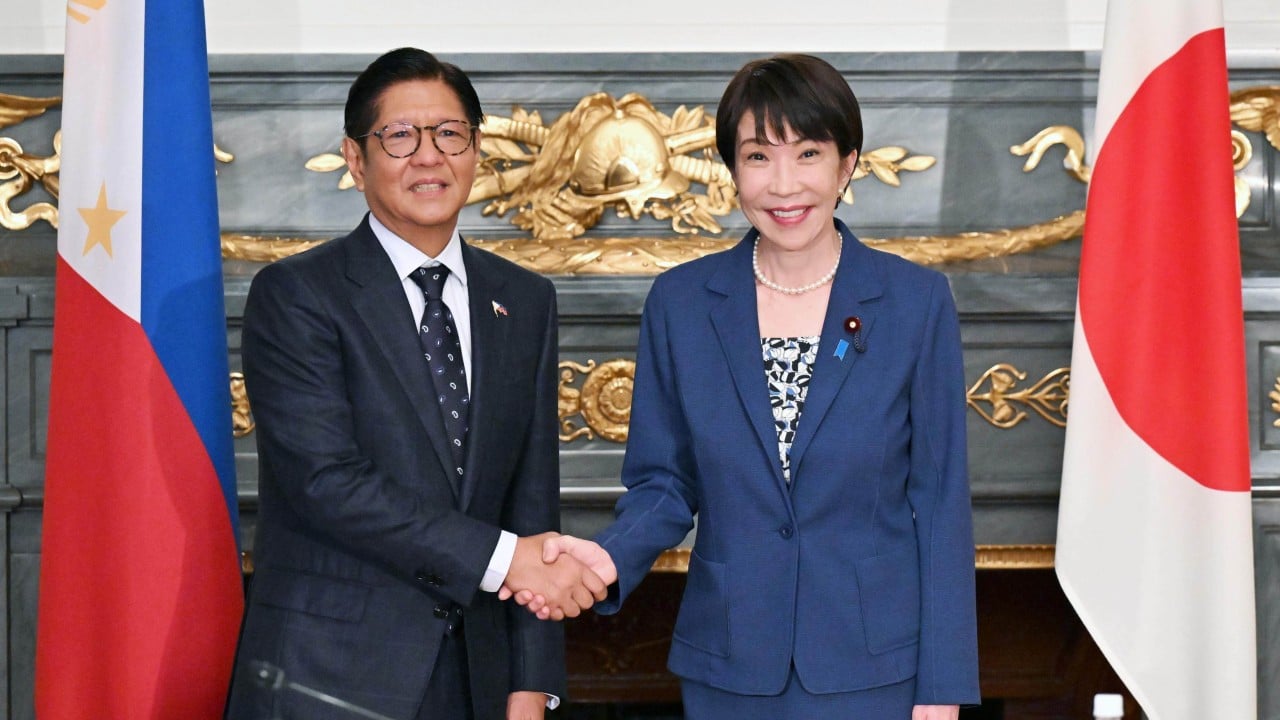
The transformation has been quiet but foundational. It culminated in the signing of the Reciprocal Access Agreement (RAA). This is not just another piece of diplomatic paper. It is a legal framework that allows the militaries of both nations to train on each other's soil. It streamlines the movement of troops, weapons, and supplies. It means Japanese troops can participate in large-scale combat exercises in the Philippines, and Philippine personnel can train in Japan.
But the real muscle of this partnership is not found in joint maneuvers. It is found in steel and technology.
The Philippine Coast Guard, once a chronically underfunded agency with a handful of aging vessels, has been completely revitalized by Japanese aid. Tokyo did not just send checks; they built and delivered ships. This includes 44-meter multi-role response vessels and 97-meter capital ships like the BRP Teresa Magbanua and BRP Melchora Aquino. These vessels are the vanguard of Manila’s resistance. They are the ones taking the brunt of the water cannons, standing their ground at disputed shoals, and ensuring that the Philippine flag continues to fly over its sovereign waters.
The transfer goes beyond hulls. Japan is providing air surveillance radar systems to the Philippine military, allowing them to see far beyond their coasts, piercing the fog of war that Beijing tries to maintain.
The Invisible Stakes of Global Trade
It is tempting for someone sitting in Chicago, London, or Berlin to dismiss this as a localized border dispute over uninhabited rocks and shallow reefs. That is a dangerous mistake.
The South China Sea is the jugular vein of the global economy.
More than three trillion dollars in trade passes through these waters every year. It carries the crude oil that powers factories across East Asia, the liquefied natural gas that heats homes, and the electronic components that drive the modern world. If these waters become the sovereign domain of a single power capable of turning the shipping lanes on and off like a faucet, the global economic order changes overnight.
Insurance rates for commercial shipping would skyrocket. Supply chains, already fragile, would fracture. The price of everything from smartphones to grain would feel the shockwaves.
Furthermore, the Western Pacific is a critical testing ground for international law. The system established after the second global conflict—where might does not automatically make right, and small nations have the same sovereign rights as empires—is being systematically stress-tested. If the Philippines is forced to capitulate, the message to every other small nation bordering an aggressive neighbor will be deafening: you are on your own.
The Strategy of the Unbroken Line
What does victory look like in a conflict where nobody wants to fire the first shot?
It looks like resilience. It looks like an endless game of positioning where the goal is simply to refuse to blink. By linking their maritime security fortunes, Japan and the Philippines have created a dual-node system that complicates Beijing’s strategic calculations. If China applies too much pressure in the south, it risks drawing in a more integrated, legally empowered Japanese response. If it pushes too hard in the north, it faces a united front of regional democracies backed by a network of logistics and intelligence sharing.
This alliance is also a magnet. It creates a framework that other nations—like Australia, Vietnam, and India—can plug into, slowly building a coalition of states dedicated to maintaining an open, rules-based ocean.
But back on the water, far from the signing ceremonies and strategic briefings, the reality remains stark and cold.
Eduardo steers his small boat back toward the coast. The sun is setting, casting a long, amber glow across a restless expanse of gray-green water. In the distance, the silhouette of a white hull remains stationary, a silent sentinel of a foreign power that has no intention of leaving.
He will return tomorrow. The Philippine Coast Guard vessels, built in Japanese shipyards, will be there too, sitting between the fishermen and the shadow of expansion. There are no illusions here. The pressure will not ease. The hulls will continue to scrape, the water cannons will continue to roar, and the tension will remain coiled like a spring. But the crescent is no longer fractured. The line is holding, drawn in steel, salt water, and shared survival.