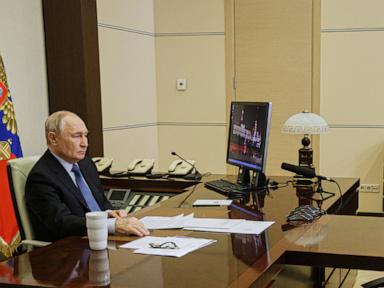
Elections in authoritarian states rarely serve as instruments of surprise. They function instead as theatrical displays of compliance. When Vladimir Putin stepped forward to claim that the 2026 parliamentary election results proved deep public backing for Kremlin policies, he wasn't offering an objective political analysis. He was delivering a script written long before a single ballot was cast.
The numbers released by Moscow's Central Election Commission looked staggering on paper. United Russia, the ruling party, captured 349 out of 450 seats in the State Duma. That's a supermajority, giving the party absolute control over federal legislation. Officials reported a turnout of nearly 60 percent, the highest figure recorded in over a decade. To the state television networks, these metrics represented an undeniable mandate. They projected an image of a nation standing shoulder-to-shoulder behind its leadership during a time of historic geopolitical confrontation. You might also find this connected story insightful: Why the Media Completely Misreads Trump’s Stagecraft Ahead of Xi Talks.
Reality resists such tidy packaging.
Understanding what actually happened during those three days of voting requires stripping away the official rhetoric. This wasn't a standard democratic contest. It was a tightly managed administrative exercise designed to validate existing power structures while silencing alternative viewpoints. When you examine how the vote was constructed, supervised, and executed, the narrative of spontaneous public enthusiasm collapses completely. As extensively documented in detailed reports by NBC News, the results are worth noting.
The Architecture of a Controlled Vote
You don't win a supermajority by leaving outcomes to chance. The Kremlin spent months engineering the electoral landscape to ensure zero risk. Independent election monitors and international watchdogs noted that the entire process unfolded under conditions that rendered genuine competition impossible.
Consider how the candidate pool was filtered. Years of systematic pressure against independent political actors meant that genuine opposition forces had already been dismantled or driven underground. Even the remnants of moderate dissent faced severe legal hurdles. The Yabloko party, which historically acted as a legal platform for critics of Kremlin policy, found itself barred from meaningful participation well before voting began. Without a legal avenue to voice opposition at the ballot box, millions of citizens who harbor doubts about the country's trajectory were left without a voice.
Voting took place over three consecutive days. While authorities defended the multi-day format as a health and convenience measure, independent analysts pointed out a glaring flaw. Extended voting windows make comprehensive independent observation nearly impossible. Ballot boxes sit unmonitored overnight. Chain-of-custody protocols weaken. The space for administrative manipulation expands exponentially.
Electronic voting systems added another layer of opacity. Promoted heavily in major urban centers, remote digital balloting offered citizens a convenient way to participate without visiting a physical station. Critics argued that these platforms functioned as black boxes. Without transparent source code or verifiable paper trails, verifying vote tallies became an exercise in blind trust. The state supplied the software, ran the servers, and certified the totals. Predictably, the numbers favored the status quo.
Manufacturing Enthusiasm in Occupied Territories
One of the most striking aspects of the 2026 election cycle was the inclusion of polling stations across illegally annexed regions of Ukraine. From Crimea to parts of Donetsk, Luhansk, Zaporizhzhia, and Kherson, voters cast ballots under the watchful eye of armed military personnel.
Kyiv immediately denounced these efforts as illegal violations of national sovereignty. International bodies refused to recognize the legitimacy of any votes collected in active conflict zones. Yet Moscow pushed forward with the exercise. The goal wasn't international approval. The goal was internal integration. By staging elections in these territories, the state sought to normalize its territorial claims and force local populations into an explicit act of political compliance.
Official reports claimed remarkably high turnout and overwhelming support for United Russia in these frontline areas. Observers on the ground painted a different picture. Voting occurred under conditions of extreme coercion. Door-to-door canvassing accompanied by soldiers transformed what should have been a private civic choice into a public loyalty test. When survival depends on demonstrating allegiance, participation rates cease to reflect genuine political preference. They reflect compliance under duress.
Bringing the Battlefield Into Parliament
Perhaps the most revealing outcome of the 2026 election was the influx of military personnel into civilian governance. Dozens of veterans who fought in Ukraine transitioned directly from active combat to seats in the State Duma.
State media hailed these candidates as the country's new elite. Kremlin spokespeople praised their battlefield experience as an asset for legislative halls. This shift signals a profound transformation within the Russian political system. The boundaries between military command and civilian administration are dissolving.
When you inject frontline veterans into parliament, you aren't just rewarding service. You are militarizing the legislative process itself. These individuals bring a specific worldview shaped by trench warfare, ideological confrontation, and strict hierarchical obedience. Their presence ensures that future parliamentary debates will lack dissenting voices on defense matters. War policy won't face scrutiny from lawmakers. It will receive rubber-stamp approval from commanders.
This institutional shift carries long-term consequences. A political class dominated by veterans and security hardliners has little incentive to pursue diplomatic off-ramps. Compromise becomes synonymous with weakness. The structures of power inside Moscow are aligning entirely around the premise of a permanent confrontation with the West.
Decoding the Real Public Mood
If official figures don't tell the whole story, what is the actual state of public opinion inside Russia?
Sociological research conducted under authoritarian conditions is notoriously difficult. People lie to pollsters when they fear political repercussions. Asking someone if they support the president while criticizing state policy can carry severe legal penalties. Direct opposition carries immense personal risk.
Beneath the surface numbers, apathy plays a much larger role than enthusiasm. Millions of citizens choose disengagement over confrontation. They retreat into private life, avoiding political discussions entirely. They adapt to sanctions, inflation, and wartime economic pressures because they see no viable alternative.
When Putin claims that the election results demonstrate universal backing for his policies, he conflates submission with support. There is a vast psychological distance between cheering for a leader and deciding that survival requires silence. The high turnout numbers trumpeted by state media mask a weary population that views political participation as a ritual to be endured rather than an opportunity to shape the future.
Independent pollsters note that while core nationalist sentiment remains strong among specific demographics, economic anxiety weighs heavily on ordinary families. Rising prices, labor shortages driven by military mobilization, and the gradual degradation of public infrastructure create daily friction. These grievances rarely translate into electoral dissent because the political system filters out any candidate who might channel them.
The Strategic Purpose of Managed Democracy
Why bother with the theater of elections at all if the outcome is guaranteed? Why spend state resources organizing campaigns, printing ballots, and managing digital infrastructure when power is already consolidated?
Authoritarian regimes rely on elections for internal signaling. A managed vote serves multiple strategic functions for the Kremlin.
First, it tests the efficiency of regional governors. Local bosses must deliver specific turnout percentages and vote shares to prove their competence. If a region underperforms, heads roll. The election acts as an internal audit of administrative control.
Second, it demoralizes potential opposition. When state media floods the airwaves with reports of an unstoppable majority, critics feel isolated and hopeless. Why protest when millions supposedly voted for the ruling party? The spectacle of overwhelming victory discourages collective action before it can begin.
Third, it provides a veneer of legal continuity. By operating through a formally elected parliament, the regime maintains the appearance of constitutional legitimacy. Laws passed by the Duma carry a stamp of popular sovereignty, even if that sovereignty is entirely fictional. This legalistic facade helps Moscow maintain relations with friendly international partners who prefer procedural pretexts for diplomatic engagement.
Looking Past the Headlines
The 2026 State Duma elections changed nothing fundamental about Russia's political trajectory. They reinforced an existing reality. The ruling apparatus remains firmly in control, dissent remains criminalized, and the architecture of the state is fully mobilized for prolonged conflict.
When leaders declare that an election validates their choices, pay attention to what gets left unsaid. Notice the candidates who weren't allowed on the ballot. Notice the voters who stayed home in quiet frustration. Notice the militarization of civilian institutions that guarantees a hardening of state policy for years to come.
Elections are supposed to offer a window into a nation's soul. In a system designed for control, they merely reflect the priorities of the fortress. The numbers on the screen belong to the Kremlin, but the silent reality of a weary, managed society belongs to the Russian people.