The Strategic Blueprint: Why Diesel Licensing Meets Legislative Waiver
Direct U.S. licensing of Russian-origin diesel alongside an executive waiver of new statutory sanctions exposes a sharp structural tension in American economic statecraft: statutory pressure mandated by Congress colliding with price-relief and diplomatic priorities managed by the White House.
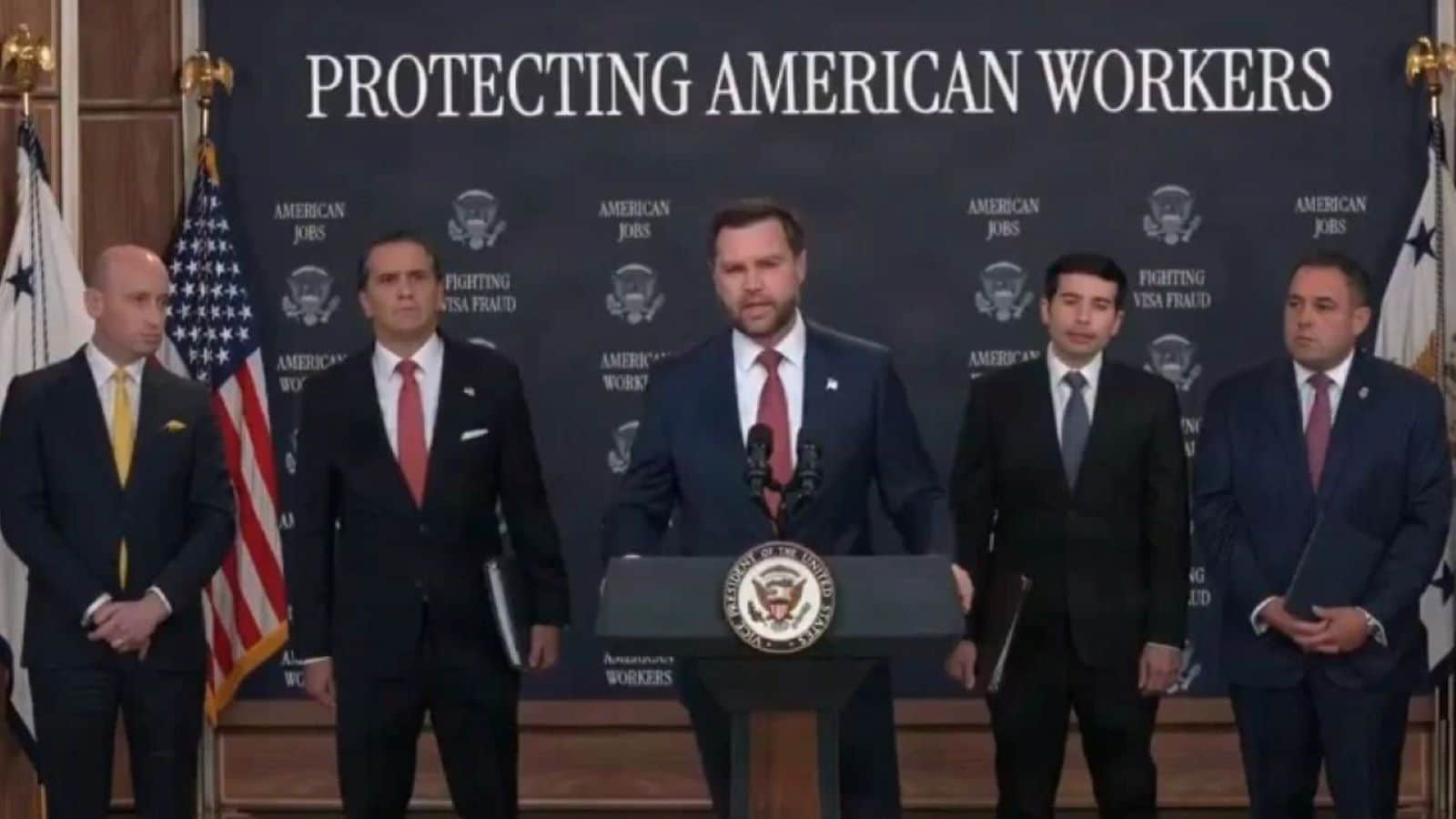
In September 2026, President Donald Trump signed the Lindsey O. Graham Sanctioning Russia and Iran Act of 2026 into law, codifying existing executive-order measures while directing steep new tariffs—up to 500% on Russian goods and up to 100% on imports from major buyers or facilitators of Russian energy—as well as targeting non-U.S. vessels, operators, and insurers tied to Russian energy transport. Less than a month later, the administration paired a licensed opening for Russian diesel with a broad waiver of the Act's Russia-related provisions just ahead of their scheduled effective date.
Understanding what is actually happening requires separating headline framing from legal mechanics. A headline emphasizing that the United States is buying Russian diesel after waiving sanctions captures the political shock value, yet conflates three distinct legal and commercial layers:
- Executive waiver authority under Executive Order 14436 (signed October 16, 2026), which suspended major new tariffs and sanctions under the Graham Act via national-interest certifications while leaving specified earlier executive-order sanctions intact.
- Treasury licensing mechanics under Office of Foreign Assets Control (OFAC) General License 135 (issued October 9, 2026), which authorizes specific transactions related to the sale, delivery, offloading, or importation of Russian-origin diesel fuel through April 7, 2027.
- Commercial execution and counterparty risk, where statutory permission to transact does not automatically guarantee physical supply flows, domestic refinery margins, lower pump prices, or protection against retaliatory Russian asset seizures.
Deconstructing the Competitor Narrative
Commentary highlighting a former diplomat's warning that the United States itself is buying diesel from Russia after waiving Graham Act sanctions relies on a clear rhetorical arc. First, it treats a sanctions waiver as a wholesale abandonment of economic pressure. Second, it treats sanctions relief and energy purchasing as a single policy act rather than two separate instruments with different scopes and expiration rules. Third, it implies a direct, automatic line from a diplomatic agreement to physical U.S. imports and lower fuel costs.
That narrative misses critical mechanics. A waiver of new statutory sanctions and tariffs under a newly enacted law is not identical to erasing pre-existing sanctions architecture. Equally important, an OFAC general license creates legal permission for authorized transactions within a defined window; commercial buyers still weigh maritime logistics, insurance, refinery specifications, price spreads, and reputational or political exposure.
Critics—including bipartisan lawmakers and Ukrainian leadership—have argued that easing pressure and opening a diesel channel undercuts leverage during the war in Ukraine. The White House has countered with national-interest certifications, arguments around energy pricing and negotiations, and discretion built into the statute itself. A rigorous analysis evaluates how these mechanisms interact rather than treating political talking points as settled economic outcomes.
The Three Pillars of the Sanctions-Diesel Pivot
1. Statutory Codification Versus Executive Discretion
Congress writes sweeping sanctions statutes to lock in pressure and constrain future reversals, yet routinely embeds waiver provisions that preserve presidential room to maneuver. The Lindsey O. Graham Sanctioning Russia and Iran Act of 2026 exemplifies that dynamic: it codified existing executive-order sanctions, established aggressive tariff ceilings on Russian goods and major Russian oil or gas purchasers, and extended the Iran Sanctions Act of 1996 through 2031, while still allowing executive waiver upon statutory certification.
When the executive branch exercises waiver authority under Section-level carve-outs and national-interest filings, the immediate legal effect is to pause newly mandated statutory penalties. Prior executive-order sanctions are not automatically wiped away simply because new statutory measures are waived. For compliance teams, that distinction is vital: a waiver removes one layer of statutory risk while leaving legacy prohibitions and narrower compliance boundaries active.
2. General License Scope and Time Boundaries
OFAC General License 135 operates on a specific calendar and transaction scope rather than functioning as a permanent open door. Authorized through April 7, 2027, it covers transactions tied to the sale, delivery, offloading, or importation of Russian-origin diesel fuel in connection with the diesel arrangement.
Two structural features shape how this license behaves in practice:
- Finite duration: A fixed expiration date creates forward-curve uncertainty for refiners, traders, and shipping operators, because cargo commitments and charter parties must account for what happens after April 7, 2027.
- Narrow commodity focus: Authorizing Russian-origin diesel transactions does not convert every sanctioned sector or entity into a permitted counterparty. Any transaction still has to stay strictly within licensed boundaries and avoid prohibited parties or unapproved activities.
3. Reciprocal Countermeasures and Asymmetrical Leverage
Sanctions policy never operates in a frictionless vacuum. Alongside the U.S. waiver and licensing steps, Moscow expanded its "temporary administration" countermeasures, placing an additional tranche of foreign-owned Russian subsidiaries under state-appointed administration.
This highlights a crucial cause-and-effect relationship that simplified commentary often overlooks. Washington can adjust tariffs, waivers, and licenses to pursue lower energy costs or diplomatic traction, while Moscow can respond with domestic asset control and state administration over remaining foreign-linked subsidiaries. Easing U.S. statutory pressure does not guarantee reciprocal restraint on corporate property or commercial predictability inside Russia.
The Cost and Price Transmission Function for Diesel
Why reach for Russian diesel when the United States is a major producer and exporter of petroleum products? In global refined-product markets, diesel is a fungible, trade-exposed distillate whose regional prices respond to refinery runs, maintenance turnarounds, inventory levels, freight rates, and global supply-demand balances.
When policymakers look at diesel relief, the underlying economic mechanism involves several moving parts rather than a single price switch:
- Global balance effects: Additional tradable diesel supply—or the expectation of it—can influence regional crack spreads and wholesale distillate benchmarks, even if physical barrels move along complex maritime routes rather than straight into a single domestic port.
- Logistics and delivered cost: Legal permission to import or trade Russian-origin diesel does not erase freight costs, war-risk or marine insurance adjustments, blending requirements, or port bottlenecks. Delivered economics depend on landed cost versus competing Atlantic or Gulf Coast barrels.
- Retail pass-through lag: Even when wholesale or benchmark distillate prices soften, retail pump prices adjust according to local competition, tax structures, distribution margins, and seasonal demand. A policy announcement or license does not mechanically guarantee immediate or permanent retail savings.
Consider a practical trading example. Suppose a fuel marketer evaluates whether to source or price against licensed Russian-origin diesel ahead of the April 2027 license window. The commercial team cannot rely solely on the existence of the license; it has to model vessel availability, counterparty vetting, inspection and origin documentation, potential congressional pushback, and the risk that the license is not renewed or is narrowed when its term approaches.
Known Facts Versus Educated Hypotheses
Separating verified policy facts from analytical projections keeps decision-making grounded:
Known facts:
- Congress passed and President Trump signed the Lindsey O. Graham Sanctioning Russia and Iran Act of 2026 on September 18, 2026.
- OFAC issued General License 135 on October 9, 2026, authorizing transactions related to the sale, delivery, offloading, or importation of Russian-origin diesel fuel through April 7, 2027.
- President Trump issued Executive Order 14436 on October 16, 2026, waiving major Russia-related sanctions and tariffs under the Act—including potential high tariff increases on Russian goods and specified third-country buyers—while submitting national-interest certifications to Congress and leaving designated earlier executive-order sanctions unaffected.
- Lawmakers and foreign leaders publicly contested the waiver and diesel arrangement, while Russia expanded temporary state administration over a new tranche of foreign-owned subsidiaries.
Educated hypotheses:
- If U.S. distillate inventories tighten or geopolitical disruptions hit global refining or shipping lanes before April 2027, licensed diesel flows could help cushion regional price spikes at the margin, though the magnitude will depend on actual physical volumes and freight spreads rather than licensing alone.
- Because the Graham Act codified sanctions authorities and tariff frameworks into statute even while they are currently waived, those provisions remain a latent policy lever that future executive action—or a later administration—could activate without starting from scratch.
- Ongoing friction between the executive branch and lawmakers over sanctions enforcement creates heightened policy volatility, making long-dated commercial commitments more sensitive to regulatory shifts than short-cycle spot transactions.
Step-by-Step Operational Playbook for Risk and Commercial Teams
- Map exact legal boundaries first. Distinguish between provisions waived under Executive Order 14436, pre-existing sanctions that remain in force, and activities explicitly covered by OFAC General License 135 through April 7, 2027. Never treat a waiver of new statutory sanctions as blanket permission across all Russia-related business.
- Audit every counterparty, vessel, and insurer. Even where diesel transactions are licensed, screen all intermediaries, shipping vessels, ownership chains, and insurance arrangements to ensure no prohibited persons, blocked assets, or out-of-scope activities are pulled into the chain.
- Stress-test contracts for the April 7, 2027 cliff. Build termination, force-majeure, and regulatory-change clauses into supply, charter, and financing agreements so operations are not stranded if the general license expires, is amended, or faces legislative or executive reversal.
- Price in retaliation and reputational exposure. Factor in non-tariff friction—such as Russian state-administration measures affecting foreign-linked entities, scrutiny from trading partners, and congressional oversight—before committing capital.
- Monitor statutory reporting and trade reviews. Track Office of the U.S. Trade Representative monitoring and reporting on Russian energy purchases, alongside congressional pressure, as early warning indicators of shifting enforcement posture.
Limitations and Blind Spots of This Framework
No analytical model can eliminate uncertainty when executive discretion, wartime geopolitics, and commodity markets intersect. Exact commercial volumes, private contract terms, and confidential diplomatic understandings are not public from policy text alone, and energy markets can move on unrelated supply shocks—such as refinery outages, OPEC+ decisions, or weather—that overwhelm any licensing effect. Furthermore, legal permissibility under U.S. sanctions rules does not resolve commercial viability if buyers, banks, or insurers view the geopolitical risk premium as too high.
Strategic Action
Treat the sanctions waiver and General License 135 as a time-bounded tactical window with high reversal risk, not a permanent structural reset of U.S.–Russia energy trade. Structure commercial and compliance operations around short-horizon execution, strict ring-fencing of legacy sanctions and counterparty risks, and explicit exit triggers ahead of April 7, 2027 so your organization captures any legitimate market efficiency without getting caught on the wrong side of a sudden policy snapback.