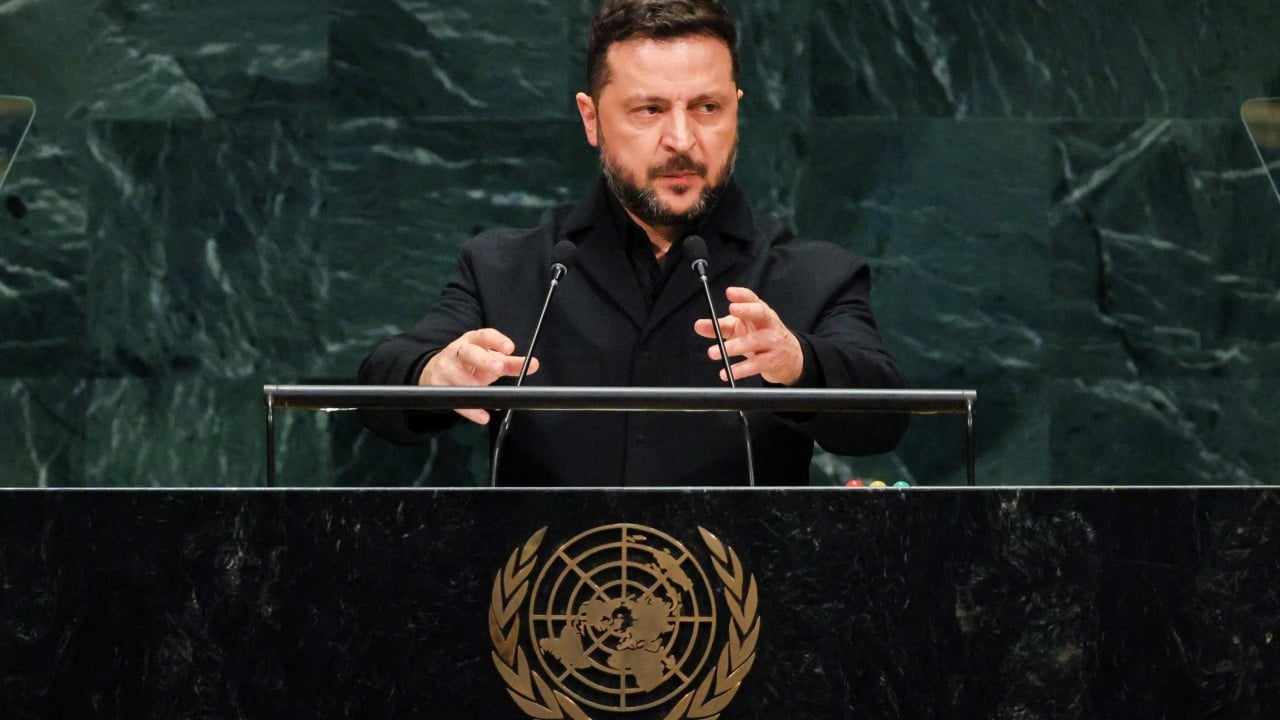
Freezing temperatures are right around the corner, and the stakes for both Kyiv and Moscow couldn't be higher. Ukrainian President Volodymyr Zelenskyy has made it crystal clear: if diplomatic efforts to secure an energy infrastructure truce fall flat, Russia will experience a deeply painful winter. For years, the Kremlin has targeted power plants, substations, and gas grids to break civilian morale. Now, the tables are turning. Ukraine's long-range drone capabilities mean that Russian oil refineries, storage hubs, and export terminals are well within striking distance.
You aren't going to hear the Russian state media talk about this vulnerability, but the math is brutal. Moscow relies heavily on refined fuel exports and domestic energy stability to fund its war machine. When Ukrainian long-range strikes hit oil infrastructure deep inside Russian territory, the economic damage piles up fast. Zelenskyy's warning isn't just political posturing. It's a strategic reality built on hundreds of successful tactical drone operations over the past year.
The Breakdown of Energy Ceasefire Talks
Negotiating a moratorium on striking critical infrastructure sounds straightforward on paper, but it always breaks down in the details. Kyiv has repeatedly stated it's open to an energy ceasefire. You don't hit our power grid, and we won't touch your refineries. Simple, right? Not quite. Moscow wants a one-sided pause that allows its forces to regroup while keeping civilian Ukrainian populations freezing in the dark.
The Kremlin's refusal to accept reciprocal terms during recent diplomatic exchanges left Ukrainian leadership with no other choice. When agreements lack monitoring mechanisms or clear lists of protected sites, they're basically invitations for the other side to cheat. Russia has a track record of using brief lulls in fighting to stockpile munitions and reposition assets. Kyiv knows this game too well to fall for it twice.
Why Russian Oil Infrastructure is Vulnerable
People often forget that Russia is a giant gas station with an army. Its economy depends entirely on the extraction, processing, and export of fossil fuels. Ukrainian strategy has adapted to this reality with surgical precision. Instead of just fighting infantry in the trenches, long-range drone technology targets the multi-billion-dollar facilities that generate cash for the Kremlin.
Refineries are notoriously hard to defend against swarm drone attacks. They feature vast expanses of complex piping, cracking towers, and storage tanks that cannot easily be covered by mobile air defense systems. When a single drone takes out a primary distillation unit, parts that take months to import or manufacture under heavy sanctions go offline. The financial loss ripples through the entire Russian budget, hitting fuel supplies for domestic markets and export revenues simultaneously.
The Broader Geopolitical Fallout
International allies are watching these developments with intense anxiety. Global energy markets are jittery. Any major disruption to Russian oil output or Black Sea logistics sends shockwaves through fuel prices worldwide. At the same time, Western partners face mounting pressure to supply Ukraine with advanced air defense batteries while balancing the risks of escalating the conflict.
European nations understand that a dark, freezing Ukraine triggers another massive wave of refugees heading west. That's why diplomatic channels remain open even as drones fly. Yet, the underlying truth remains unchanged. Until the cost of destroying civilian infrastructure becomes higher for Moscow than the perceived military benefits, the strikes will continue.
Preparation is the only defense left for millions of civilians caught in the crossfire. Cities across Ukraine are installing anti-drone nets, setting up decentralized backup generators, and stockpiling repair parts. But the ultimate deterrent remains Ukraine's capacity to bring the consequences home to Russian citizens who have spent years ignoring the war on their doorstep. If the Kremlin wants a winter of darkness, it should expect to share the cold.