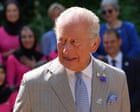
Buckingham Palace deployed an unprecedented financial weapon to disarm critics when it revealed King Charles paid 12.9 million pounds in voluntary income and capital gains tax for the latest financial year. By showcasing a figure that places the monarch among Britain’s top one hundred taxpayers, the royal household attempted to buy permanent goodwill. Yet this historic disclosure functions primarily as a masterclass in misdirection. The itemized details of the royal wealth remain completely hidden, while the public funding mechanism known as the Sovereign Grant is quietly lock-stepping toward a massive long-term expansion.
The strategy behind the headline-grabbing numbers relies on a fundamental omission. While the public digests the sheer scale of a multi-million-pound tax check, the palace continues to withhold the exact total of the underlying private income, asset sales, and investment portfolios that generated the tax bill in the first place. This allows the Crown to claim the civic virtue of tax compliance while maintaining total opacity over its actual net worth.
The Calculus of Voluntary Compliance
Monarchs do not legally owe taxes to the state. The current arrangement stems entirely from a 1993 memorandum of understanding, a defensive maneuver brokered by Queen Elizabeth II to quell public outrage after taxpayers were asked to foot the bill for repairing fire-damaged Windsor Castle. Charles has merely extended this policy by authorizing the first-ever public release of his personal tax receipts, a total exceeding 30 million pounds since his accession.
The timing of this sudden openness is far from accidental. Public support for the monarchy has slipped to 55 percent, according to recent polling data, marking its lowest point in over three decades. Offering up a massive, headline-friendly tax payment serves to neutralize arguments that the royal family is an entirely parasitic drain on the British public.
But a single, isolated number tells us very little about true financial equity. Without knowing the exact deductions claimed, the off-shore structures utilized, or the precise blend of capital gains versus standard income, the public cannot verify if the King is paying a rate comparable to an ordinary high-earning citizen. The prime minister publishes a full tax return showing precise mechanisms and percentages. The King merely delivers a final sum via his accountant.
The Wobbly Line Between Private and Public Wealth
To understand why this disclosure lacks true depth, one must examine the bizarre legal construction of royal property. The King’s primary source of independent income is the Duchy of Lancaster, a sprawling 44,748-acre portfolio of agricultural land, commercial office spaces, and industrial sites. It generated a massive 25.2 million pounds for the Privy Purse in the most recent accounting period.
The Duchy of Lancaster is not private property in the traditional sense, as the monarch cannot sell the core assets for personal gain, yet the annual profits belong entirely to the reigning sovereign. When the palace states that tax is paid on this surplus minus official expenses, it introduces a massive gray area. What constitutes an official expense? The palace freely admits that these funds pay for the lifestyles of non-working royals and various top-up costs not covered by public grants.
This creates an incredibly convenient arrangement.
- Private income is used to subsidize royal relatives away from parliamentary oversight.
- These internal transfers are classified as expenses, reducing the monarch’s taxable surplus.
- The public is left with no way to track which royal received what sum, or why.
The same opacity shields the Prince of Wales. Prince William disclosed a tax payment of 7.76 million pounds from his inherited Duchy of Cornwall profits. This hereditary estate functions like a private corporation but enjoys sweeping exemptions from corporate tax and capital gains tax at the institutional level. The princes and kings pay tax only on the cash they pull out at the end, a setup that would make any private equity billionaire envious.
The Sovereign Grant Escalation
While the press focuses heavily on the millions flowing into the Treasury from the King's personal account, a far larger sum is quietly moving in the opposite direction. The Sovereign Grant, the direct taxpayer-funded payment used to support official royal duties, has undergone an extraordinary expansion.
The Funding Formula Problem
The mechanism for calculating the Sovereign Grant is tied directly to the profits of the Crown Estate, a vast national property portfolio. For years, the grant was set at 25 percent of these profits to help fund a emergency 369 million-pound modernization program for Buckingham Palace. Although that decade-long renovation project is winding down, the funding framework is not shrinking back to its historic norms.
The Royal Trustees, a group consisting of the Prime Minister, the Chancellor, and the Keeper of the Privy Purse, recently locked in a new funding formula. From the next financial year onward, the grant will be set at 20.5 percent of Crown Estate profits. Because of massive windfalls from offshore wind farm leases on the British seabed, that percentage translates to a guaranteed annual payment of 99.9 million pounds.
Compare this to the 51.8 million pounds the core grant sat at just a few years ago. The baseline cost of running the royal apparatus has essentially doubled, structural inflation that will outlive the palace renovations by decades. Anti-monarchy research groups have quickly pointed out that if the original 2012 grant had simply risen in line with standard economic inflation, it would sit closer to 45 million pounds today.
The Abandoned Palace
The inflation of the Sovereign Grant becomes even harder to justify when paired with the latest domestic decisions of the King. Alongside the tax disclosure, the palace confirmed that King Charles and Queen Camilla have no intention of actually moving into Buckingham Palace once its multi-million-pound taxpayer renovation finishes. They prefer to remain down the road at Clarence House.
This creates a glaring public relations contradiction. Taxpayers have spent hundreds of millions of pounds replacing antique boilers, updating old wiring, and modernizing a 775-room palace under the explicit premise that it serves as the functional home of the head of state. Instead, it will be treated as an incredibly expensive corporate headquarters and a backdrop for occasional garden parties.
The Institutional Shield Against Reform
Demands for genuine parliamentary supervision of royal spending have consistently hit a brick wall. The Keeper of the Privy Purse insists that the Sovereign Grant is subject to strict value-for-money audits and Treasury oversight, but these checks only look at whether the money was spent according to the agreed rules. They never question the validity of the rules themselves.
The publication of the voluntary tax bill is a brilliant preemptive strike against a Parliament that might otherwise demand deep structural reforms. By volunteering a number that sounds immense to an ordinary worker, the King builds a political fortress. Any MP who tries to argue that the monarchy is too expensive can be met with a standardized, palace-approved response detailing the millions the King personally hands over to the state.
True transparency would require dismantling the centuries-old wall that separates the public identity of the Crown from its private financial machinery. It would mean detailing the exact contents of the royal investment portfolios, exposing the identities of the private companies they hold shares in, and listing the specific values of inherited treasures like the art collections at Sandringham and Balmoral.
Instead, the public receives a highly sanitized annual report designed to satisfy curiosity without providing actual leverage. The historic tax disclosure is not the beginning of a new era of openness. It is simply the price of keeping the rest of the empire in the dark.